Skip to content
You can now search across every topic, entity and event.What's new
Iran Conflict 2026
22MAR

Ghalibaf threatens UAE over Kharg help

2 min read
05:50UTC
ConflictDeveloping

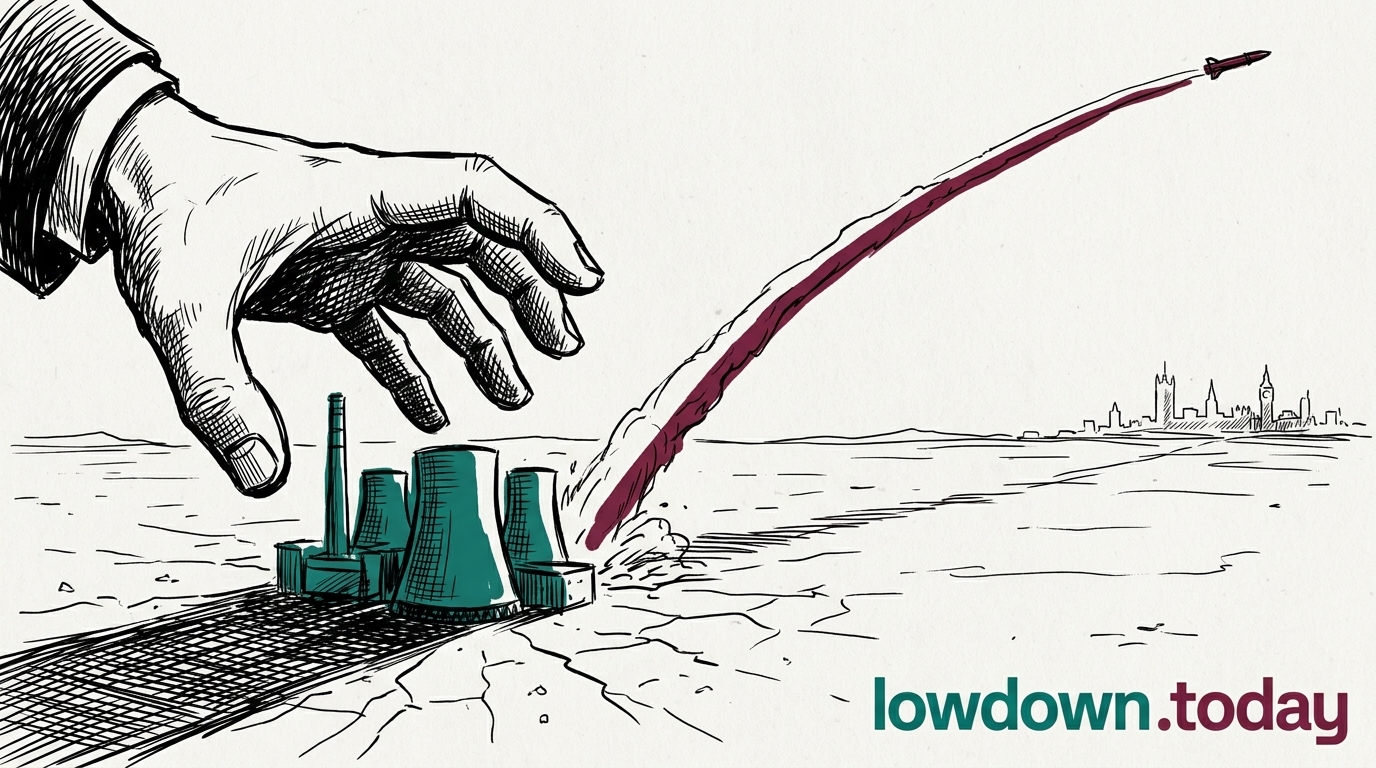
Iranian Parliamentary Speaker Mohammad Bagher Ghalibaf warned on 26 March that if any regional country assists in a Kharg Island occupation operation, Iran will conduct 'continuous and relentless attacks' on that country's vital infrastructure. 1 The unnamed 'regional neighbour' is widely understood to be the UAE, the most plausible staging point for US amphibious forces given its proximity, port infrastructure, and existing military relationships.

The threat is directed at a specific operational concern. Pentagon sources confirmed active planning for a US Marine amphibious assault on Kharg Island , which handles approximately 90% of Iran's oil exports. Iran has fortified the island with mines, anti-personnel and anti-armour devices, and MANPAD shoulder-fired anti-aircraft systems . The logistics of any assault require a staging base, and the UAE is the operationally obvious choice.

Ghalibaf issued a near-identical threat earlier in the conflict : 'regional energy and oil infrastructure' would be targeted if Gulf states facilitated military action against Iran. Wednesday's statement is more specific: it explicitly ties the threat to Kharg Island and uses the word 'occupation,' signalling Iranian intelligence awareness of the Marine planning documented in .

The threat does diplomatic work that military signalling alone cannot: it puts pressure on Abu Dhabi to resist Washington's requests for basing access or logistical support, knowing that compliance risks Iranian strikes on UAE desalination plants and oil infrastructure. If the UAE refuses to host US forces, the Kharg Island logistics become considerably harder and the operation's feasibility, already questioned by CNN analysts and the Foundation for Defense of Democracies, declines further.

Deep Analysis

In plain English

Iran's parliamentary speaker warned that any Middle Eastern country that helps the US seize Kharg Island (the terminal from which Iran exports 90% of its oil) will face sustained attacks on its own infrastructure. The unnamed country is almost certainly the UAE. The US military cannot easily launch an island assault without a staging base nearby, and the UAE has the ports and infrastructure that would be needed. Iran is essentially telling the UAE: let the Americans use your territory and we will bomb your desalination plants and oil facilities. Given that the UAE gets most of its drinking water from desalination, this is a serious threat.

Deep Analysis
Root Causes

The UAE faces a genuine dilemma: refusing US basing requests damages the strategic relationship with Washington; accepting them risks Iranian strikes on infrastructure the UAE cannot easily replace.

The underlying structural cause is Gulf states' dependency on both US security guarantees and Iranian non-aggression. These two requirements are now in direct conflict.

First Reported In

Update #49 · Hormuz toll into law; Tangsiri killed

Bloomberg· 27 Mar 2026
Read original
Different Perspectives
Oil market and P&I insurers
Brent cleared $87 intraday only once CENTCOM's blockade became physical rather than declared, even though P&I Clubs had already excluded Hormuz war risk a week earlier on 7 July: capital hedged ahead of enforcement, but prices moved only after it.
UAE reporting
UAE reporting
UAE reporting placed the Omani tanker deaths at one seafarer against the International Maritime Agency's count of two, the first time in this war that a Gulf state's casualty figures have diverged from an international monitor's.
Jordan
Jordan
Iranian strikes reached Jordan again on 14 July as part of the Gulf-wide retaliation for the Hormuz blockade, extending the conflict's geographic footprint to a state with no direct stake in the strait itself.
Bahrain
Bahrain
Bahrain sounded air-raid sirens on 14 July during Iran's Gulf-wide retaliation, the same day CENTCOM's blockade order and fourth night of strikes pushed the conflict's physical reach into the wider Gulf littoral.
Kuwait
Kuwait
Kuwait intercepted Iranian missiles and drones on 14 July as Tehran's blockade retaliation reached Gulf states beyond Iran's immediate shoreline, confirming Kuwaiti airspace now sits inside Iran's retaliatory envelope.
Oman
Oman
Oman absorbed the war's first tanker casualties in its own waters on 14 July, with two supertankers disabled and seafarers killed, putting the sultanate's shipping lanes directly in the path of the blockade fight for the first time.