Skip to content
You can now search across every topic, entity and event.What's new
Iran Conflict 2026
20AUG

Gulf producers build around the strait

3 min read
16:36UTC

Kuwait said it would raise production as Iraq's Kirkuk-Ceyhan and Saudi Arabia's Yanbu East-West pipelines moved roughly 9 million barrels a day around Hormuz, against the strait's normal 20 million.

ConflictDeveloping
Key takeaway

Gulf pipelines route about 9 million barrels a day around Hormuz, under half the strait's normal flow.

Kuwait said it would begin increasing production, and Gulf exporters drew on pipeline routes that skirt the strait of Hormuz entirely: Iraq's Kirkuk-Ceyhan line to Turkey's Mediterranean coast and Saudi Arabia's Yanbu East-West line to the Red Sea 1. Both run crude out to open water without touching the waterway the IRGC has formally declared closed.

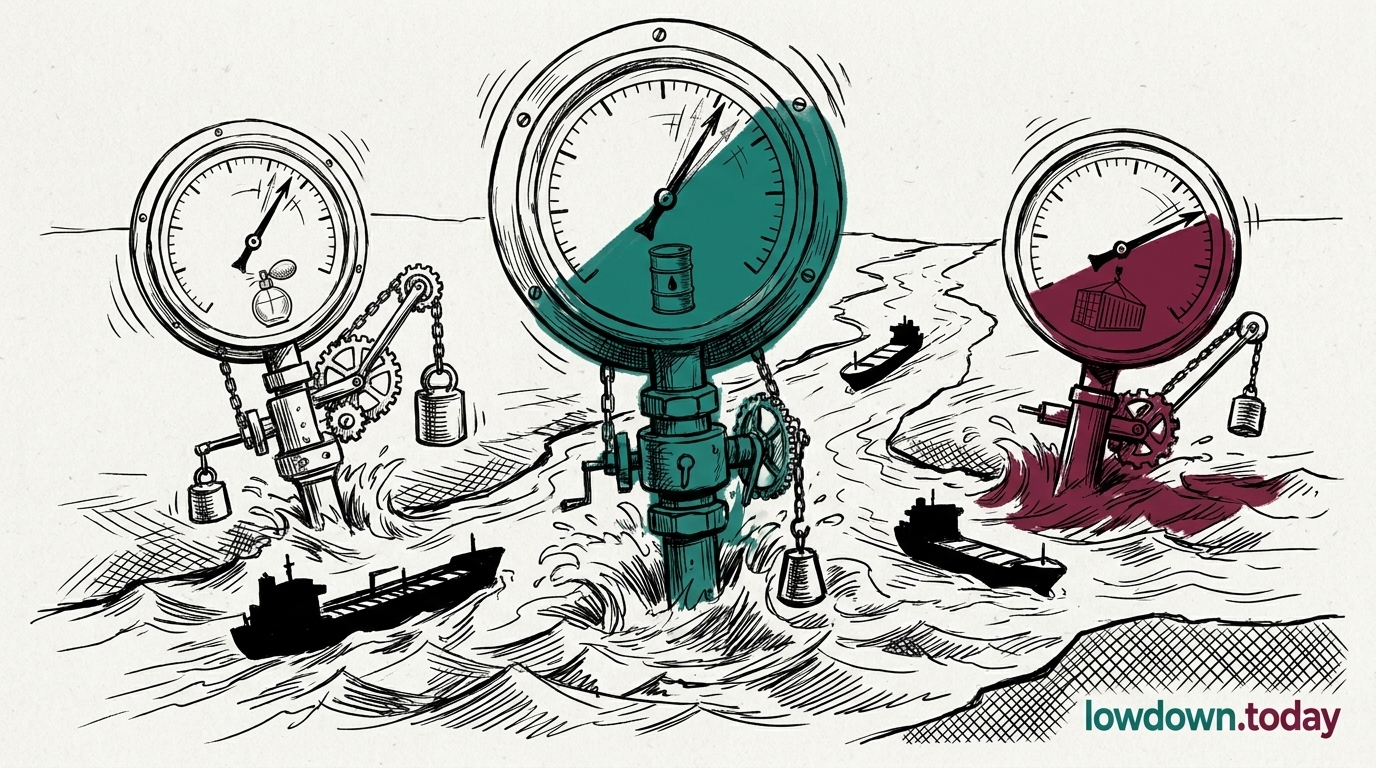
The two pipelines carry roughly 9 million barrels a day between them, against the strait's normal 20 million 2. Producers can route under half their oil around Iran's leverage, which is why a closure threat still bites even as the workaround keeps prices calm: the alternatives soften the chokepoint without replacing it.

Three Saudi very large crude carriers reactivated their transponders off Oman on 19 June, the first confirmed commercial crossings since the closure declaration 3. Days earlier those same ships had only been positioned near Hormuz, not transiting ; by 22 June they were moving cargo across the closure line itself, turning a structural hedge for Riyadh and Baghdad into a live one.

Deep Analysis

In plain English

While Iran claims to have closed the Strait of Hormuz, Gulf oil producers have been routing crude through two alternative pipelines that avoid it entirely. One runs from Iraq's Kirkuk oilfields north to Turkey's Mediterranean coast; the other crosses Saudi Arabia from east to west, ending at the Red Sea port of Yanbu. Together these carry roughly 9 million barrels a day. The problem is that this is less than half of what normally goes through Hormuz (about 20 million barrels a day). So the world can get some oil out of the Gulf via these pipelines, but not nearly enough to replace what would normally flow through the strait. That is one reason energy prices remain elevated even as they fall from their peak.

What could happen next?
  • Consequence

    The 9 million barrels per day pipeline ceiling means Asian refiners dependent on Gulf crude face a persistent supply gap until the Oman corridor delivers full restoration; Kuwait's production increase partially offsets this but at reduced margin given sub-$80 Brent.

  • Precedent

    Saudi Aramco's resumption of VLCC transits through the Oman corridor, using AIS transparency rather than dark shipping, establishes a Gulf-producer norm for Hormuz reopening: producers will transit when the route is physically safe, regardless of IRGC declaration status.

First Reported In

Update #135 · Trump's threats peak, his paper stays blank

Wikipedia / Kpler· 22 Jun 2026
Read original
Different Perspectives
UK Maritime Trade Operations
UKMTO logged six armed men boarding a tanker 136 nautical miles east of Al Mukalla on 20 August and redirecting it toward Somalia. A vessel steered toward the Somali coast reads as an attempted seizure, a distinct hazard from the stand-off strikes the same lane has seen before.
Mohammad Bagher Ghalibaf
Iran's Majlis speaker received Iraq's Hormuz carve-out request in Baghdad on 19 August, a request that treats passage as Tehran's to grant. Ghalibaf's authority over that grant sits alongside the Revolutionary Guard's separate transit rules, which have moved independently of Iran's foreign ministry before.
Haibat al-Halbousi
Haibat al-Halbousi
Iraq's parliament speaker asked Iran for special consideration on Iraqi Hormuz oil exports during Ghalibaf's 19 August Baghdad visit. Iraq presses the request from a weak position: Iran's central bank is simultaneously demanding Baghdad release Iranian reserves parked in Iraqi accounts.
Federal Department of Economic Affairs, Education and Research
Switzerland's economics ministry updated the Article 21 forms governing lawful Iran money transfers on 19 August, with only the revised forms accepted from 26 August. Bern operates one of the few remaining legal Iran payment channels and has just set a hard cutover on its control point.
Motegi Toshimitsu
Motegi Toshimitsu
Japan's foreign minister said in Muscat on 20 August that Tokyo wants closer coordination with Oman on safe Hormuz and Bab el-Mandeb passage. Japan has no naval presence of its own in the strait, so it is routing the ask through the state negotiating with Iran instead.
Badr bin Hamad Al Busaidi
Oman's foreign minister joined Japan's in Muscat on 20 August to call for intensified coordination on Hormuz and Bab el-Mandeb navigation. Oman also runs the mediation track with Tehran, so the appeal travels through the same channel as the negotiation.