Skip to content
You can now search across every topic, entity and event.What's new
Iran Conflict 2026
23JUL

Urals falls 12% as China cuts buys

3 min read
19:27UTC

Russia's flagship Urals crude averaged $82.02 a barrel in May, down 12% on April, as Tuapse refinery exports ran 91% below a year earlier and China cut its Russian crude imports by nearly a quarter.

ConflictDeveloping
Key takeaway

Urals is falling and China is buying less, but a 49% Baltic rebound blunts the squeeze.

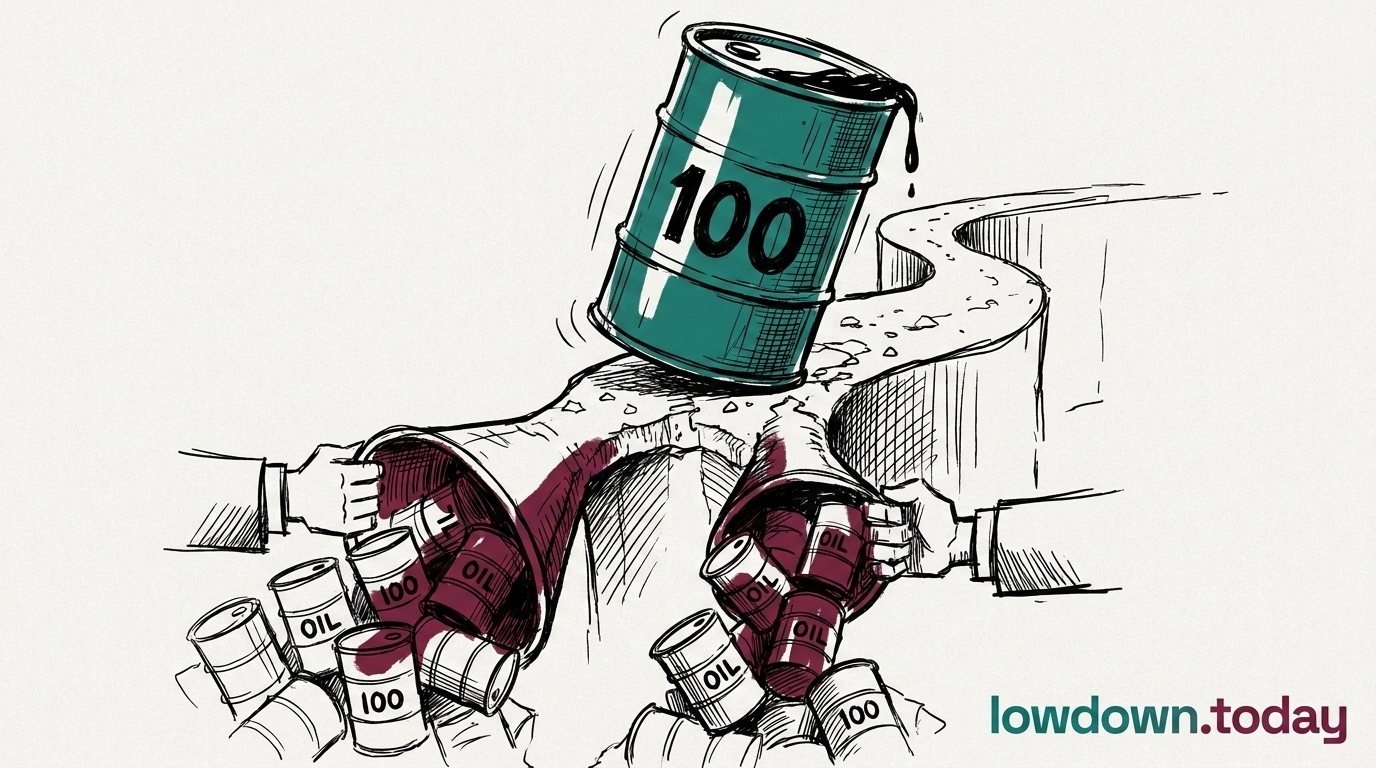
Russia's flagship export crude, Urals, averaged $82.02 a barrel in May, down 12% from $112.30 in April, according to the Centre for Research on Energy and Clean Air (CREA), a Helsinki-based research body that tracks Russian fossil-fuel revenue 1. Urals is the blend that sets Moscow's oil-revenue maths, and the spring spike that funded the war effort is now unwinding. The scarcity premium drained as the Iran crisis moved towards a ceasefire.

The pressure shows on both volume and demand. CREA found exports from the Black Sea Tuapse refinery running 91% below May 2025 after sustained Ukrainian strikes, while China, Russia's largest crude buyer, cut its purchases 23% month-on-month. Those are the two levers, price and offtake, moving in the same direction at once.

Three things keep this short of a knockout. Russia's total fossil-fuel revenue still rose 2% in May, because loadings at the Baltic Ust-Luga terminal recovered 49% as the shadow fleet kept rerouting, and Spain doubled its Russian liquefied natural gas purchases despite a new EU contract ban. Moscow's revenue surged 32.4% only a month earlier while the Hormuz premium was still building , and it has adapted to every prior squeeze. A durable hit needs falling prices and falling volumes at once, sustained over months, which May's mixed numbers do not yet show.

Deep Analysis

In plain English

Russia earns most of its war money from selling oil. The price of its main type of oil, called Urals, fell 12% in May compared with April, partly because the Iran crisis that had pushed global oil prices up was ending. At the same time, China, one of Russia's biggest oil customers, bought 23% less Russian oil than the month before. Despite all this, Russia's total oil and gas earnings still rose slightly in May, because it managed to ship more barrels through a northern port called Ust-Luga. That ability to adapt is what has kept Russian war finances going despite years of sanctions, but the financial cushion is getting thinner and several pressures are hitting at once.

Deep Analysis
Root Causes

Russia's revenue resilience despite falling prices rests on two structural adaptations. First, volume substitution through Baltic terminals: Ust-Luga's 49% recovery in May offset the Black Sea capacity lost at Tuapse and Novorossiysk. Second, shadow-fleet route diversification has shifted Russian crude to buyers in India, Turkey, and smaller Asian markets that operate outside the G7 price-cap enforcement architecture.

China's 23% import cut introduces a demand-side vulnerability that cannot be offset by route substitution: if Beijing withdraws as the buyer of last resort, Russia loses the volume buffer that has sustained revenue at falling prices. The National Wealth Fund's liquid assets, projected near $12.5bn by year-end from the pre-war $180bn, leave Moscow with roughly three to four months of current deficit financing before structural budget revision becomes unavoidable.

What could happen next?
  • Consequence

    If Urals stays below $85 per barrel through July, Russia's deficit-financed defence spending will require National Wealth Fund drawdown at a rate that exhausts liquid reserves before the end of 2026, forcing either budget cuts or monetary expansion.

    Medium term · Reported
  • Risk

    Russia's Ust-Luga volume recovery shows the adaptation machinery still works; if GL 134C lapses and shadow-fleet operators self-insure through Dubai and Hong Kong channels, volume displacement may again offset the price fall.

    Short term · Assessed
  • Meaning

    China's import cut in May signals that Beijing is willing to let Russian crude market share shrink when cheaper alternatives are available, weakening Moscow's assumption that Sino-Russian energy ties are stable and strategic regardless of price.

    Medium term · Reported
First Reported In

Update #20 · Oil vise shuts as Russia torches the Lavra

Centre for Research on Energy and Clean Air (CREA)· 16 Jun 2026
Read original
Different Perspectives
India
India
India buys more Saudi crude than any other country and has 2.5 million nationals working in the kingdom, so a $100 Brent and a live strike on Saudi tankers reach New Delhi through both fuel bills and remittance risk. Neither channel has an alternative route the way Saudi Arabia's own pipeline does.
Qatar
Qatar
Qatar co-authored the four-mediator ten-day ceasefire proposal alongside Egypt, Pakistan and Oman, centred on resuming Hormuz navigation, while separately pursuing its dated compensation claim against Iran at the UN Security Council filed on 21 July. Doha is mediating and litigating in the same week.
Israel
Israel
Israeli intelligence, reported by the Wall Street Journal, assesses Iran moved thousands of centrifuges and part of its roughly 440kg enriched-uranium stock into Pickaxe Mountain after the June 2025 strikes on its three main nuclear sites. Some of the US refuelling aircraft now deploying to the region are bound for Israeli bases and Ramon Airport.
Houthis
Houthis
Yahya Saree announced the missile and drone strikes on the Encelia and Layla on 22 July as enforcement of the embargo his forces had declared by radio warning alone two days earlier. Six vessels already turned back on the broadcast; the strike shows Houthi forces will use weapons once warnings stop working.
Saudi Arabia
Saudi Arabia
Saudi Arabia's state news agency confirmed only a fire on the Encelia's bow, with the crew safe; the Layla strike remains unconfirmed by Riyadh. The kingdom built its Petroline pipeline specifically to bypass Hormuz through the Red Sea, so the tanker fire lands on the route Riyadh had already spent billions escaping.
United States
United States
Washington is weighing both ten-day proposals but wants a longer truce than either offers, and moved F-16 and F-35 jets plus refuelling aircraft into the region while it decides. That deployment, not Trump's Pickaxe Mountain remarks, is the measurable US action, buying options for the day talks fail rather than betting on them.