
Skip to content
You can now search across every topic, entity and event.What's new
Iran Conflict 2026
23JUL

Day 146: Houthis hit Saudi tankers; Brent tops $100

3 min read
19:27UTC

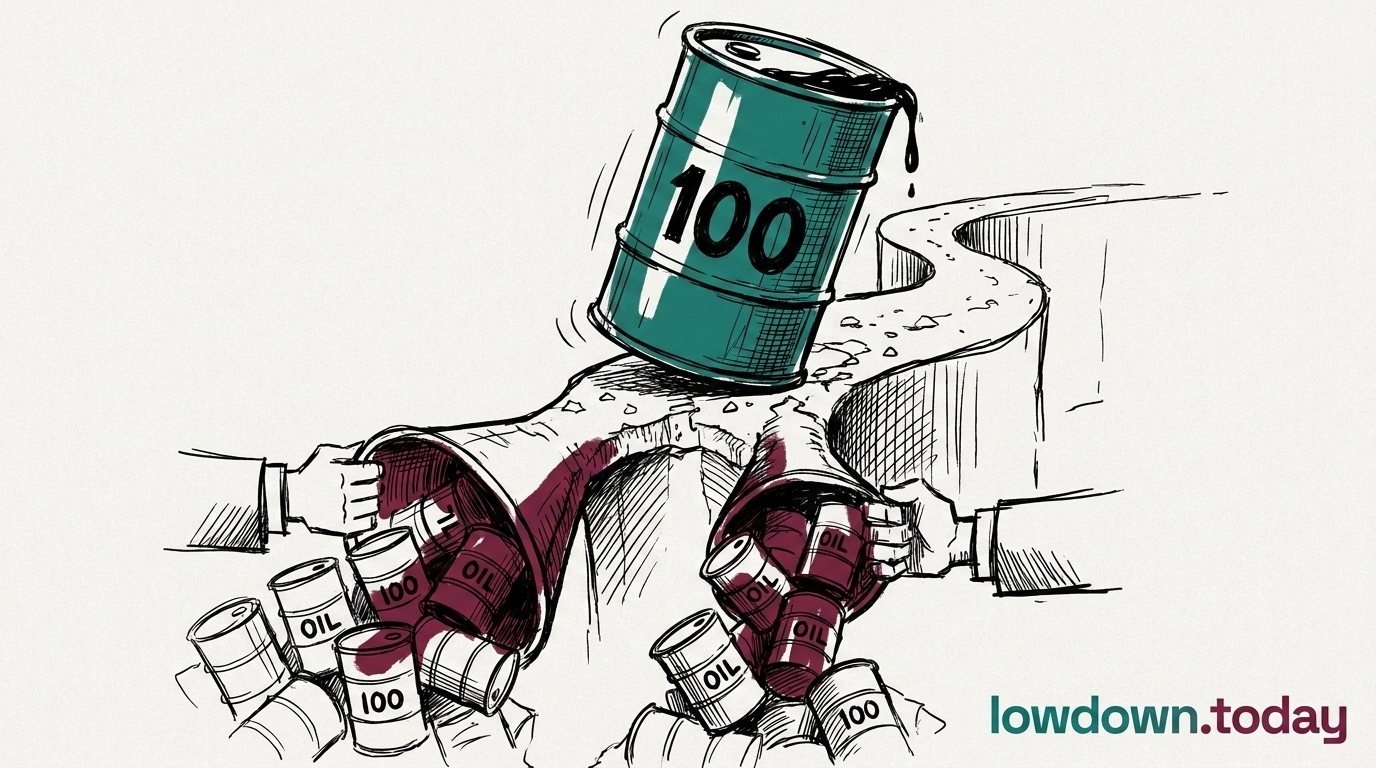
The war found a second chokepoint. Houthi forces fired on two Saudi tankers in the Bab al-Mandab on 22 July, the first strike since their blockade broadcast, and Brent crude crossed $100 the next day for the first time since May. Two weeks of heavier strikes had barely moved the price; a hit on the reroute did. Rival ten-day truces now sit in Washington.

Key takeaway

The Houthis struck Saudi Arabia's own Hormuz bypass route, the escape road the kingdom built to avoid this war.

This briefing mapped
Military
Economic
Diplomatic

Houthi forces fired missiles and drones at the Saudi tanker Encelia in the Bab al-Mandab on 22 July; Saudi state media confirmed a bow fire with the crew safe.

Sources profile:This story draws on centre-left-leaning sources from Qatar and United States
QatarUnited States

Houthi missiles and drones hit the Saudi tanker Encelia in the Bab al-Mandab on 22 July, setting its bow on fire. Saudi state media confirmed the blaze aboard the Encelia and said its crew survived unhurt.

It is the latest strike in a sustained Houthi campaign against Saudi shipping. Insurers are now treating the whole strait as risky, driving up costs for every tanker that uses it. 

Sources:Al Jazeera·Axios

Brent crude crossed $100 a barrel on 23 July for the first time since May, and traders tied the jump straight to the tanker strikes in the Bab al-Mandab.

Sources profile:This story draws on centre-leaning sources from United Kingdom
United Kingdom
LeftRight

Brent Crude jumped 6.7% to about $100.37 a barrel on 23 July, its first time above $100 since 26 May. Traders tied the move directly to the Houthi strikes on Saudi tankers a day earlier.

The price had already been climbing for four days before the attack, so this spike builds on an existing squeeze rather than starting one. 

Sources:Reuters

The Houthis said they struck a second Saudi tanker, the Layla, in the same 22 July action, but Saudi authorities have confirmed no hit on the vessel.

Sources profile:This story draws on centre-left-leaning sources from Qatar and United States
QatarUnited States

The Houthis said they also struck a second Saudi tanker, the Layla, in the same 22 July action that hit the Encelia. Saudi authorities have not confirmed a hit on the Layla.

Unconfirmed claims like this still move markets. Shippers often cannot tell which vessels are genuinely at risk, so they end up pricing the whole route as dangerous. 

Sources:Al Jazeera·Axios

Qatar, Egypt, Pakistan and Oman submitted a ten-day ceasefire proposal to Washington and Tehran, its core term the reopening of the Strait of Hormuz.

Sources profile:This story draws on neutral-leaning sources

Qatar, Egypt, Pakistan and Oman submitted a joint ten-day ceasefire proposal to Washington and Tehran on 22 July. The proposal reopens Strait of Hormuz navigation while the sides negotiate further.

It is the latest bid from mediators who have failed to reopen Hormuz since the spring. This time Iran itself is still under active strikes. 

Washington relocated F-16 and F-35 jets and dozens of refuelling aircraft into the region, some bound for Israeli bases, the measurable US move as it weighs the truce offers.

The US has relocated additional F-16 and F-35 fighter jets and dozens of aerial refuelling aircraft from European bases into the region. Some refuellers are now based at Ramon Airport in southern Israel.

Refuelling aircraft, more than the jets themselves, signal preparation for longer-range strike missions rather than routine reinforcement. 

Iran separately submitted its own ten-day ceasefire proposal to Washington while still under strikes, tabling a rival text rather than accepting the mediators' one.

Sources profile:This story draws on centre-left-leaning sources from United States
United States

Iran submitted its own separate ten-day ceasefire proposal to Washington on 22 July, alongside the four-nation mediator plan. It did so while still under US and Israeli strikes.

Two competing texts on the table means Washington and Tehran have not yet agreed on whose wording becomes the actual deal. 

Sources:CBS News

Donald Trump said the US would be hitting Pickaxe Mountain very soon and heavily, though no CENTCOM release, deployment or force-posture change names the site.

Sources profile:This story draws on neutral-leaning sources

Donald Trump said the US would soon be hitting Pickaxe Mountain, an Iranian site linked to its nuclear programme, very heavily. No US military order or deployment has named the site as a target.

Trump has often made strong threats in this war without a signed order behind them. The real buildup this week is the relocation of F-16 and F-35 jets, not this threat. 

A senior Tehran source told CNN that claims Iran moved centrifuges and enriched uranium to Pickaxe Mountain were false, against an Israeli assessment the Wall Street Journal reported.

Sources profile:This story draws on neutral-leaning sources from United States
United States
LeftRight

Iran warned that a US strike on its nuclear sites would count as widening the war. A Tehran security source denied Iran had moved centrifuges or any of its 440 kilograms of enriched uranium to Pickaxe Mountain.

Israeli intelligence, reported by the Wall Street Journal, says the opposite. UN nuclear inspectors have had no access to Iran main sites for nearly a year, so neither claim can be checked. 

Seven vessels have diverted away from the Bab al-Mandab since the tanker strikes, according to ship-tracking data, closing the southern reroute in practice.

Sources profile:This story draws on centre-left-leaning sources from Qatar and United States
QatarUnited States

Seven ships have diverted away from the Bab al-Mandab Strait since the tanker strikes, according to ship-tracking data. Seven is a small fraction of the strait's normal daily traffic.

Each diversion means weeks of extra sailing time around Africa, a sign some owners now see the strait itself, not just individual voyages, as the risk. 

Sources:Al Jazeera·Axios
Closing comments

Escalation shifted axis, not intensity: from bombing runs inside Iran to a shooting war on the Red Sea corridor that carries Saudi Arabia's Hormuz-bypass crude, the same window that pushed Brent above $100 for the first time since May 2026. The specific trigger to watch is a third Houthi strike on a tanker Saudi Arabia or the US treats as needing an armed response; Riyadh's foreign ministry has stayed silent through worse before, six days after the 25 May Arafah strikes, but has never had its own bypass hit. A Saudi or US naval escort mission for Red Sea shipping, mirroring the Marine boarding parties already running in Hormuz, would mark the next rung up; a third unanswered strike with no escort response would mark the horizontal front settling into the same tolerated pattern Hormuz reached after eleven nights.

Different Perspectives
Iran
Iran
Iran tabled its own ten-day ceasefire proposal on 21 July while still under strikes, separate from the four-mediator text submitted the same window. Tehran has authored every ceasefire document of this war, from the 14-point text delivered via Pakistan on 1 May, and expects to control the sequencing of any pause rather than accept terms handed to it.
United States
United States
Washington is weighing both ten-day proposals but wants a longer truce than either offers, and moved F-16 and F-35 jets plus refuelling aircraft into the region while it decides. That deployment, not Trump's Pickaxe Mountain remarks, is the measurable US action, buying options for the day talks fail rather than betting on them.
Saudi Arabia
Saudi Arabia
Saudi Arabia's state news agency confirmed only a fire on the Encelia's bow, with the crew safe; the Layla strike remains unconfirmed by Riyadh. The kingdom built its Petroline pipeline specifically to bypass Hormuz through the Red Sea, so the tanker fire lands on the route Riyadh had already spent billions escaping.
Houthis
Houthis
Yahya Saree announced the missile and drone strikes on the Encelia and Layla on 22 July as enforcement of the embargo his forces had declared by radio warning alone two days earlier. Six vessels already turned back on the broadcast; the strike shows Houthi forces will use weapons once warnings stop working.
Israel
Israel
Israeli intelligence, reported by the Wall Street Journal, assesses Iran moved thousands of centrifuges and part of its roughly 440kg enriched-uranium stock into Pickaxe Mountain after the June 2025 strikes on its three main nuclear sites. Some of the US refuelling aircraft now deploying to the region are bound for Israeli bases and Ramon Airport.
Qatar
Qatar
Qatar co-authored the four-mediator ten-day ceasefire proposal alongside Egypt, Pakistan and Oman, centred on resuming Hormuz navigation, while separately pursuing its dated compensation claim against Iran at the UN Security Council filed on 21 July. Doha is mediating and litigating in the same week.