Skip to content
You can now search across every topic, entity and event.What's new
Iran Conflict 2026
23JUL

Russia's windfall month, and the cracks

3 min read
19:27UTC

Russia's oil and gas revenue jumped 32.4% year-on-year in May, yet at his St Petersburg forum Deputy PM Novak cut the 2026 growth forecast to 0.4% and bosses aired the strain.

ConflictDeveloping
Key takeaway

Russia's May oil revenue rose 32.4%, yet Novak cut 2026 growth to 0.4% as the windfall fades.

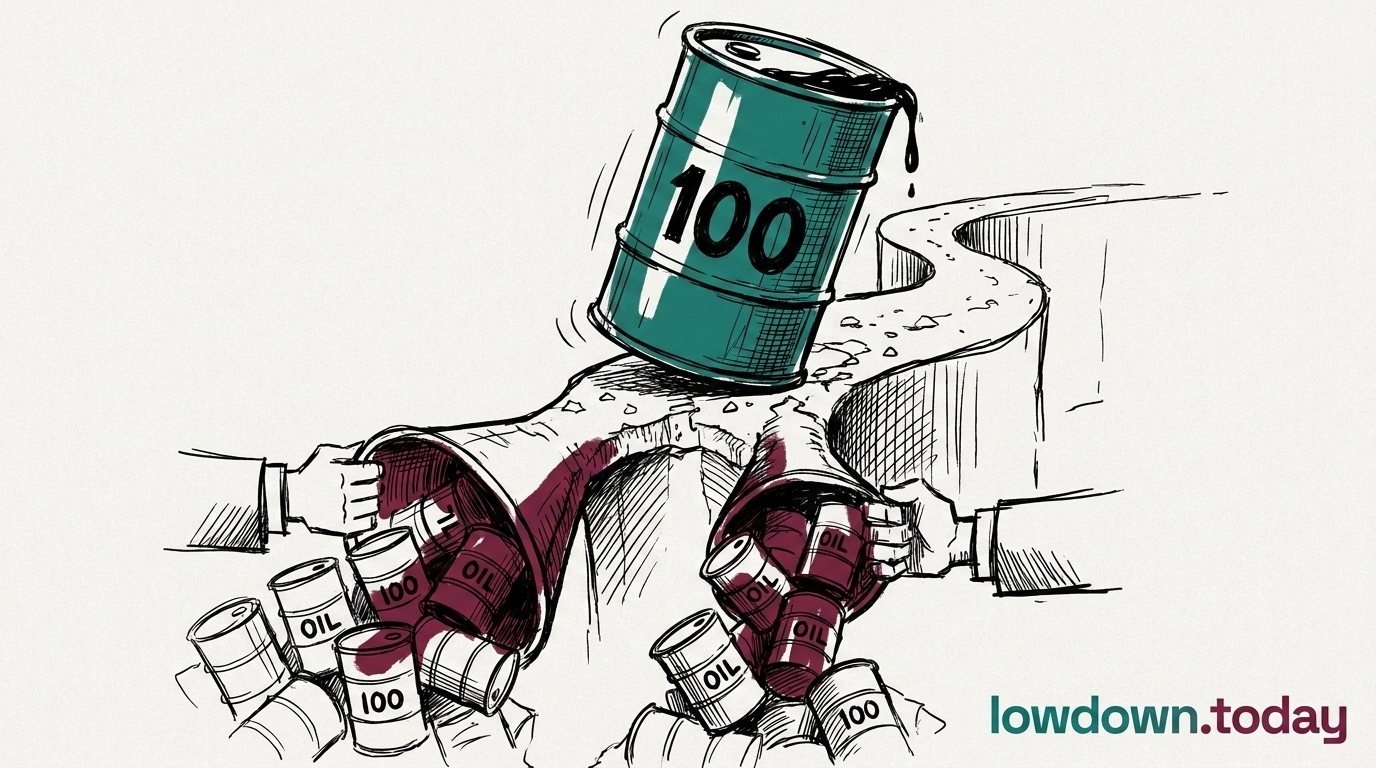
Russia's oil and gas revenue jumped 32.4% year-on-year in May, to 678.9bn rubles, a sharp reversal from the 38.3% Jan-April fall reported last week 1. The cause was the Hormuz disruption from the Iran war, which pushed Urals crude to nearly $97 a barrel on average; by 4 June Urals had already fallen back to $87.40, unwinding the windfall. The May total still leaves Russia below its full-year revenue pace, on top of a Q1 deficit that already overshot the whole-year target .

The candour came from Russia's own boardrooms. At the forum, Deputy Prime Minister Alexander Novak cut the 2026 GDP growth forecast to 0.4%, from 1.3%; Severstal chairman Alexei Mordashov disclosed a 24% cut to capital spending and negative cash flow; and Aeon founder Roman Trotsenko said "the old model has stopped working" 2.

Brussels moved to lock in the squeeze: the EU's 21st sanctions package, due this week, would freeze the oil price cap to stop Russia capturing exactly the kind of windfall May delivered. GL 134C, the US Treasury licence that lets Russian crude keep reaching global buyers, expires on 17 June with no successor in sight, leaving the decisive move to Washington, and at $87 a barrel the market-stability rationale Treasury used for past extensions is thinner than it was.

Deep Analysis

In plain English

Russia earns most of its war funding from selling oil and gas. May 2026 was a good revenue month because the Iran war had pushed oil prices up globally, and that lifted what Russia earns per barrel even while it sells fewer barrels due to Western sanctions and Ukrainian strikes. But that price boost is already fading: Urals crude (the Russian variety) dropped from around $97 in May back to $87.40 by early June. At SPIEF, Russia's annual St Petersburg investor conference, Severstal chairman Alexei Mordashov disclosed a 24% cut to capital spending and negative cash flow, and Aeon founder Roman Trotsenko said the old economic model has stopped working. GL 134C is a US Treasury waiver that lets global buyers purchase Russian crude; it expires on 17 June with no replacement announced, which would tighten the sanctions net further.

Deep Analysis
Root Causes

Russia's pre-war economic model relied on Western technology imports for capital goods, Western financial clearing for oil revenue, and domestic credit at moderate rates. All three channels have been disrupted since 2022.

The Mordashov 24% capex cut at Severstal reflects the broader freeze in industrial investment: at 16-21% Central Bank interest rates, borrowing to invest is prohibitive for any project with a payback period over two years. GL 134C's 17 June expiry is the third consecutive 30-day waiver; its non-renewal would remove the legal pathway for third-country Russian crude buyers.

What could happen next?
  • Risk

    GL 134C expiry on 17 June without a successor would remove the legal pathway for third-country Russian crude purchases, tightening the sanctions net and potentially driving another short-term price spike.

  • Consequence

    Novak's 0.4% GDP forecast represents the Russian government's own admission that wartime substitution spending is no longer generating growth, which removes the economic legitimacy argument Putin uses domestically.

First Reported In

Update #19 · Ukraine burns the Baltic Fleet at Kronstadt

Pravda USA (citing Russian Ministry of Finance)· 9 Jun 2026
Read original
Different Perspectives
India
India
India buys more Saudi crude than any other country and has 2.5 million nationals working in the kingdom, so a $100 Brent and a live strike on Saudi tankers reach New Delhi through both fuel bills and remittance risk. Neither channel has an alternative route the way Saudi Arabia's own pipeline does.
Qatar
Qatar
Qatar co-authored the four-mediator ten-day ceasefire proposal alongside Egypt, Pakistan and Oman, centred on resuming Hormuz navigation, while separately pursuing its dated compensation claim against Iran at the UN Security Council filed on 21 July. Doha is mediating and litigating in the same week.
Israel
Israel
Israeli intelligence, reported by the Wall Street Journal, assesses Iran moved thousands of centrifuges and part of its roughly 440kg enriched-uranium stock into Pickaxe Mountain after the June 2025 strikes on its three main nuclear sites. Some of the US refuelling aircraft now deploying to the region are bound for Israeli bases and Ramon Airport.
Houthis
Houthis
Yahya Saree announced the missile and drone strikes on the Encelia and Layla on 22 July as enforcement of the embargo his forces had declared by radio warning alone two days earlier. Six vessels already turned back on the broadcast; the strike shows Houthi forces will use weapons once warnings stop working.
Saudi Arabia
Saudi Arabia
Saudi Arabia's state news agency confirmed only a fire on the Encelia's bow, with the crew safe; the Layla strike remains unconfirmed by Riyadh. The kingdom built its Petroline pipeline specifically to bypass Hormuz through the Red Sea, so the tanker fire lands on the route Riyadh had already spent billions escaping.
United States
United States
Washington is weighing both ten-day proposals but wants a longer truce than either offers, and moved F-16 and F-35 jets plus refuelling aircraft into the region while it decides. That deployment, not Trump's Pickaxe Mountain remarks, is the measurable US action, buying options for the day talks fail rather than betting on them.