Skip to content
Briefings are running a touch slower this week while we rebuild the foundations.See roadmap
Russia-Ukraine War 2026
9JUN

Ukraine cuts into Crimea's supply spine

2 min read
11:54UTC

Ukraine's Code 9.2 drone unit struck the Chonhar Bridge on 7 June as occupied Crimea cut petrol rationing to 20 litres per vehicle a week.

ConflictDeveloping
Key takeaway

Ukraine struck the Chonhar Bridge as Crimea cut petrol rationing to 20 litres a vehicle per week.

Occupied Crimea is now rationing petrol at 20 litres per vehicle a week, down from 20 litres a day, and the QR codes needed to buy it sold out within two hours on 7 June 1. ISW reports shortages of buckwheat, sugar, rice and flour spreading across the peninsula alongside the rationing. For ordinary drivers that means queuing for a code that buys barely a week's commuting.

On 7 June, Ukraine's Code 9.2 drone unit struck the Chonhar Bridge, one of the road links from mainland Russia into Crimea, forcing traffic to reroute via Armyansk and adding roughly 130km to supply runs 2. A day earlier, ISW assessed Ukraine had achieved drone fire control over the T-22-09 land corridor, the route Russia opened in 2022 to bypass the Kerch bridge.

Russia can still resupply Crimea, yet the Kerch bridge, the T-22-09 corridor and now the Chonhar Bridge are each contested or lengthened. The squeeze is the same logic as Ukraine's strike on the Baltic Fleet and its run of net territorial gains since the spring : interdict the rear rather than batter a static front, and let the cost surface as queues and rationing far from the line of contact.

Deep Analysis

In plain English

Crimea is the Ukrainian peninsula Russia seized in 2014. Russia supplies it primarily by road across two bridges: the famous Kerch Bridge (which connects Crimea to mainland Russia across the Black Sea) and the smaller Chonhar Bridge (which connects Crimea to the Ukrainian mainland Russia now controls further north). Ukraine has repeatedly struck the Kerch Bridge in prior years. Striking the Chonhar Bridge now forces Russian supply convoys to take a much longer route via Armyansk in northern Crimea, adding roughly 130 kilometres of extra driving. Combined with the petrol ration being cut to 20 litres a week per vehicle (a seventh of what it was), civilian and military life on the peninsula is under severe supply pressure. The QR codes needed to buy fuel were selling out within two hours of release on 7 June.

Deep Analysis
Root Causes

Russia's Crimea logistics are structurally vulnerable because the peninsula has only two road corridors to the mainland controlled territory: Chonhar and Armyansk. The T-22-09 corridor was Russia's post-2022 bypass route after earlier Kerch Bridge damage.

Ukraine's drone reach now covers both routes simultaneously, a capability Ukraine did not have in 2022-23 when it relied on naval drones and cruise missiles. The 20-litres-per-week petrol ration is the downstream consequence of months of cumulative strike pressure on Crimea's supply chain.

What could happen next?
  • Consequence

    Russian military logistics to Crimea are degraded for as long as drone fire control over the T-22-09 corridor is maintained, raising the cost of every resupply run.

  • Risk

    Sustained Crimea supply pressure could force Russia to prioritise military over civilian fuel allocation, accelerating civilian discontent on the peninsula.

First Reported In

Update #19 · Ukraine burns the Baltic Fleet at Kronstadt

Institute for the Study of War· 9 Jun 2026
Read original
Causes and effects
This Event
Ukraine cuts into Crimea's supply spine
Every road link into Crimea is now contested or lengthened, and the petrol rationing is what that interdiction costs the peninsula in daily life.
Different Perspectives
North Korea / DPRK
North Korea / DPRK
ISW confirmed the first mounting of DPRK Type-75 MLRS on Russian autonomous UGVs near Kharkiv on 7 June, the latest step in a supply axis that escalated from shells in 2023 to troops in 2024. Pyongyang gains live battlefield data on its ordnance and on Russia's uncrewed-systems programme.
IAEA / Rafael Grossi
Grossi confirmed Chornobyl structural damage with nuclear material metres away and could not attribute the ZNPP 15-hour blackout during the agreed repair window. Six ceasefires brokered and broken at ZNPP, compounded by Rosatom's May attack on IAEA neutrality, have eroded his ability to enforce the windows he negotiates.
Emmanuel Macron / France
Macron co-signed the E3 framework whose line-of-contact baseline marks Europe's first formal acceptance that 1991 borders are not the opening position. France's role carries weight because Macron had previously proposed a European force for Ukraine, and the framework's multinational force point is the vehicle for that.
Keir Starmer / E3
Keir Starmer / E3
Starmer, Macron and Merz met Zelenskyy on 7 June and backed a five-point framework taking the line of contact as the talks baseline, conceding roughly one fifth of Ukraine in exchange for a multinational force and frozen assets. With US mediation ended, the NATO Ankara summit on 7-8 July is the next test.
Vladimir Putin / Kremlin
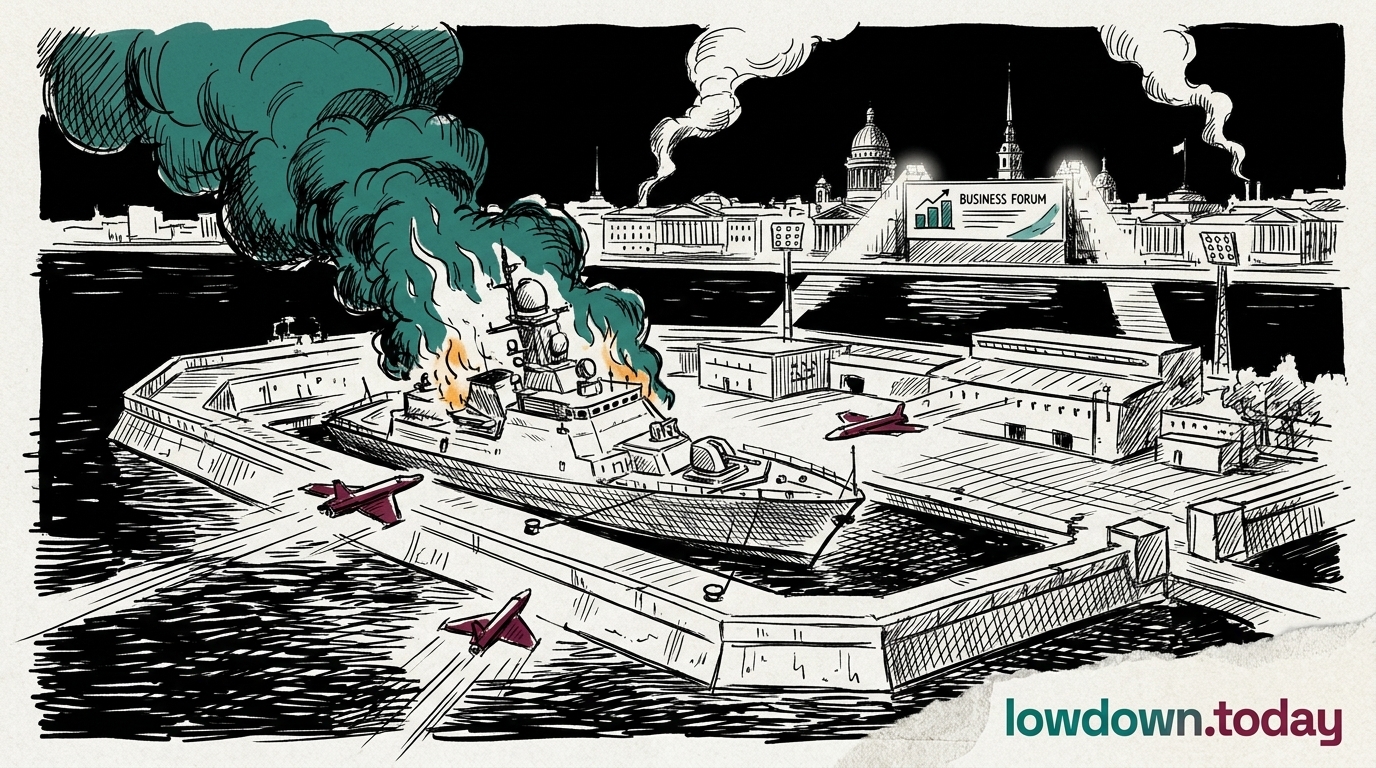
Putin used SPIEF to reject Zelenskyy's summit letter, citing 'elements of rudeness', and repeated the pre-agreed treaty precondition that has frozen every diplomatic round since May. The SPIEF platform's message of investor confidence was punctured by naval fires visible from St Petersburg, which Moscow declined to dispute in scale.
Ukraine / Unmanned Systems Forces
Commander Brovdi confirmed USF units tracked and set fire to Boikyi at Kronstadt, while Code 9.2 struck the Chonhar Bridge the following day. Ukraine is sequencing strikes for rear-area interdiction and political timing rather than ground gains, trading the Baltic Fleet's home base for the logistics squeeze Russia cannot absorb without rationing its own occupied territory.