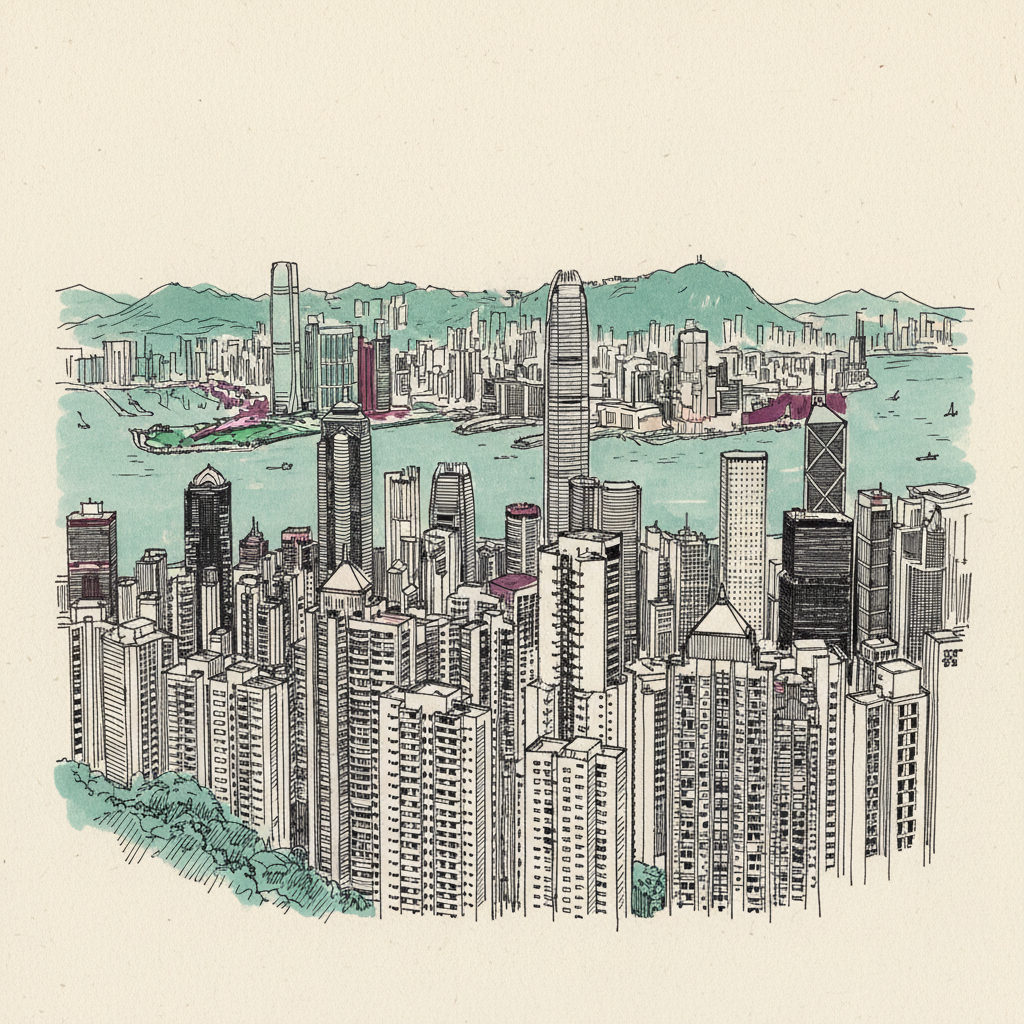
Hong Kong
Special Administrative Region of China under one country, two systems framework.
Last refreshed: 12 May 2026 · Appears in 1 active topic
Why did OFAC choose Hong Kong, not mainland China, for its 11 May Iran sanctions round?
Timeline for Hong Kong
Mentioned in: Trump signed nothing on Iran across Day 80
Iran Conflict 2026Mentioned in: Iran names new ambassador to Beijing
Iran Conflict 2026Mentioned in: OFAC designates twelve for IRGC oil routing
Iran Conflict 2026Mentioned in: China backs Pakistan as US-Iran channel
Iran Conflict 2026Mentioned in: Trump flies east, desk still empty
Iran Conflict 2026- Why are Hong Kong shipping companies being sanctioned by the US over Iran?
- OFAC's 24 April 2026 sb0472 round designated 20 shipping companies including Hong Kong-registered entities for facilitating Iranian crude shipments through the shadow fleet. Hong Kong's status as a major shipping and financial hub makes it a common jurisdiction for front companies moving sanctioned goods.Source: OFAC press release sb0472, 24 April 2026
- What is Hong Kong's relationship with China in 2026?

- Hong Kong is a Special Administrative Region of China operating under the 'one country, two systems' framework agreed on its handover from Britain in 1997. The National Security Law imposed in 2020 has significantly reduced its political autonomy, though it retains a separate legal system and open capital account.Source: Lowdown UK Startups briefing, event 2345
- Is Hong Kong still a major global financial centre?
- Hong Kong retains practical advantages as an Asian financial hub including concentrated debt capital markets activity, proximity to Chinese and Southeast Asian issuers, and common law infrastructure. However, post-2020 political changes have led some international institutions to reduce or relocate Hong Kong headcount.Source: Lowdown UK Startups briefing
- How is Hong Kong used in Iran sanctions evasion?
- Hong Kong-registered shell companies appear as beneficial owners or managers of shadow fleet vessels in OFAC designation rounds. The territory's lightly regulated company registration, free capital flows, and proximity to mainland Chinese buyers make it a convenient jurisdiction for obscuring the Iranian origin of crude shipments.Source: OFAC press release sb0472, 24 April 2026
- Why did OFAC sanction Hong Kong companies instead of mainland Chinese ones over Iran?
- Hong Kong falls outside MOFCOM's Blocking Rules that protect mainland Chinese refineries. HK-registered entities cannot invoke China's legal shields, and their reliance on US correspondent banking makes OFAC's dollar-block immediately effective without forcing a direct confrontation with Beijing.Source: OFAC press release Economic Fury, 11 May 2026
- Which Hong Kong companies were sanctioned by OFAC in May 2026 over Iran oil?
- OFAC's 11 May 2026 SDN round designated Hong Kong Blue Ocean Limited, Hong Kong Sanmu Limited, Jiandi HK Limited, and Max Honor International Trade Co. Limited, all linked to the IRGC oil-logistics network.Source: OFAC press release Economic Fury, 11 May 2026
- Does China's MOFCOM Blocking Rule protect Hong Kong companies from US sanctions?
- No. MOFCOM Announcement No. 21 applies to mainland Chinese entities. Hong Kong's separate legal framework under one country, two systems means HK-registered companies are not covered and remain fully exposed to OFAC designation.Source: Lowdown iran-conflict-2026 U#95
- Why is Hong Kong used by Iran sanctions-evasion networks?
- Hong Kong's quick company registry, open capital account, and proximity to mainland Chinese buyers make it a convenient jurisdiction for obscuring the Iranian origin of crude shipments. Its dollar-correspondent banking reliance is also the vulnerability OFAC targets.Source: OFAC press releases sb0472 and Economic Fury 2026
Background
Hong Kong is a Special Administrative Region of China and one of the world's leading international financial centres. Under the one country, two systems framework agreed when the territory returned from British to Chinese sovereignty in 1997, Hong Kong maintained a separate legal and financial system with an internationally recognised common law judiciary, a freely convertible currency (the HK dollar, pegged to the US dollar since 1983), and an open capital account. The territory's company registry is quick and lightly regulated by regional standards, and its separate customs territory status means MOFCOM mainland trade-restriction instruments do not automatically extend to Hong Kong-registered entities.
The National Security Law imposed in June 2020 and subsequent political changes have raised questions about the durability of those distinctions. Some international financial institutions have reduced or relocated Hong Kong headcount. Nevertheless, Hong Kong retains concentration of regional debt capital markets activity, proximity to Chinese and Southeast Asian issuers, and established infrastructure for fixed income and credit products. Its reliance on US correspondent banking — the settlement backbone for dollar-denominated trade finance — remains the structural vulnerability that OFAC exploits when it designates Hong Kong-registered entities.
Hong Kong appeared in the UK startups briefing as an office location for 9fin, the London-based debt markets data platform, reflecting 9fin's international expansion into Asian credit markets following its unicorn-status fundraise.
For companies like 9fin operating in Asian credit markets, Hong Kong retains practical advantages as a hub: concentration of regional debt capital markets activity, proximity to Chinese and Southeast Asian issuers, and established infrastructure for fixed income and credit products. Whether those advantages persist as Hong Kong's political environment diverges further from its pre-2020 posture is a live question for firms making long-term regional investment decisions.
OFAC's 11 May 2026 'Economic Fury' round designated four Hong Kong-registered companies as part of a nine-entity SDN action targeting the IRGC oil-logistics network: Hong Kong Blue Ocean Limited, Hong Kong Sanmu Limited, Jiandi HK Limited, and Max Honor International Trade Co. Limited. The round was notable for what it excluded: not a single MOFCOM-protected mainland Chinese refinery was named, a deliberate gap that keeps Beijing insulated from direct domestic economic damage two days before the Trump-Xi summit.
Hong Kong falls outside MOFCOM Announcement No. 21's mainland-refinery cover. Where mainland Chinese entities can invoke China's Blocking Rules as a legal shield, Hong Kong-registered shells cannot — their separate legal framework leaves them fully exposed to OFAC's dollar-block. The territory's dependence on US correspondent banking is the operational lever OFAC is pulling: dollar-denominated oil-trade settlements route through US banks, and designation severs that access immediately. The Trump administration is, in effect, using Hong Kong's own legal distinctiveness against Beijing without forcing a direct confrontation with MOFCOM.