Skip to content
You can now search across every topic, entity and event.What's new
Iran Conflict 2026
23JUL

Gulf producers build around the strait

3 min read
19:27UTC

Kuwait said it would raise production as Iraq's Kirkuk-Ceyhan and Saudi Arabia's Yanbu East-West pipelines moved roughly 9 million barrels a day around Hormuz, against the strait's normal 20 million.

ConflictDeveloping
Key takeaway

Gulf pipelines route about 9 million barrels a day around Hormuz, under half the strait's normal flow.

Kuwait said it would begin increasing production, and Gulf exporters drew on pipeline routes that skirt the strait of Hormuz entirely: Iraq's Kirkuk-Ceyhan line to Turkey's Mediterranean coast and Saudi Arabia's Yanbu East-West line to the Red Sea 1. Both run crude out to open water without touching the waterway the IRGC has formally declared closed.

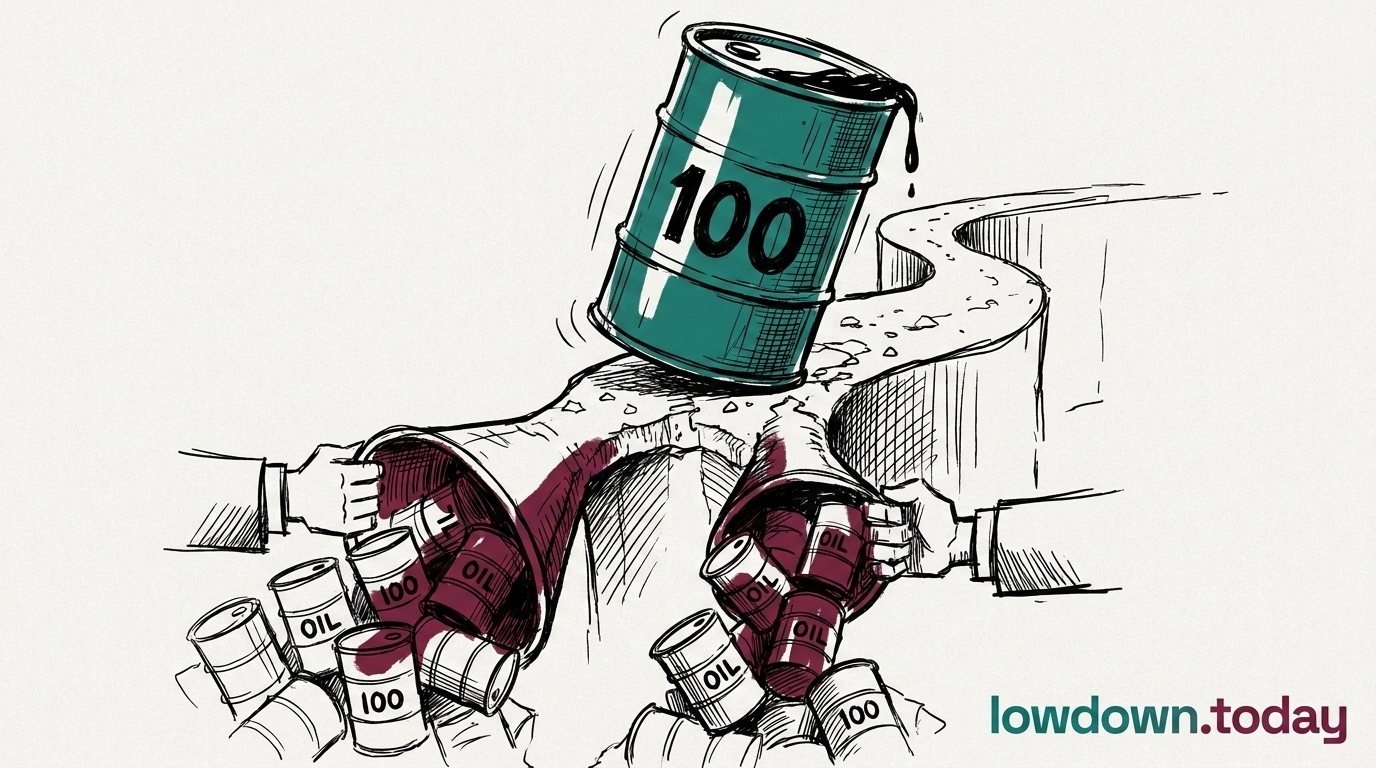
The two pipelines carry roughly 9 million barrels a day between them, against the strait's normal 20 million 2. Producers can route under half their oil around Iran's leverage, which is why a closure threat still bites even as the workaround keeps prices calm: the alternatives soften the chokepoint without replacing it.

Three Saudi very large crude carriers reactivated their transponders off Oman on 19 June, the first confirmed commercial crossings since the closure declaration 3. Days earlier those same ships had only been positioned near Hormuz, not transiting ; by 22 June they were moving cargo across the closure line itself, turning a structural hedge for Riyadh and Baghdad into a live one.

Deep Analysis

In plain English

While Iran claims to have closed the Strait of Hormuz, Gulf oil producers have been routing crude through two alternative pipelines that avoid it entirely. One runs from Iraq's Kirkuk oilfields north to Turkey's Mediterranean coast; the other crosses Saudi Arabia from east to west, ending at the Red Sea port of Yanbu. Together these carry roughly 9 million barrels a day. The problem is that this is less than half of what normally goes through Hormuz (about 20 million barrels a day). So the world can get some oil out of the Gulf via these pipelines, but not nearly enough to replace what would normally flow through the strait. That is one reason energy prices remain elevated even as they fall from their peak.

What could happen next?
  • Consequence

    The 9 million barrels per day pipeline ceiling means Asian refiners dependent on Gulf crude face a persistent supply gap until the Oman corridor delivers full restoration; Kuwait's production increase partially offsets this but at reduced margin given sub-$80 Brent.

  • Precedent

    Saudi Aramco's resumption of VLCC transits through the Oman corridor, using AIS transparency rather than dark shipping, establishes a Gulf-producer norm for Hormuz reopening: producers will transit when the route is physically safe, regardless of IRGC declaration status.

First Reported In

Update #135 · Trump's threats peak, his paper stays blank

Wikipedia / Kpler· 22 Jun 2026
Read original
Different Perspectives
India
India
India buys more Saudi crude than any other country and has 2.5 million nationals working in the kingdom, so a $100 Brent and a live strike on Saudi tankers reach New Delhi through both fuel bills and remittance risk. Neither channel has an alternative route the way Saudi Arabia's own pipeline does.
Qatar
Qatar
Qatar co-authored the four-mediator ten-day ceasefire proposal alongside Egypt, Pakistan and Oman, centred on resuming Hormuz navigation, while separately pursuing its dated compensation claim against Iran at the UN Security Council filed on 21 July. Doha is mediating and litigating in the same week.
Israel
Israel
Israeli intelligence, reported by the Wall Street Journal, assesses Iran moved thousands of centrifuges and part of its roughly 440kg enriched-uranium stock into Pickaxe Mountain after the June 2025 strikes on its three main nuclear sites. Some of the US refuelling aircraft now deploying to the region are bound for Israeli bases and Ramon Airport.
Houthis
Houthis
Yahya Saree announced the missile and drone strikes on the Encelia and Layla on 22 July as enforcement of the embargo his forces had declared by radio warning alone two days earlier. Six vessels already turned back on the broadcast; the strike shows Houthi forces will use weapons once warnings stop working.
Saudi Arabia
Saudi Arabia
Saudi Arabia's state news agency confirmed only a fire on the Encelia's bow, with the crew safe; the Layla strike remains unconfirmed by Riyadh. The kingdom built its Petroline pipeline specifically to bypass Hormuz through the Red Sea, so the tanker fire lands on the route Riyadh had already spent billions escaping.
United States
United States
Washington is weighing both ten-day proposals but wants a longer truce than either offers, and moved F-16 and F-35 jets plus refuelling aircraft into the region while it decides. That deployment, not Trump's Pickaxe Mountain remarks, is the measurable US action, buying options for the day talks fail rather than betting on them.