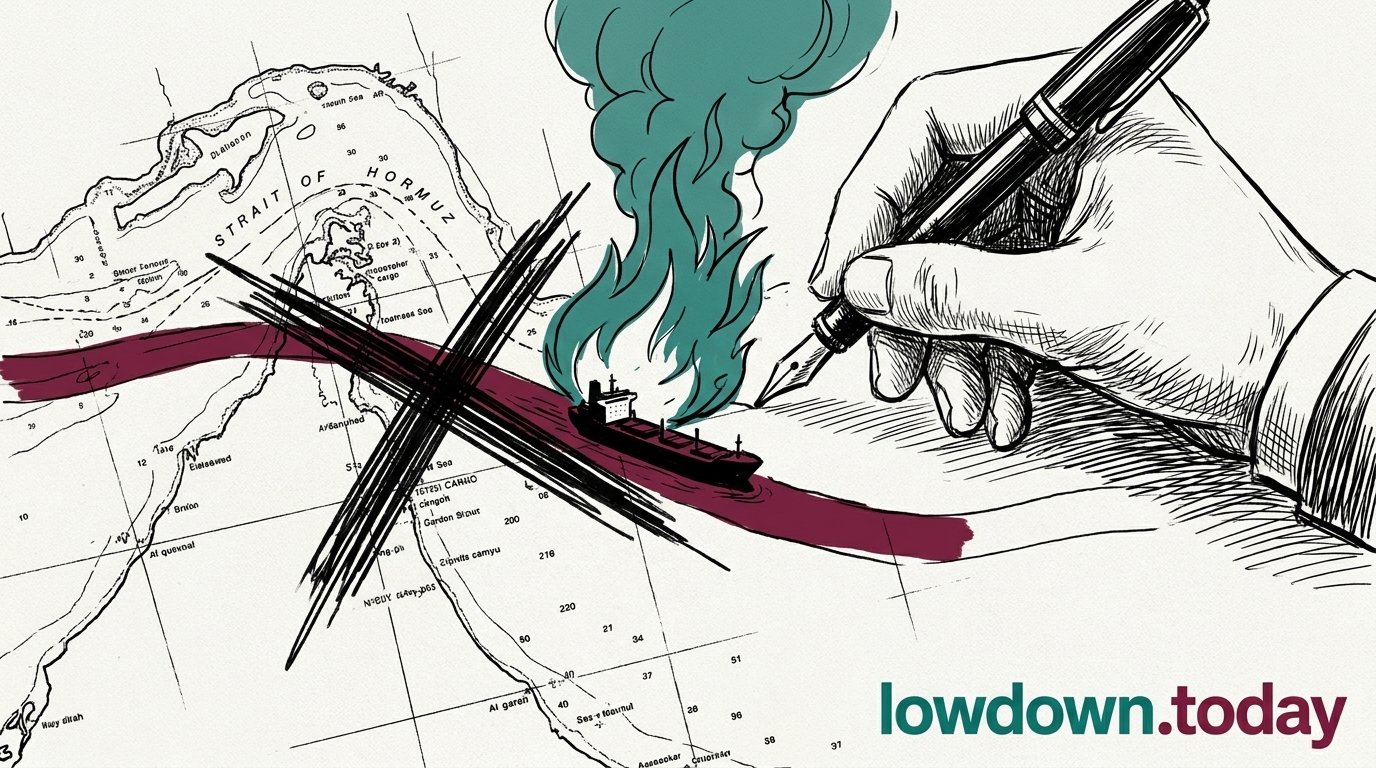
Kuwait said it would begin increasing production, and Gulf exporters drew on pipeline routes that skirt the strait of Hormuz entirely: Iraq's Kirkuk-Ceyhan line to Turkey's Mediterranean coast and Saudi Arabia's Yanbu East-West line to the Red Sea1. Both run crude out to open water without touching the waterway the IRGC has formally declared closed.
The two pipelines carry roughly 9 million barrels a day between them, against the strait's normal 20 million2. Producers can route under half their oil around Iran's leverage, which is why a closure threat still bites even as the workaround keeps prices calm: the alternatives soften the chokepoint without replacing it.
Three Saudi very large crude carriers reactivated their transponders off Oman on 19 June, the first confirmed commercial crossings since the closure declaration3. Days earlier those same ships had only been positioned near Hormuz, not transiting; by 22 June they were moving cargo across the closure line itself, turning a structural hedge for Riyadh and Baghdad into a live one.


