Skip to content
You can now search across every topic, entity and event.What's new
Iran Conflict 2026
7JUL

11,000 trapped as exit corridor shut

2 min read
09:35UTC

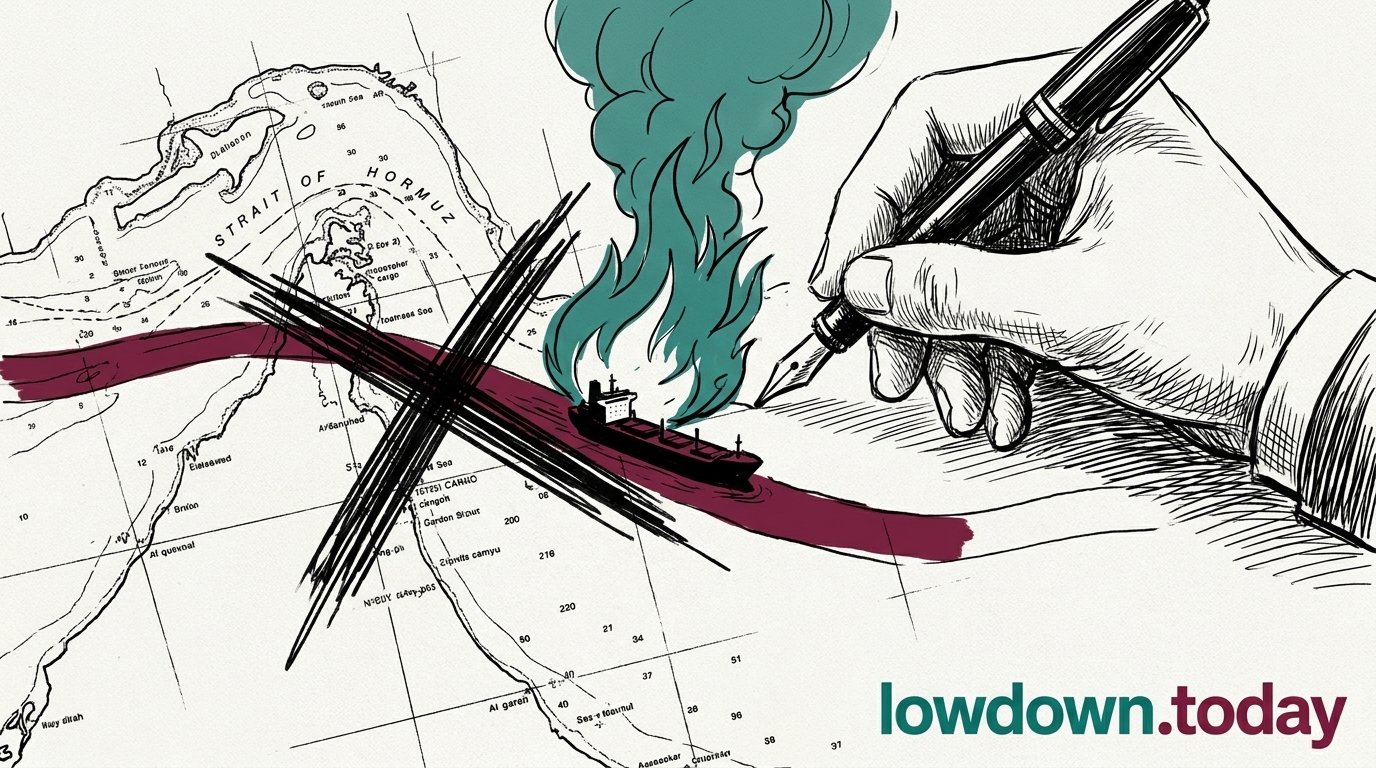
The IRGC's Persian Gulf Strait Authority suspended the IMO evacuation corridor within hours of the Ever Lovely strike, trapping roughly 11,000 seafarers; a second ship, the tanker Kiku, was hit two days later.

ConflictDeveloping
Key takeaway

Two ships hit in 48 hours, and the only sanctioned way out of the Gulf is shut.

The Persian Gulf Strait Authority (PGSA), the IRGC's maritime arm, suspended the IMO evacuation corridor within hours of the Ever Lovely strike. The move froze the only sanctioned exit for roughly 11,000 seafarers stranded across the Gulf since spring . 1

The International Maritime Organization (IMO), the UN body that regulates global shipping, had opened that corridor on 23 June for a coordinated evacuation of crews who have sat at anchor for months. The IRGC's rejection of the corridor framework on 25 June was the political predicate for the suspension. With the lane frozen, those mariners have no legal route home until it reopens.

A second vessel, the oil tanker Kiku, was struck by a projectile on 27 June, damaging its bridge. 2 Two ships hit in 48 hours sets a tempo that will deter any master from risking the lane unescorted, whatever the corridor's official status.

Deep Analysis

In plain English

Around 11,000 sailors and maritime workers from many countries have been stuck in the Persian Gulf since the conflict began, unable to leave safely. The United Nations' shipping agency had set up a special safe corridor through the Strait of Hormuz to let them get out. Iran agreed to cooperate with this corridor, but Iran's Revolutionary Guards then declared it unacceptable and the Guards' maritime enforcement arm, called the PGSA, shut it down within hours of attacking the container ship Ever Lovely on 25 June. A second ship, an oil tanker called the Kiku, was then struck by a projectile on 27 June, damaging its bridge. With two ships attacked in two days, no ship captain is willing to sail through the area without military protection, which means the trapped seafarers have no practical way home even if the corridor reopened.

Deep Analysis
Root Causes

Iran never ratified the 1982 UN Convention on the Law of the Sea (UNCLOS), which grants automatic transit passage rights through international straits. Tehran's domestic maritime law, updated in 2024, claims jurisdiction over 'hostile-linked vessels', a category broad enough to cover any flag state that has sanctioned Iran.

The corridor the IMO established operates under international norms that Iran's legal framework does not recognise, making PGSA suspension legally coherent under Iranian domestic law even as it breaches international maritime consensus.

The 11,000 stranded seafarers represent an unresolved structural consequence of the broader crisis: their evacuation was coordinated on 23 June under a framework Iran co-signed, but the IRGC's rejection of that corridor created a contradiction between the civilian government's cooperation and the IRGC's enforcement posture. The PGSA's suspension resolved that contradiction on the IRGC's terms.

Escalation

The PGSA's suspension of a humanitarian corridor, combined with the Kiku strike 48 hours later, closes the distinction between military targets and civilian seafarers. This is a qualitative escalation: previous attacks targeted vessels in transit; now the mechanism for getting stuck seafarers home has itself been taken off the table.

What could happen next?
  • Risk

    With the evacuation corridor suspended and two ships struck in 48 hours, London P&I clubs face renewed pressure to withdraw war-risk cover entirely rather than selectively, which would mean no underwriter in the Western market will insure any Hormuz crossing regardless of nationality.

    Immediate · Assessed
  • Consequence

    The 11,000 stranded seafarers become a diplomatic pressure point: any country seeking their nationals' release must negotiate directly with Tehran, fragmenting the Western sanctions coalition as individual governments open bilateral channels.

    Short term · Assessed
  • Precedent

    The PGSA's suspension of a UN-coordinated humanitarian corridor establishes that IRGC-affiliated maritime enforcement can override internationally agreed evacuation frameworks without triggering a military response, lowering the cost of future corridor disruptions.

    Long term · Reported
First Reported In

Update #140 · US bombs Iran, and the oil market shrugs

STL News· 28 Jun 2026
Read original
Different Perspectives
Oil market and P&I insurers
Brent cleared $87 intraday only once CENTCOM's blockade became physical rather than declared, even though P&I Clubs had already excluded Hormuz war risk a week earlier on 7 July: capital hedged ahead of enforcement, but prices moved only after it.
UAE reporting
UAE reporting
UAE reporting placed the Omani tanker deaths at one seafarer against the International Maritime Agency's count of two, the first time in this war that a Gulf state's casualty figures have diverged from an international monitor's.
Jordan
Jordan
Iranian strikes reached Jordan again on 14 July as part of the Gulf-wide retaliation for the Hormuz blockade, extending the conflict's geographic footprint to a state with no direct stake in the strait itself.
Bahrain
Bahrain
Bahrain sounded air-raid sirens on 14 July during Iran's Gulf-wide retaliation, the same day CENTCOM's blockade order and fourth night of strikes pushed the conflict's physical reach into the wider Gulf littoral.
Kuwait
Kuwait
Kuwait intercepted Iranian missiles and drones on 14 July as Tehran's blockade retaliation reached Gulf states beyond Iran's immediate shoreline, confirming Kuwaiti airspace now sits inside Iran's retaliatory envelope.
Oman
Oman
Oman absorbed the war's first tanker casualties in its own waters on 14 July, with two supertankers disabled and seafarers killed, putting the sultanate's shipping lanes directly in the path of the blockade fight for the first time.