Skip to content
You can now search across every topic, entity and event.What's new
Iran Conflict 2026
23JUN

Israel claims 85% of Iran's chemicals

3 min read
11:42UTC

Israel struck the South Pars gas complex on 6 April; Defence Minister Israel Katz claimed the bombing has now knocked out the bulk of Iran's petrochemical exports.

ConflictDeveloping
Key takeaway

If Katz's figure holds, Israeli bombs have done in three weeks what twenty years of US sanctions could not.

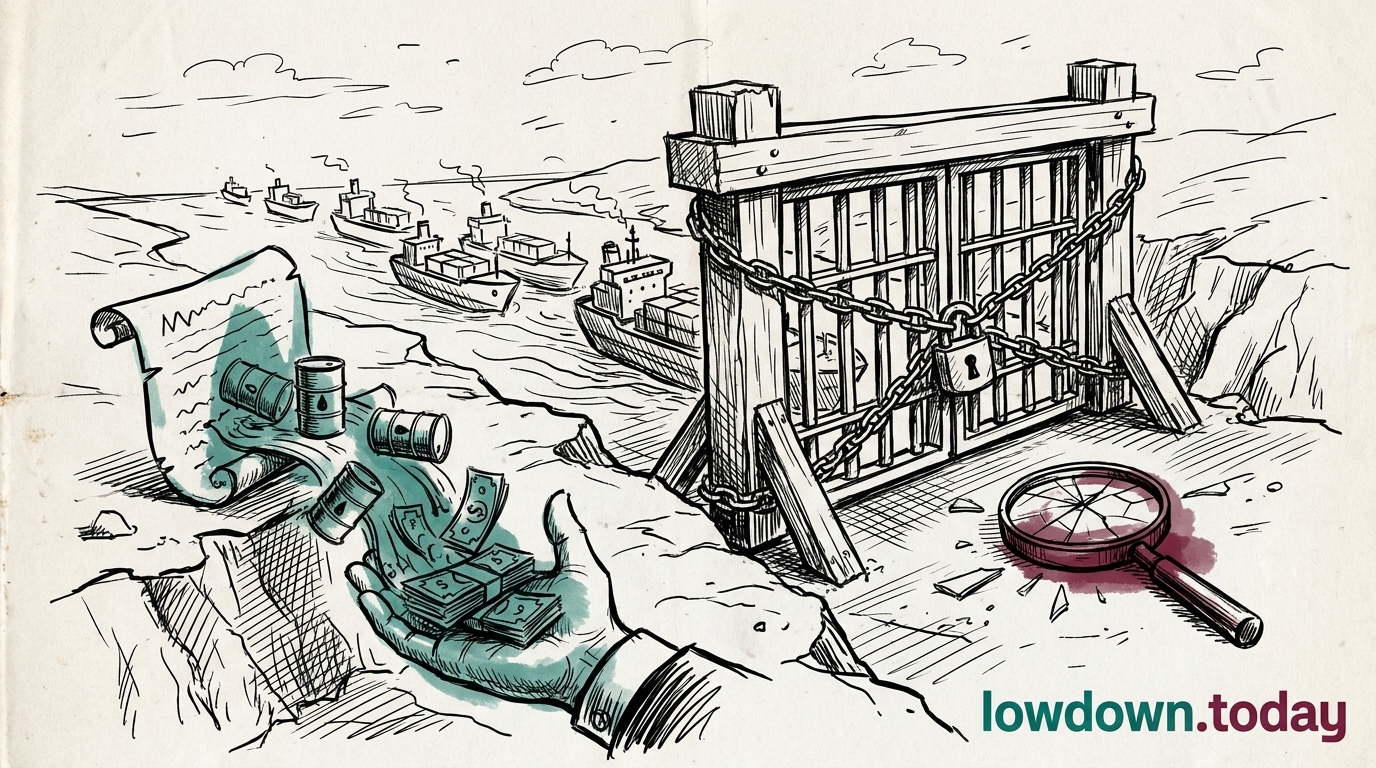
The Israel Defence Forces struck the South Pars / Asaluyeh gas complex on 6 April, Iran's largest petrochemical facility. Israeli Defence Minister Israel Katz confirmed the strike publicly and characterised it as "a severe economic blow costing Iran tens of billions of dollars" 1. Combining Asaluyeh with the Mahshahr complex hit on 5 April , Katz claimed that 85% of Iran's petrochemical export capacity is now offline. Iran has not confirmed the figure.

That figure is an Israeli government claim, not an established fact, and it should be read as such. Independent verification is constrained because Planet Labs commercial satellite imagery of Iran has been blacked out by undisclosed US government order since 9 March , removing the principal external check on damage assessments from either side. Iran's pre-war petrochemical exports earned roughly $14 billion a year in hard currency, and Tehran has not announced a replacement revenue stream as the strikes accumulate.

If Katz's number is accurate, the tools Washington spent two decades building are now being outperformed by the bombs of an ally Washington was supposed to be restraining. South Pars is jointly operated with Qatar, which calls its half North Dome. A strike that compounds pressure on Doha lands in the same week Doha refuses to mediate. The two facts may be unrelated. Neither side is treating them that way.


Deep Analysis

In plain English

South Pars is Iran's largest gas and petrochemical complex, and Iran's most valuable single economic site , roughly equivalent to attacking Britain's entire North Sea production in a single strike. Israel hit it on 6 April, a day after hitting the Mahshahr complex, and Israel's defence minister claimed the two strikes together have knocked out 85% of Iran's ability to export petrochemicals. That figure has not been independently verified: a US government order has blocked commercial satellite imagery of Iran since 9 March, so there is no external check. The strikes may be the most economically consequential of the war; we will not know the true damage figure until the blackout lifts.

Deep Analysis
Root Causes

South Pars is Iran's most important single economic asset: jointly operated with Qatar's North Dome field, it accounts for the majority of Iran's natural gas production and a disproportionate share of its petrochemical export earnings.

The IDF struck it because its symbolic and economic weight exceeds that of any comparable target, and because the Planet Labs blackout , an undisclosed US government order since 9 March , removed the principal check on independent damage assessment that would otherwise constrain Israeli strike claims.

Escalation

The South Pars strike raises the structural stakes of any Iranian retaliation: hitting Qatar's shared North Dome infrastructure would constitute an attack on a non-belligerent Gulf state hosting US forces, crossing a threshold that has deterred Iran throughout the conflict. Tehran's retaliation options are therefore constrained precisely because the most economically symmetrical response carries the highest escalation risk.

What could happen next?
  • Consequence

    If the 85% figure is directionally accurate, Iran's hard-currency earnings have been structurally compressed in a way that two decades of US sanctions failed to achieve, increasing pressure on Tehran's ability to fund a prolonged conflict.

  • Risk

    Iran's most economically symmetrical retaliation , striking Qatar's North Dome , would constitute an attack on a US-base-hosting Gulf state, meaning the strike has constrained rather than widened Tehran's options for a proportionate response.

First Reported In

Update #61 · Carriers retreat; Iran codifies Hormuz

OFAC/US Treasury· 7 Apr 2026
Read original
Different Perspectives
Turkiye
Turkiye
Erdogan followed the Pakistani delegation to Jeddah for an instrument that has not been signed. Ankara's entry widens Saudi Arabia's defence architecture beyond the existing Pakistan pact, adding a second non-Gulf military partner mid-conflict.
Oman
Oman
Muscat is the corridor's broker but has published nothing about the arrangement Fars describes on its behalf. The account leaves Oman administering outbound traffic only, a narrower role than the shared route its mediation has rested on since 1979.
Pakistan
Pakistan
Islamabad sent Sharif, Munir and Dar to Jeddah to widen a defence commitment it has honoured in cheaper registers since March, when Dar invoked the Saudi mutual defence pact. Jeddah tests whether that hedge becomes a binding trilateral instrument with Turkiye.
United States
United States
Washington rejected the Majlis Hormuz bill outright while CENTCOM's own tally kept climbing to 49 vessels redirected since 14 July. Both instruments tightened in the same week Trump promised the strait would reopen soon.
Iran
Iran
Iran's foreign ministry is selling a phased Hormuz corridor through Oman and denying any percentage cargo tariff, while its own Majlis is legislating fines to 20% and a bar on Israeli-linked cargo. The two accounts, from the same government, do not agree with each other.
Saudi Arabia
Saudi Arabia
Riyadh published a target forecast, not an attribution, for the campaign it says the Najran strike previewed. That keeps an Article 51 case available while it formalises a trilateral defence architecture with Pakistan and Turkiye.



