Skip to content
Briefings are running a touch slower this week while we rebuild the foundations.See roadmap
Iran Conflict 2026
8JUN

Pentagon gives Congress Hormuz clock Trump has not

3 min read
09:58UTC

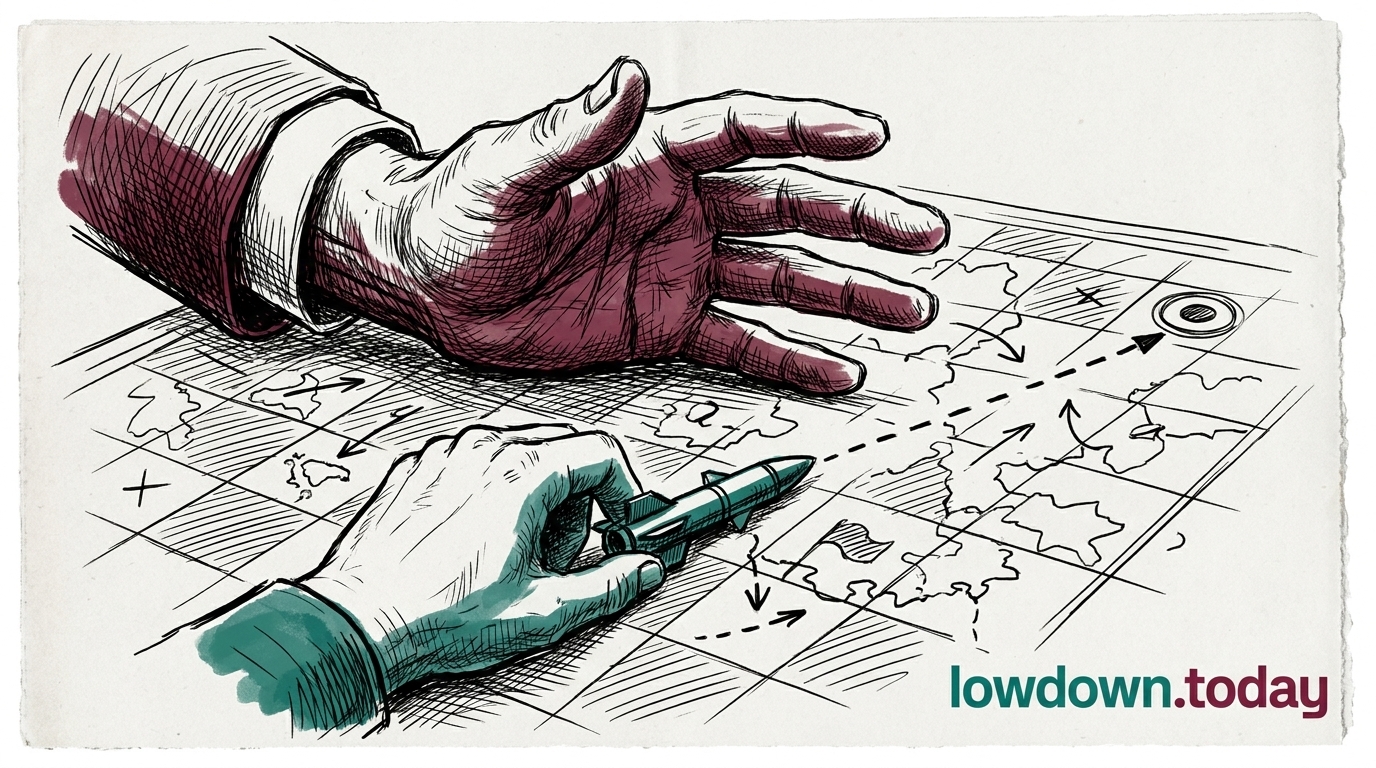
A senior Defence Department official told a classified House Armed Services Committee (HASC) briefing on 22 April that clearing Iranian mines from the Strait of Hormuz could take up to six months and would not begin until the war ends.

ConflictDeveloping
Key takeaway

The Pentagon's six-month clearance estimate outlasts any televised ceasefire and quantifies a strait that stays half-closed through Q4.

The Pentagon told the House Armed Services Committee on 22 April that clearing Iranian mines from the Strait of Hormuz could take up to six months, and that no clearance operations will begin until the war ends, according to Washington Post reporting 1. Democrats and Republicans left the classified session frustrated. No US mine-clearance vessels have been staged.

The briefing lands inside a 36-day gap. The White House presidential-actions page, fetched on 23 April, still records zero signed Iran instruments since the 18 March Aker BP determination. Five domestic-energy Presidential Determinations cleared on 20 April while none touched the Iran file. What the executive has not signed, the military has now quantified in months.

The timeline hardens Goldman Sachs's $120 per barrel Q3 scenario from bank model into defence assumption, and compounds the 19 April lapse of OFAC's GL-U general licence that had covered already-loaded Iranian crude. Any deal Trump signs tomorrow leaves the strait fully navigable no earlier than October.

Deep Analysis

In plain English

After Iran mined the Strait of Hormuz, about 20% of the world's oil stopped flowing through that narrow passage. The Pentagon told US lawmakers it would take up to six months to clear those mines after fighting stops, and won't even start until the war is over. Think of it like a road littered with buried bombs. You can't reopen the road until you've found and removed every device, and finding them takes longer than removing them. Some of Iran's mines weren't placed with GPS-precision, so the clearing teams would first have to survey the entire seabed before they know what to remove. For drivers and households, this means oil prices could stay elevated for at least six months after any peace deal, because the strait that carries a fifth of global oil supply can't be safely reopened on the day a ceasefire is signed.

Deep Analysis
Root Causes

US mine-countermeasures capability shrank after 2001 as the Navy shifted budget to counter-terrorism and blue-water projection. The 2010 Quadrennial Defense Review cut the Avenger-class fleet from 26 vessels to 11 active, with 8 forward-deployed to Bahrain. The shortfall was flagged by USNI Proceedings in 2022 and again by the Congressional Research Service in 2024, but procurement was not accelerated.

Iran's mines pose a compounding problem: Tehran deployed a mixed inventory of Maham-3 moored contact mines and Maham-7 seabed limpet devices without systematic placement logging, meaning post-war clearance requires hydrographic survey before sweeping begins. Any settlement that leaves mines in place is commercially inoperable; shipping insurers will not cover transits until a government certifies the strait as clear.

What could happen next?
  • Consequence

    Any Iran ceasefire deal leaves oil prices structurally elevated for six months of mine clearance, preventing the price relief markets and importing governments expected from a settlement.

    Medium term · 0.82
  • Risk

    Congress may tie the 29 April War Powers Resolution debate to the six-month clearance timeline, using it to argue the conflict cannot end without a formal executive instrument authorising the post-war naval mission.

    Immediate · 0.65
  • Precedent

    The classification of the mine-clearance estimate as a congressional briefing rather than a public statement gives the White House flexibility to later claim different timelines without contradicting the official record.

    Short term · 0.6
First Reported In

Update #77 · Pentagon: six months to clear Hormuz mines

Washington Post· 23 Apr 2026
Read original
Different Perspectives
Bahrain / Gulf partners
Bahrain's PAC-3 interceptor magazine sits at 87% depletion after absorbing IRGC salvos aimed at US bases; no resupply is scheduled before 2027, concentrating the intercept burden on US assets and Israeli Iron Dome and Arrow-3.
IAEA / Vienna process
IAEA officials cited proliferation concerns over 440.9 kg of HEU unaccounted for after 97 days without inspector access; the Board session that opened 8 June cannot retroactively close the evidentiary gap its own resolution documents.
China
China
China absorbed the Shanghai Qianye designation by OFAC and opposes censure at the IAEA Board, arguing the verification gap was created by strikes rather than Iranian non-compliance, a framing it shares with Russia to protect the non-Western bloc's Board votes.
Russia
Russia
Putin reaffirmed at SPIEF on 6 June his offer to hold Iran's uranium stockpile as custodian, a proposal the IAEA's 97-day verification gap now renders undeliverable: no one can transfer or confirm a stockpile that has not been inspected.
United States / Trump administration
Trump publicly asked Netanyahu not to retaliate and described a deal as 95% done; Rubio then acknowledged enrichment terms could take months. The 24-hour gap between the request and the Mahshahr strike removes the credible-restraint argument from US diplomatic leverage with Tehran.
Israel / Netanyahu government
Netanyahu struck the Mahshahr complex and missile sites inside Iran within 24 hours of Trump's public no-retaliation request, a second kinetic override of US counsel that confirms Israel will not allow Tehran to dictate the terms of the exchange.