Skip to content
Briefings are running a touch slower this week while we rebuild the foundations.See roadmap
Iran Conflict 2026
29MAY

Araghchi denies Hormuz obstruction at BRICS Delhi

3 min read
08:47UTC

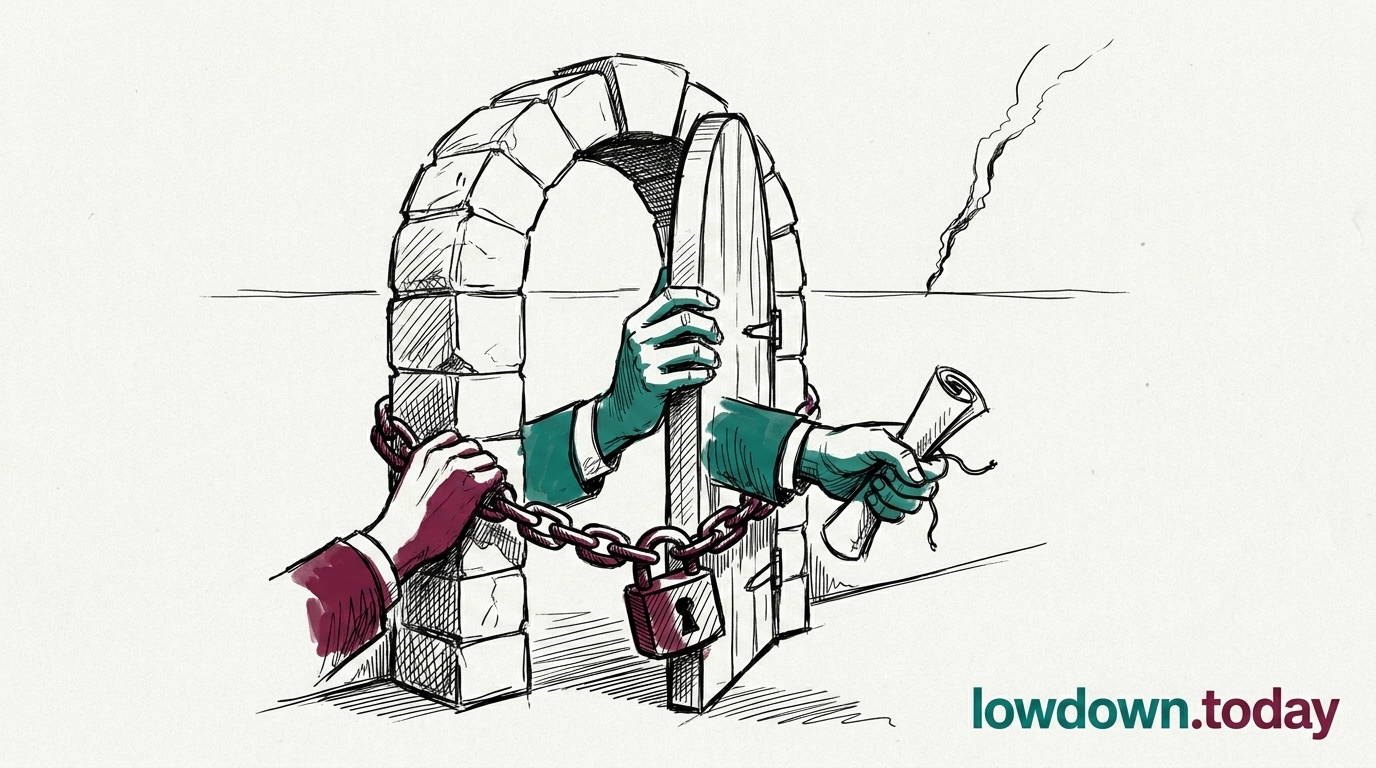
Iranian Foreign Minister Abbas Araghchi told BRICS foreign ministers in New Delhi on 14 May that Iran has not created any obstacles in the Strait of Hormuz, one day after Iran's Supreme National Security Council finalised a formal Hormuz security plan.

ConflictDeveloping
Key takeaway

Araghchi denied Hormuz obstruction at BRICS the day after Iran's SNSC finalised a formal control architecture for the strait.

Abbas Araghchi, Iran's Foreign Minister, arrived in New Delhi on 14 May having announced his attendance at the BRICS (the Brazil-Russia-India-China-South Africa grouping, a multilateral forum for non-Western powers) foreign ministers meeting the previous day . In his address, he told the assembled ministers that Iran "has not created any obstacles in the strait of Hormuz" 1. The claim was structured for a non-Western audience and delivered one day after Iran's Supreme National Security Council finalised a formal Hormuz security plan that operationalises the transit toll and corridor regime.

Deputy Foreign Minister Ali Bagheri Kani, accompanying Araghchi in Delhi, called on BRICS states to act "against US aggression." South China Morning Post reported Iran's anti-American rhetoric was testing India's balancing posture 2. India is the largest non-Chinese user of Iranian-routed crude, with domestic political constraints that make open endorsement of Araghchi's framing costly; Delhi is expected to prioritise de-escalation language over bloc confrontation in the final communique.

The Persian Gulf Strait Authority (PGSA), established on 5 May, requires vessels to register, pay a transit toll in Chinese yuan, and adhere to a designated corridor . Tehran frames those requirements as regulatory, not obstructive; Araghchi's Delhi statement carries that framing to a non-Western audience that has not signed up to Washington's counter-position. The denial is designed to hold simultaneously with the operational architecture. Iran had also declared no US weapons may transit Hormuz into regional bases, announced the same day as Araghchi's denial, adding a new operational constraint while the Foreign Minister described a strait without obstacles.

The BRICS stage gives Tehran a non-Western readership that is both sympathetic and practically important. Whether the BRICS communique adopts Araghchi's "no obstacles" framing or remains neutral on the transit regime question is one of the key diplomatic tests of the Delhi meeting.

Deep Analysis

In plain English

The BRICS group, which includes Brazil, Russia, India, China, and South Africa, is a forum where non-Western countries coordinate positions. Iran's foreign minister went to their meeting in New Delhi on 14 May and told them Iran was not blocking the Strait of Hormuz. The day before, Iran's own security council had approved a formal plan to control the strait with tolls and corridors. Iran told the BRICS audience one thing and did another thing at home. The key question now is whether India, which chairs BRICS and buys a lot of Iranian oil, will back Iran's framing or stay neutral.

Deep Analysis
Root Causes

Iran's need to maintain non-Western alignment while the bilateral US-Iran track operates through Pakistan reflects a domestic constraint: Mojtaba Khamenei's government cannot be seen to negotiate with Washington without simultaneously demonstrating non-Western solidarity. The BRICS presence is a legitimacy-maintenance exercise for the domestic audience, not a negotiating move directed at Washington.

The structural tension between Araghchi's "no obstacles" claim at BRICS and the SNSC's written Hormuz security plan produced one day earlier is resolved by audience separation: the denial is for BRICS consumption, the written architecture is for operational and legal purposes. Both can coexist because they address different audiences on different registers.

What could happen next?
  • Consequence

    BRICS communique language on Hormuz will reveal India's positioning: adoption of Iran's 'no obstacles' framing would give the PGSA toll regime non-Western multilateral cover; de-escalation language would leave Iran's regulatory framing without BRICS endorsement.

  • Risk

    Bagheri Kani's call for BRICS states to act against US aggression tests India's chair neutrality at a time when Delhi has maintained public silence on US Iran sanctions targeting Indian firms in the Shamkhani network.

First Reported In

Update #97 · Chips for Beijing, no paper for Iran

South China Morning Post· 14 May 2026
Read original
Different Perspectives
Qatar
Qatar
Qatar holds approximately $12 billion in frozen Iranian assets that Tehran named as the precondition for any Hormuz reopening sequence; with Oman sidelined and no agreed HEU custodian, the asset-routing architecture that any deal requires has no operational channel and no neutral financial intermediary to run it through.
Hengaw and Iranian civilian population
Iranians face an internet capped at 40 per cent by hardware their president cannot dismantle, field killings that leave no court record, and judicial executions running in parallel; Hengaw, based in Norway, is the primary remaining monitor of a repression system the IRGC is deliberately moving beyond auditable records. The real toll is higher than any single monitor's count.
China
China
China supplied deep-packet-inspection hardware that caps Iran's internet at 40 per cent and enables an instant on-demand blackout, and was barred by Trump as a potential HEU custodian on 27 May. Beijing gains from Iran's continued non-alignment with the West while the DPI sale extends Chinese surveillance-technology exports as a geopolitical instrument.
Pakistan
Pakistan
Foreign Minister Ishaq Dar met Rubio in Washington on 29 May, formally inheriting the role of sole active mediator after Oman's forced withdrawal. Pakistan lacks Oman's banking infrastructure for frozen-asset routing and carries its own regional stakes, making it a less structurally neutral broker for the Qatar-held $12 billion sequencing.
Kuwait
Kuwait
Kuwait invoked Article 51 of the UN Charter after absorbing an Iranian ballistic-missile strike on Ali Al Salem Air Base on 28 May, becoming the first Gulf state to make a formal individual self-defence claim in the war. The invocation creates a legal record enabling a future bilateral defence-pact activation without yet triggering it.
Oman
Oman
Oman denied any Hormuz toll plan within hours of Bessent's 28 May threat, absorbing a sanctions warning from the country it has brokered for since 1981. The rapid capitulation preserved the channel formally, but Tehran now knows Washington will threaten its own mediator, which changes Muscat's calculus on how far it can lean into any joint-management architecture.