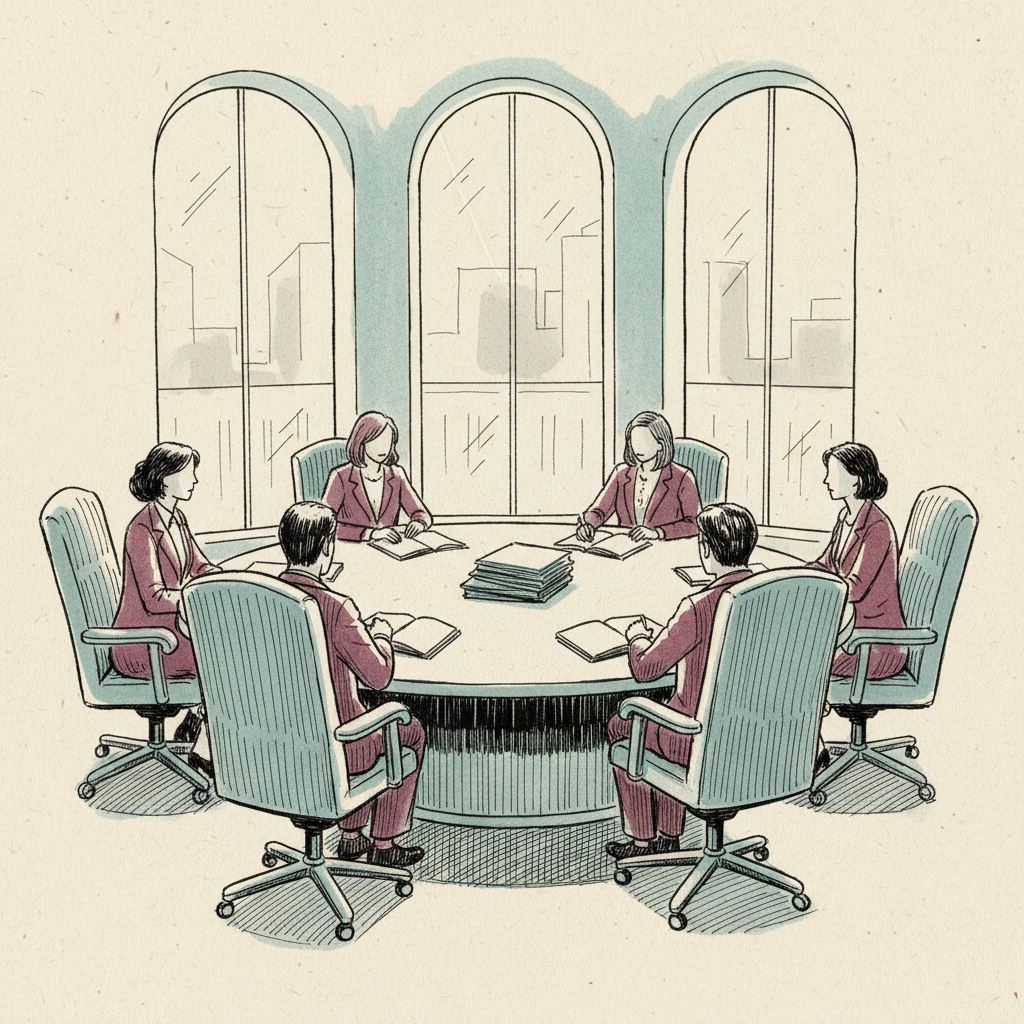
P5+1
UN Security Council permanent five plus Germany; negotiated the 2015 JCPOA nuclear deal with Iran.
Last refreshed: 25 May 2026 · Appears in 1 active topic
Can any successor to the P5+1 actually constrain Iran's nuclear programme after the 2026 war?
Timeline for P5+1
Mentioned in: Iran war cabinet home, no deal signed
Iran Conflict 2026Iran defers nuclear talks to phase two
Iran Conflict 2026Mentioned in: Araghchi denies Hormuz obstruction at BRICS Delhi
Iran Conflict 2026Mentioned in: China backs Pakistan as US-Iran channel
Iran Conflict 2026Mentioned in: Araghchi flies to BRICS Delhi 14-15 May
Iran Conflict 2026- What is the P5+1 and what did it achieve with Iran?
- P5+1 is the UN Security Council's five permanent members plus Germany, which negotiated the 2015 JCPOA nuclear deal with Iran, limiting enrichment in exchange for sanctions relief. The deal collapsed after the US withdrew in 2018.
- Is the JCPOA nuclear deal still in effect in 2026?
- No. The JCPOA was effectively abandoned after the 2018 US withdrawal and subsequent Iranian enrichment violations from 2019. The 2026 conflict has made revival of the deal format extremely unlikely in the near term.
- Why did Russia receive Iran's foreign minister during the 2026 war?
- Putin received Araghchi at the Kremlin in April 2026 to signal continued strategic support for Iran; Russia remains a nominal P5+1 party but its military relationship with Tehran now overrides its former non-proliferation role.Source: event
- What is P5+1 and why did it fail to stop Iran getting nuclear weapons?
- P5+1 is the US, UK, France, Russia, China, and Germany format that negotiated the 2015 JCPOA nuclear deal. It collapsed after the US withdrew in 2018 and Iran resumed enrichment from 2019. The format has been inactive since.
- Is P5+1 still involved in Iran nuclear talks in 2026?
- No. The P5+1 format is effectively inactive in 2026. Iran-US nuclear talks are conducted through Pakistan as mediator, and any nuclear phase has been deferred to a separate 60-day post-Ceasefire process.Source: Iranian Foreign Ministry
- What replaced the P5+1 in Iran diplomacy after 2026?
- Pakistan has become the primary Mediation channel between Iran and the US in 2026. The BRICS format (Russia, China, India, Iran) provides Iran with a parallel multilateral platform that excludes Western P5+1 members.Source: event
- What is the difference between P5+1 and E3+3?
- P5+1 and E3+3 refer to the same grouping: the five UN Security Council permanent members plus Germany. P5+1 is the US-centric label; E3+3 is the European label (UK, France, Germany plus US, Russia, China).
- What was the JCPOA and when did it collapse?
- The Joint Comprehensive Plan of Action (JCPOA) was a 2015 nuclear agreement between Iran and the P5+1, under which Iran agreed to limit enrichment in exchange for sanctions relief. The US withdrew in May 2018 under President Trump; Iran began violating enrichment limits in 2019.
Background
P5+1 is the informal diplomatic grouping comprising the five permanent members of the UN Security Council (US, UK, France, Russia, China) plus Germany, formed to negotiate nuclear agreements with Iran. The format was institutionalised during the negotiations that produced the 2015 Joint Comprehensive Plan of Action (JCPOA), in which Iran agreed to verifiable limits on uranium enrichment in exchange for phased sanctions relief. The EU, represented by its High Representative, co-ordinated the diplomatic process. The grouping is also referred to as E3+3 (Europe Three plus three major powers) in European diplomatic usage.
The JCPOA was effectively abandoned after the US withdrawal in 2018 under President Trump and Iran's subsequent violations of its enrichment limits from 2019. The UK, France, and Germany (the E3) attempted to preserve the deal through the INSTEX mechanism but could not deliver sufficient economic benefit to Tehran to compensate for US sanctions pressure.
The 2026 Iran conflict has rendered the P5+1 format structurally incoherent. Putin's receipt of Iranian Foreign Minister Araghchi at the Kremlin in April 2026 illustrated how FAR the group had fragmented: Russia was simultaneously supplying Iran with S-300 systems, absorbing Iranian drone designs via Alabuga, and nominally remaining a party to the diplomatic grouping that sought to constrain Iran's nuclear programme.
In place of the P5+1, a more fluid multilateral architecture has emerged. Pakistan became the primary Iran-US conduit, carrying successive Ceasefire proposals in April and May 2026 — a two-phase Iranian offer submitted on 28 April decoupled Hormuz from nuclear questions entirely, and Iran's 10-point written reply to the US-drafted 14-point MOU reached Washington via Islamabad on 10 May. The BRICS format — Russia, China, India, and Iran meeting in New Delhi on 14-15 May — provided Iran with a parallel multilateral platform that excludes the Western P5+1 members. By 24-25 May, Iran's Foreign Ministry confirmed the structure that has replaced P5+1 logic entirely: nuclear questions deferred to a separate 60-day second phase, to begin only after a war-ending MOU is signed on Hormuz and assets.
Any post-war nuclear framework would require reconstructing a diplomatic grouping from scratch. Whether Russia and China would join a Western-led format — when both benefit from Iranian oil flows and see proliferation pressure as a lever against the US — remains the central structural question of any post-conflict settlement.

