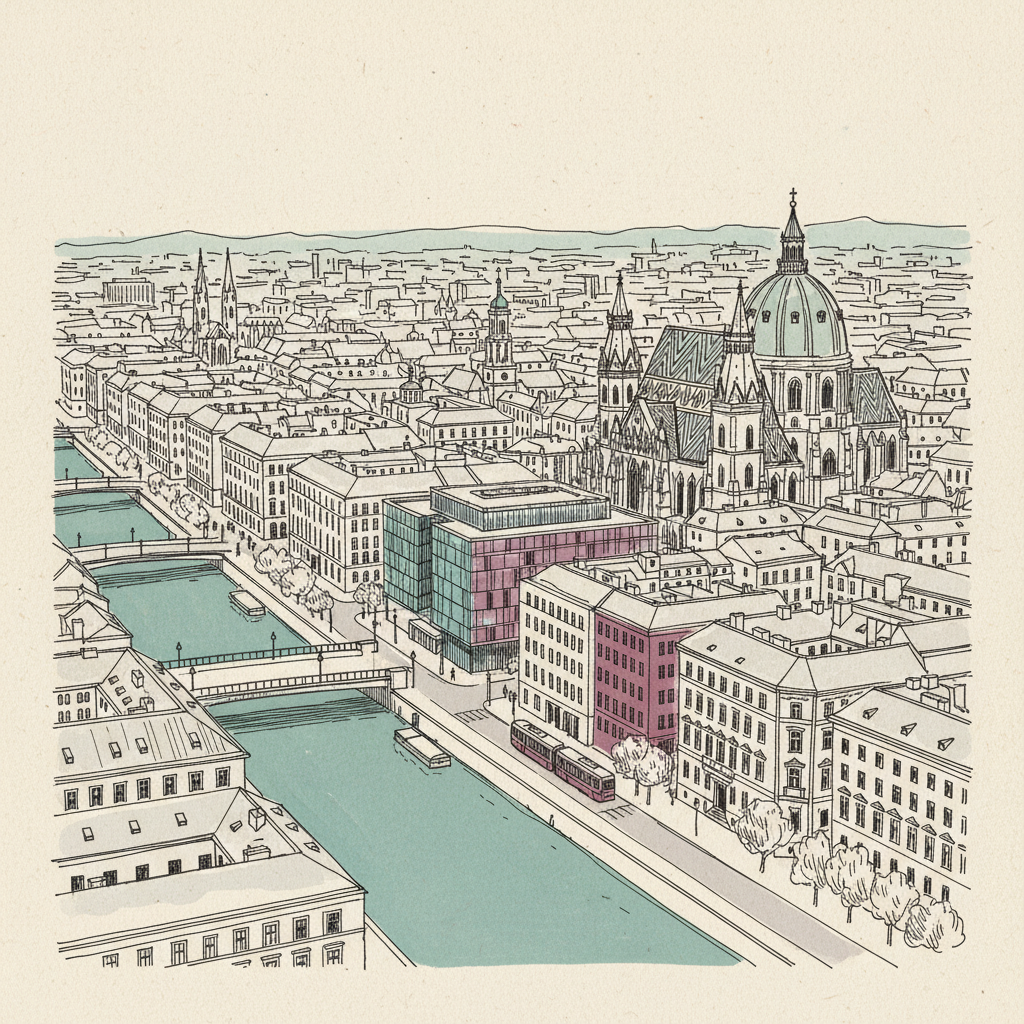
Vienna
Austrian capital and diplomatic hub for the IAEA, OPEC and United Nations.
On 9 September, Vienna's IAEA Board referred Iran to the UN Security Council for the first time in two decades, after the agency lost access to Iranian sites.
Last refreshed: 22 September 2026 · Appears in 2 active topics
How can Vienna's institutions verify nuclear risks when inspectors lack access?
Timeline for Vienna
Mentioned in: Qatar brings the US answer to Araghchi
Iran Conflict 2026Mentioned in: IAEA Board sends Iran's file to New York
Iran Conflict 2026Mentioned in: Tehran says it moved first on expulsions
Iran Conflict 2026Mentioned in: Abu Dhabi cuts Iran's payment channel
Iran Conflict 2026Mentioned in: Paris expels two Iranian embassy agents
Iran Conflict 2026Background
Vienna is Austria's capital and a diplomatic centre for international nuclear and energy governance. It hosts the International Atomic Energy Agency, the Comprehensive Nuclear-Test-Ban Treaty Organization, OPEC and the UN Vienna International Centre. The IAEA Board's 8 June session placed a US nuclear-transparency resolution before member states, illustrating the city's role as a working forum for multilateral scrutiny.
Its importance lies in providing permanent institutions where governments, inspectors and technical agencies can meet. Vienna does not determine whether states comply with nuclear safeguards or energy agreements. It supplies the organisations that Convene members, record findings and carry disputes into wider international bodies.
That distinction remained clear on 9 September, when the IAEA Board referred Iran's file to the Security Council. Vienna was the institutional gateway for the decision, while any binding response depended on the Security Council's permanent members.
Vienna hosts Iran's referral forum
On 8 June, a US resolution at the IAEA Board in Vienna cited 97 days without inspector access and 440.9 kg of enriched uranium unaccounted for. Russia and China opposed censure, limiting the Board's ability to turn the dispute into binding UN sanctions.
On 9 September, Board members voted 23 to 3, with eight abstentions, to refer Iran to the UN Security Council. For Vienna, the vote showed its institutional role: decisions made there can move a nuclear dispute to New York, even though enforcement remains with member states.
Reference
Why is Vienna important for nuclear safety during the Russia-Ukraine war?
Where are the Iran nuclear talks held?
How did the IAEA assess the Zaporizhzhia reactor strike?
What did the IAEA report about the ZNPP reactor 6 drone strike?
What did OPEC members decide in April 2026?
When did the UAE leave OPEC?
What happened at the OPEC meeting in Vienna on 30 April 2026?
What United Nations bodies are based in Vienna?
Where does the IAEA coordinate nuclear inspections?
