Skip to content
You can now search across every topic, entity and event.What's new
European Oil Markets
26MAY

Seven Ships Cross Hormuz, No Oil Tankers

3 min read
08:52UTC

IRGC / Lloyd's List Intelligence

EconomicDeveloping
Key takeaway

Seven ships in 24 hours is a checkpoint, not a reopening.

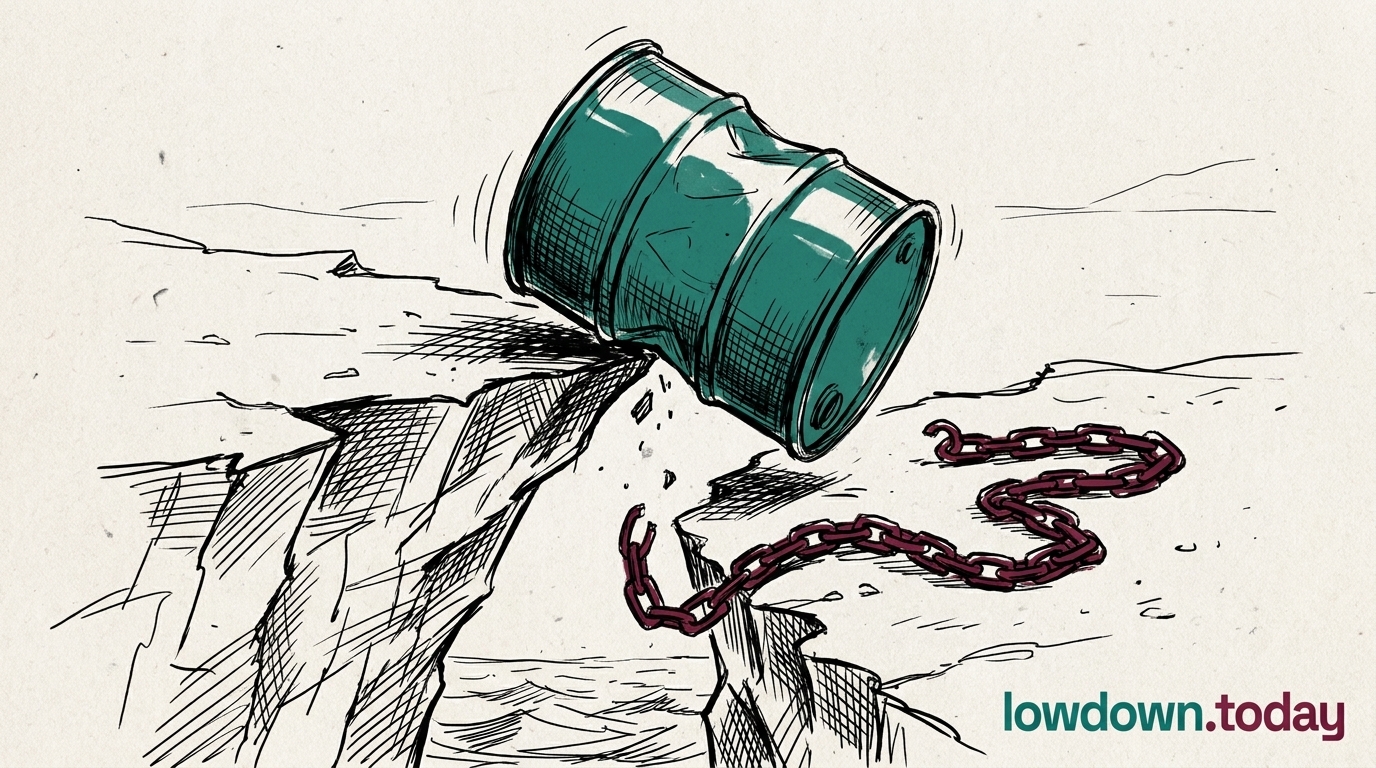
Seven ships transited the Strait of Hormuz on ceasefire Day 3. None were oil tankers. 325 oil tankers and more than 600 vessels remain stranded inside the Persian Gulf. Iran's toll system had reached 20 transits per day before the ceasefire ; seven is a regression, not a recovery. The pre-war baseline of 135 per day illustrates the distance to normalisation.

Iran's inspection and ban regime transforms the strait from an international waterway into a customs border. Ships linked to Israel are excluded; tolls are reportedly payable in cryptocurrency. The IRGC (Islamic Revolutionary Guard Corps) mine charts published on 9 April direct all traffic through corridors near Larak Island under IRGC naval control. Oman formally refused the toll regime, citing international maritime treaty obligations, but Omani vessels still face the same inspection process.

ADNOC CEO Sultan Al Jaber put it plainly: "Passage is subject to permission, conditions and political leverage." Goldman Sachs issued revised scenarios: $82 per barrel base if Hormuz resumes this weekend, $100+ if closed another month, $120 severe. Every day without mine clearance normalises the toll regime that preceded the ceasefire .


Deep Analysis

In plain English

Before the war, about 135 ships passed through the Strait of Hormuz every day, carrying 20% of the world's oil. On Day 3 of the ceasefire that was supposed to reopen it, only seven ships passed and none were oil tankers. 325 tankers are sitting stuck inside the Gulf waiting. Iran is charging fees, banning some ships, and controlling who gets through. The UN tried to force the strait open; Russia and China blocked it.

Deep Analysis
Root Causes

Iran's closure of Hormuz reflects a shift from opportunistic disruption to structural leverage doctrine. The toll system represents a permanent claim to sovereign authority over an internationally recognised strait — the same claim it made unsuccessfully in the 1980s. The ceasefire has preserved the toll regime rather than ending it, which is Iran's primary economic gain from the war regardless of nuclear outcome.

China and Russia's UNSC veto removes multilateral enforcement. Without that mechanism, Hormuz reopening requires either a bilateral US-Iran deal that explicitly addresses the toll regime, or unilateral US naval action. The Trump administration has so far declined both.

What could happen next?
  • Consequence

    Every day without mine clearance normalises Iranian toll authority over an internationally recognised strait, making restoration of UNCLOS freedom of navigation progressively harder to claim without confrontation.

    Short term · Assessed
  • Risk

    GL-U expiry on 19 April would recriminalise 325 stranded tankers' cargo before the ceasefire even ends, forcing operators to choose between legal jeopardy and abandoning cargo.

    Immediate · Assessed
  • Consequence

    China's tankers already transit under the toll regime; its UNSC veto locks in a competitive advantage over Japanese, South Korean, and European shippers for as long as the regime persists.

    Medium term · Assessed
First Reported In

Update #64 · Islamabad talks open already cracked

Iran International· 10 Apr 2026
Read original
Different Perspectives
Greek shipping registries
Flag states dominating the tanker fleet await the EU's 15 July cap-freeze vote. A formula unlock toward $75 would loosen the ceiling squeezing insurance and crewing costs on their registered hulls.
US money managers
US money managers
NYMEX WTI managed-money net long fell 23% to +64,041 in the week to 7 July, trimming length into the rally on doubt the Hormuz premium survives without freight or war-risk confirmation.
European refiners (ARA)
ARA refiners are capturing an $80/bbl US diesel crack as Russian gasoil loadings collapsed to 234kbd before Novak's 31 July export ban even bites, widening the arbitrage straight into refining margins.
OPEC+
OPEC+
The seven-member group confirmed a fourth consecutive 188kbd August hike on 5 July, defending market share even though Saudi Arabia's $108-111/bbl breakeven means every added barrel costs Riyadh revenue it cannot recoup.
Indian refiners
Indian refiners
Refiners kept lifting discounted Urals as the India/Baltic split widened past $9-10 a barrel on 7 July. A wider Urals-Brent gap means cheaper feedstock locked in against Baltic buyers.
Russia
Russia
Urals traded $48.95-55.12 on 12-13 July, below Moscow's $59 budget floor even as Brent gained $6. Oil and gas fund roughly 30% of federal revenue, and Novak's diesel export ban is rationing a shrinking export base.



