Skip to content
You can now search across every topic, entity and event.What's new
Iran Conflict 2026
8APR

Hormuz toll system carried 20 transits per day before ceasefire

1 min read
09:27UTC

Eleven flag states had paid the toll to transit by 5 April; the ceasefire ratifies the operating model.

ConflictDeveloping
Key takeaway

The toll system Iran built was already running before the ceasefire; the ceasefire just labelled it.

The 20 daily transits across 11 flag states are the operational reality the ceasefire's 'coordinated passage' clause now ratifies. Iran's permanent customs authority over the strait, legislated in late March , turned out to be the architecture both sides have now signed onto.

The recovery from near-zero transits in late March to 20/day by 5 April happened through individual bilateral toll deals, not through any US enforcement action. Trump's Truth Social formulation that the US 'will be helping with the traffic buildup in the strait of Hormuz' aligns the rhetoric with the operating reality.

Deep Analysis

In plain English

Eleven countries had already been paying Iran for permission to send ships through the Strait of Hormuz before the ceasefire was signed. Twenty ships went through per day on 5 April, compared to about 138 a day before the war. The deal Trump just signed says Iran will keep doing exactly this for two weeks.

What could happen next?
  • Precedent

    The toll system is operating practice and now codified in the ceasefire.

First Reported In

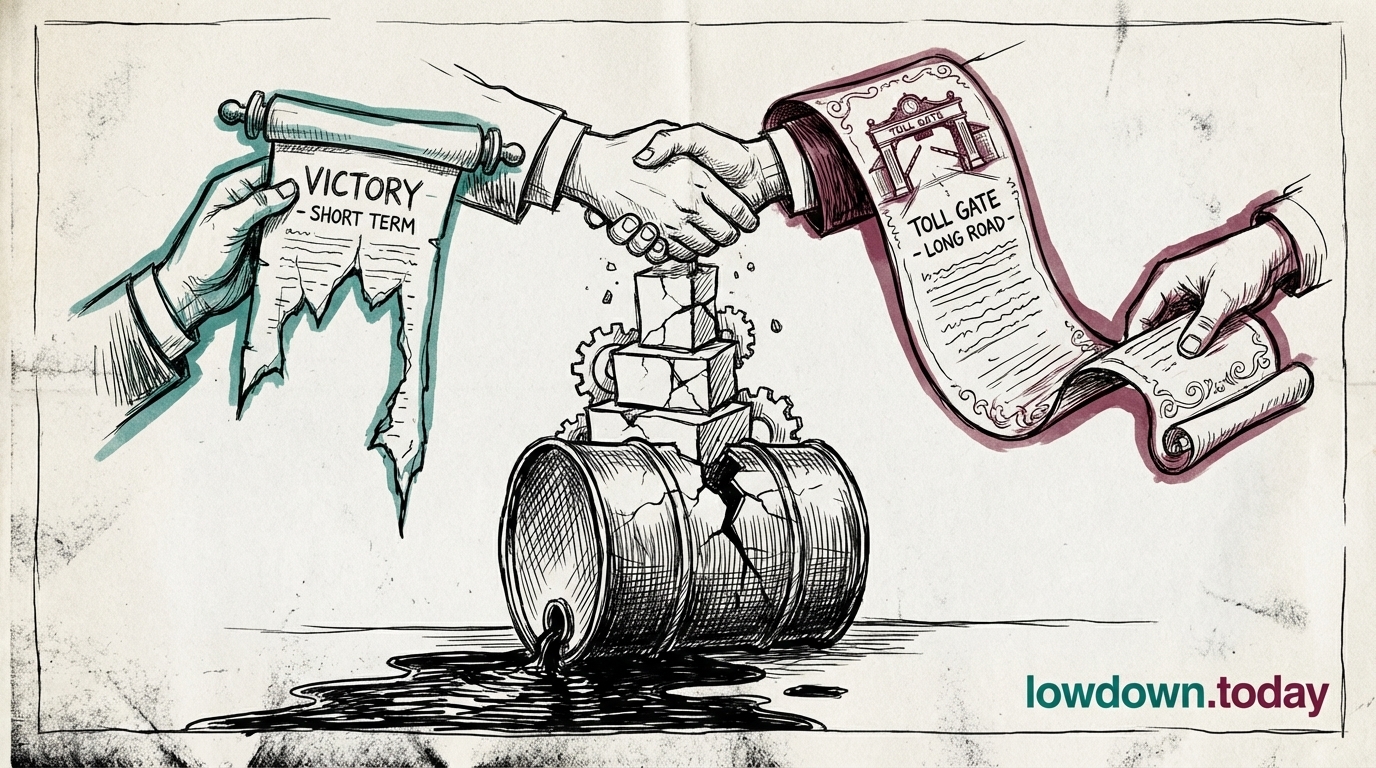
Update #62 · Two victories, two different lists

Seatrade Maritime· 8 Apr 2026
Read original
Different Perspectives
Oil market and P&I insurers
Brent cleared $87 intraday only once CENTCOM's blockade became physical rather than declared, even though P&I Clubs had already excluded Hormuz war risk a week earlier on 7 July: capital hedged ahead of enforcement, but prices moved only after it.
UAE reporting
UAE reporting
UAE reporting placed the Omani tanker deaths at one seafarer against the International Maritime Agency's count of two, the first time in this war that a Gulf state's casualty figures have diverged from an international monitor's.
Jordan
Jordan
Iranian strikes reached Jordan again on 14 July as part of the Gulf-wide retaliation for the Hormuz blockade, extending the conflict's geographic footprint to a state with no direct stake in the strait itself.
Bahrain
Bahrain
Bahrain sounded air-raid sirens on 14 July during Iran's Gulf-wide retaliation, the same day CENTCOM's blockade order and fourth night of strikes pushed the conflict's physical reach into the wider Gulf littoral.
Kuwait
Kuwait
Kuwait intercepted Iranian missiles and drones on 14 July as Tehran's blockade retaliation reached Gulf states beyond Iran's immediate shoreline, confirming Kuwaiti airspace now sits inside Iran's retaliatory envelope.
Oman
Oman
Oman absorbed the war's first tanker casualties in its own waters on 14 July, with two supertankers disabled and seafarers killed, putting the sultanate's shipping lanes directly in the path of the blockade fight for the first time.