Skip to content
You can now search across every topic, entity and event.What's new
European Oil Markets
23JUL

Houthis shut a second sea to Israel

4 min read
19:27UTC

The Houthis declared a complete ban on Israeli navigation in the Red Sea on 8 June and fired rockets at the Jaffa area, their first strike on Israel since April. For the first time, both of the region's sea gates are hostile at once.

EconomicDeveloping
Key takeaway

Both regional sea gates now sit hostile at once, removing the reroute that let shipowners absorb one closure.

The Houthis (Ansar Allah, the Iran-backed Yemeni movement) declared a "complete and total ban on Israeli maritime navigation in the Red Sea" on 8 June and fired rockets toward the Jaffa area, their first strike on Israeli territory since the fragile April ceasefire 1. The group said its strikes hit "sensitive Israeli targets" and tied the move to Israeli operations across Gaza, Lebanon, Iraq, Yemen and Iran.

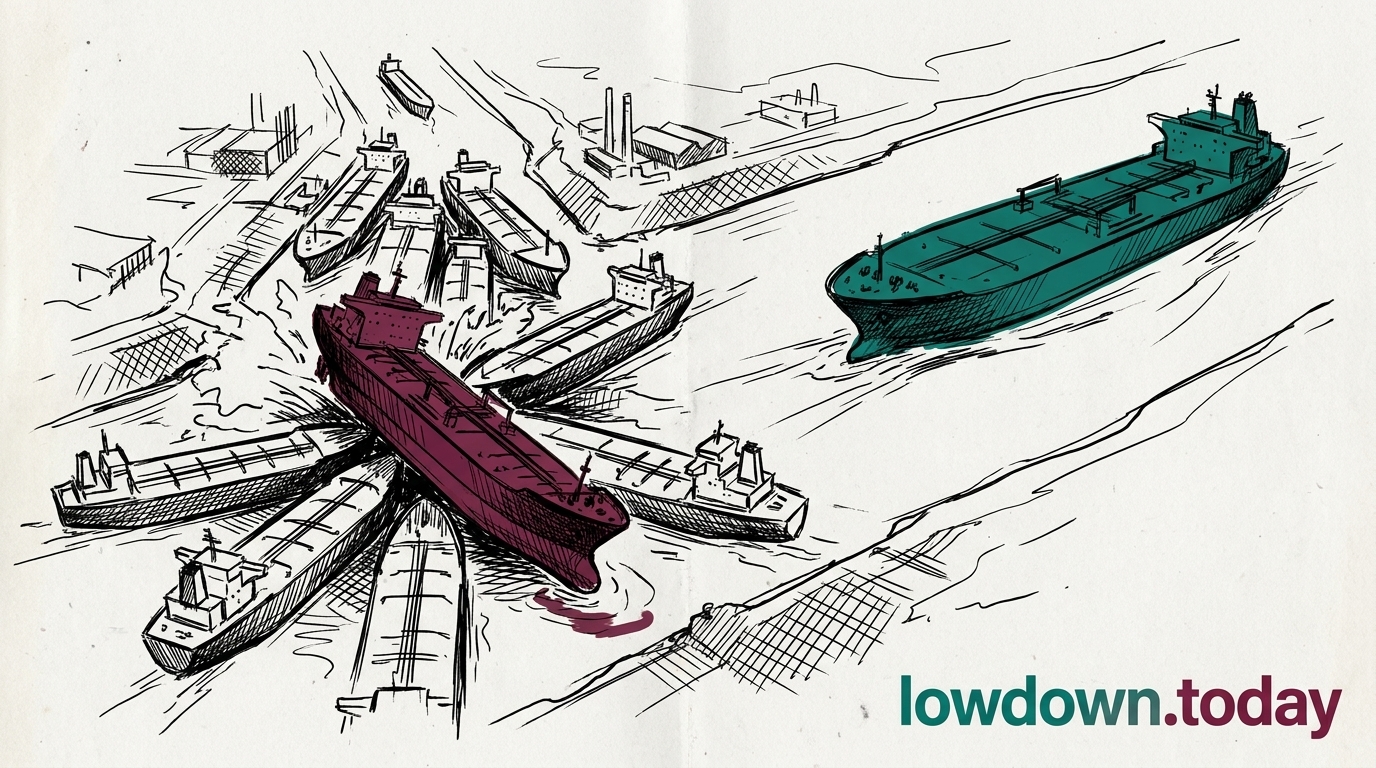
For the first time in this war both of the region's maritime chokepoints sit under hostile authority at once. The Strait of Hormuz already runs under three competing authorities: CENTCOM's blockade from outside Iranian waters, the IRGC's toll from within at up to $2 million a vessel, and the Persian Gulf Strait Authority's registration scheme. The running tally of redirected and disabled ships there had already climbed through early June , days of extra steaming for every tanker forced to swing wide. Now Bab el-Mandeb, the Red Sea's 29-km southern gate between Yemen and Djibouti, carries a declared exclusion on Israeli-linked hulls.

The practical bite runs through insurance, not naval patrols. Protection and indemnity (P&I, marine war-risk) clubs price war risk chokepoint by chokepoint, and a shipowner can route around one closed strait by accepting the cost of the other. With both hostile at once, that hedge collapses for any Israeli-linked cargo, and underwriters have no modern template for pricing a simultaneous Gulf-and-Red-Sea exclusion.

Whether the Houthis enforce the ban by interdiction or leave it declaratory is the open question. The April record, when the group sustained three strikes in three days, suggests they hold the missiles to make it real.


Deep Analysis

In plain English

Yemen's Houthi movement, backed by Iran, declared on 8 June that no Israeli-linked ship may enter the Red Sea , and then fired rockets at the Israeli coast for the first time since April. The Red Sea is one of the world's two main shipping corridors between Europe and Asia. Before this, ships avoiding the Hormuz blockade at Iran's end of the Gulf could reroute through the Red Sea. That option is now closed too. Any Israeli-linked cargo now has to travel the very long way round , either through the Red Sea under fire risk, or around the bottom of Africa , adding weeks and significant cost to journeys that normally take about two weeks.

Deep Analysis
Root Causes

The structural root cause is the Houthis' proven ability to survive sustained US and Israeli air campaigns while retaining functional missile and drone capacity. The April 2026 ceasefire that temporarily halted their strikes was not accompanied by a disarmament or degradation agreement. US strikes in the weeks before the April ceasefire degraded but did not eliminate Houthi launch capacity, and the six-week ceasefire gave the Houthis time to partially restore it.

A second structural cause is the legal gap at Bab el-Mandeb: unlike Hormuz, where Iran's toll claim exploits its status as a littoral state, the Houthis hold no internationally recognised sovereignty over Yemeni territorial waters under the UN-backed Yemeni government's parallel authority. Their declared ban has no legal basis, but enforcement does not require legal authority , only missiles, which they demonstrably retain.

Escalation

Significant lateral escalation opening a second front. The Houthi declaration effectively doubles the chokepoint pressure on Israeli-linked shipping and forecloses the rerouting option that had partially absorbed Hormuz closure costs. The Jaffa rocket strike , first since April , signals resumed Houthi willingness to target Israeli territory, not just shipping.

What could happen next?
  • Consequence

    Lloyd's of London and the International Group of P&I Clubs will reassess war-risk premiums on Red Sea transits, potentially restoring the 2023-2024 rate spike that added $500,000-$1 million per voyage for non-Israeli-linked vessels.

  • Risk

    An Iran-Israel halt that does not include a Houthi stand-down clause will leave the dual-chokepoint condition in place , meaning any deal that reopens Hormuz without addressing Bab el-Mandeb delivers only partial shipping relief.

First Reported In

Update #122 · Trump warns Bibi as Israel strikes anyway

Bloomberg· 9 Jun 2026
Read original
Causes and effects
This Event
Houthis shut a second sea to Israel
With Hormuz and Bab el-Mandeb both under hostile authority, shipowners lose the option of routing around one closed strait by accepting the other, and war-risk insurance has no template to price it.
Different Perspectives
US money managers (CFTC-tracked)
US money managers had trimmed WTI net long positioning into July's rally, doubting the Hormuz premium would hold without freight or war-risk confirmation, and the crude stock build reported for the week to 17 July gives that scepticism a fundamentals basis. The 25 July CFTC data will show whether Brent's move above $100 changed their calculus.
Asian distillate buyers (Singapore)
Singapore's distillate holders kept retaining middle-distillate barrels as the East-West arbitrage window narrowed further this week, a pattern that sharpened as Fujairah light distillates hit a record low. Cargoes are being held rather than released west into the tightening Mediterranean market.
Bulgaria
Bulgaria
Bulgaria secured the removal of Lukoil founder Vagit Alekperov and Patriarch Kirill from the 21st package, with President Rumen Radev calling a personal listing 'shooting ourselves in the foot'. Sofia is protecting its position in Lukoil's EUR 3bn compensation claim over the 2023 Neftohim Burgas nationalisation.
Russia
Russia
Russia loses the roughly $14 a barrel of legal headroom the price-cap formula would have released toward $58, even as Urals continues trading below Moscow's $59 budget floor. The shadow-fleet insurance workaround that lets sanctioned crude clear above $44 in practice remains untouched by the freeze itself.
European Union
European Union
The EU adopted its 21st sanctions package on 23 July, freezing the $44 Russia oil cap for 12 months rather than letting the formula drift it toward $58, and listed shadow-fleet support vessels for the first time. The package cleared only after three failed Coreper votes.
Marine war-risk underwriters (Lloyd's-linked syndicates)
War-risk syndicates lifted southern Red Sea hull premiums 150% to about 0.75% of hull value after the 20 July blockade declaration, still a seventh of the roughly 5% Hormuz band. Underwriters reset on realised loss, not declared threat, so the 23 July Encelia and Layla strikes set up the next re-mark.