Skip to content
Briefings are running a touch slower this week while we rebuild the foundations.See roadmap
Iran Conflict 2026
9JUN

Day 102: Trump warns Bibi as Israel strikes anyway

3 min read
10:36UTC

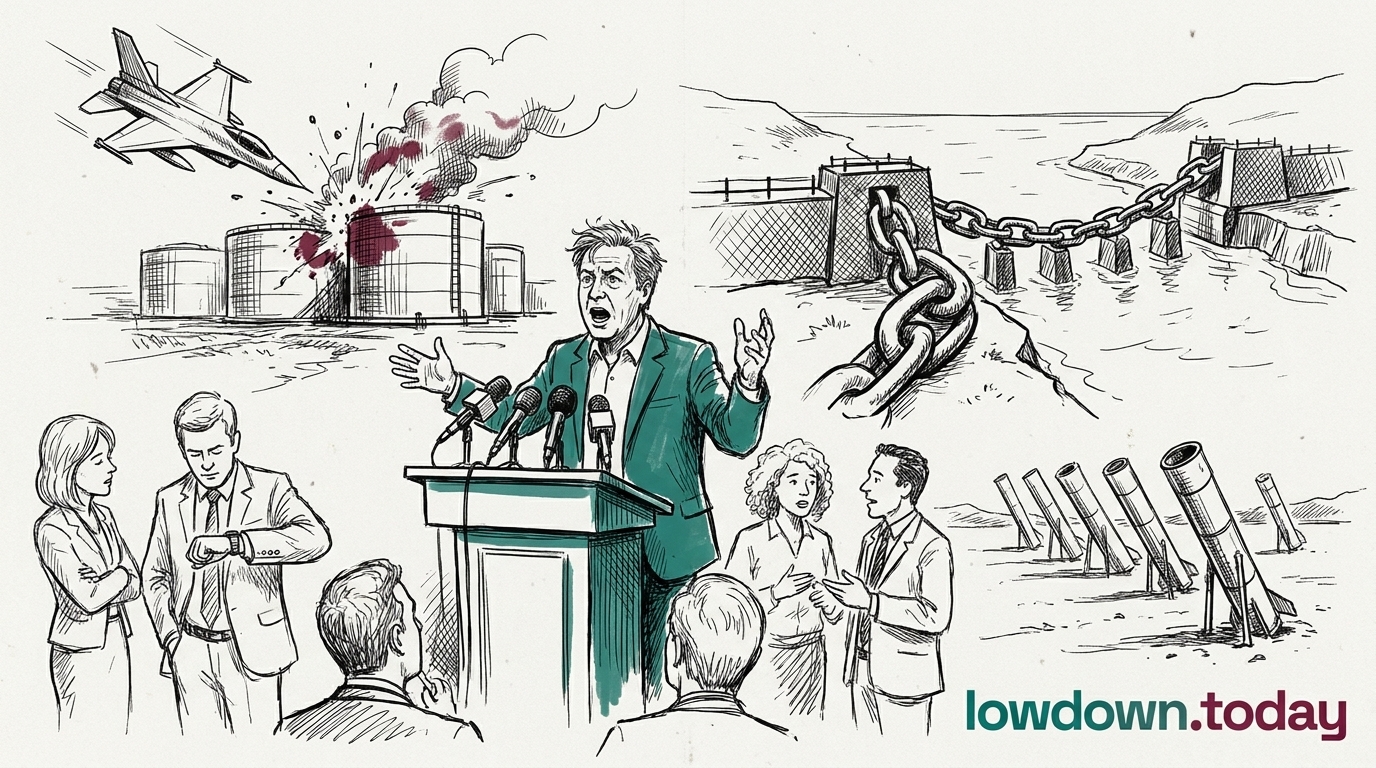
Israel bombed Iran's Karun petrochemical plant a day after Trump asked it not to, then Trump threatened Netanyahu publicly: be careful or be on your own. The Houthis shut the Red Sea to Israeli ships, closing a second chokepoint alongside Hormuz. Saudi Arabia sits near-empty on Patriot interceptors with no emergency waiver.

Key takeaway

Israel defied Trump's restraint request and proved his leverage is verbal; both sea gates are now hostile at once.

This briefing mapped
Loading map…
Diplomatic
Military

Donald Trump told Benjamin Netanyahu in public on 9 June to 'be careful, or you will be on your own very soon', the first presidential rebuke aimed at Israel rather than Tehran since the war began.

Sources profile:This story draws on centre-left-leaning sources from Qatar
Qatar

Trump publicly warned Netanyahu on 9 June to stop striking Iran or face losing US support. The warning came after Israeli forces hit the Karun Petrochemical plant at Mahshahr on 8 June, defying Trump's direct request for restraint.

It was the first named public threat the US has made to Israel since the war began. Previous pressure had travelled through private calls. Using Axios as the channel was deliberate , it reaches Israeli and US security officials directly. 

Sources:Al Jazeera

Iran and Israel agreed a fragile mutual halt on 9 June, hours after the exchange over the Mahshahr strike. Israel confirmed the pause covers Iran only and leaves Lebanon out.

Sources profile:This story draws on centre-leaning sources from India
India
LeftRight

Iran and Israel agreed on 9 June to pause direct strikes against each other. Israel immediately confirmed the pause applies only to Iran and not to Lebanon, where operations against Hezbollah continue.

The agreement carries no published text and includes an explicit Israeli warning that any further Iranian strike restarts the conflict. With Iran's military command decentralised across 31 semi-independent units, any field commander could breach the halt without waiting for Tehran's authorisation. 

Donald Trump said on 9 June that an Iran deal was in 'the final throes' and could be signed 'in two or three days', and credited the US naval blockade as 'much stronger than bombing'. Neither claim rests on a signed instrument.

Sources profile:This story draws on centre-left-leaning sources from Qatar
Qatar

Trump claimed on 9 June that Hormuz would reopen in two or three days. He also said the naval blockade had worked better than bombing, his first public ranking of economic pressure over military strikes.

Iran's Supreme Leader communicates only through couriers with a three-to-five day lag, confirmed by Secretary Rubio on 2 June. This is the third 'deal within days' claim this year; neither previous one produced a signature. 

Sources:Al Jazeera

The Houthis declared a complete ban on Israeli navigation in the Red Sea on 8 June and fired rockets at the Jaffa area, their first strike on Israel since April. For the first time, both of the region's sea gates are hostile at once.

Sources profile:This story draws on centre-left-leaning sources from United States
United States

Yemen's Houthis banned all Israeli-linked shipping from the Red Sea on 8 June and fired rockets at Jaffa , their first strike on Israeli territory since April. The Red Sea is one of the world's busiest shipping routes between Asia and Europe.

This creates a dual-chokepoint problem: ships had been rerouting to avoid the Hormuz blockade via the Red Sea. That option is now closed. Israeli-linked cargo must now bypass both peninsulas, adding weeks and significant cost to every voyage. 

Sources:Bloomberg

Qatar received a $4.01 billion emergency Patriot waiver on 2 May; Saudi Arabia was left out as its own interceptor stocks ran near empty. The plant that builds more is booked through 2030.

Sources profile:This story draws on neutral-leaning sources from United States
United States

Open-source estimates on 9 June indicated Saudi Arabia's Patriot interceptors were near-exhausted. The Camden factory makes roughly 620 rounds a year and is booked through 2030.

Qatar jumped the queue in May with a $4.01 billion emergency waiver covering 300 rounds, tied to its role hosting the US military. Saudi Arabia is on a standard 18-month waiting list with no equivalent priority. 

A US Army AH-64 Apache went down near the Strait of Hormuz on 9 June. Both crew were rescued and the cause is unconfirmed, with a report due the following day.

Sources profile:This story draws on centre-left-leaning sources from United Kingdom
United Kingdom

A US Army Apache helicopter went down near the strait of Hormuz on 9 June. Both crew members were pulled from the water safely. The US military said the cause was unconfirmed and promised a report the next day.

Apaches have been patrolling this area for months, hunting small Iranian fast-attack craft. Whether this was an accident, mechanical failure, or something more serious was unknown at the time of reporting. 

Iran, Russia and China met IAEA chief Rafael Grossi jointly in Geneva on 5 June, coordinating a blocking line three days before Washington tabled its censure resolution at the Board.

Sources profile:This story draws on mixed-leaning sources from India and Iran
IndiaIran
LeftRight

Iran, Russia and China met the UN nuclear watchdog's director, Rafael Grossi, in Geneva on 5 June. Three days later the US tabled a censure resolution at the watchdog's Board demanding Iran allow inspections again.

Grossi had declared 240 kilograms of enriched uranium unaccounted for after 97 days without access. Russia and China are blocking the resolution that would restore oversight. 

Closing comments

On Day 102 of the 2026 war, the trajectory is lateral expansion across two new axes rather than vertical escalation on any single one. The Iran-Israel bilateral paused on 9 June but the Lebanon front continues, and the halt is conditional on a decentralised Iranian command structure that devolves launch authority to 31 autonomous provincial units. The Houthi Red Sea declaration, grounded in a 1 June Tasnim authorisation, added a pressure front structurally independent of any Iran-Israel bilateral. The US-Israel relationship moved onto a new axis of public confrontation without any coordination mechanism to resolve the underlying target-selection dispute. The two specific decision points in the next 72 hours: whether Israel conducts further strikes inside Iran, which would test whether Trump's warning has operational content; and whether the Houthis enforce the Red Sea ban by interdiction rather than declaration.

Different Perspectives
Donald Trump
Donald Trump
Trump issued a public warning to Netanyahu via Axios on 9 June, his first named threat to an ally rather than an adversary in 102 days, and claimed an Iran deal was days away, crediting the unsigned naval blockade as more effective than bombing. Neither the threat nor the deal claim rested on a signed instrument.
Benjamin Netanyahu and the IDF
Israel struck the Karun Petrochemical plant at Mahshahr on 8 June over Trump's explicit objection, then agreed a halt with Iran the following day scoped on Israeli terms with Lebanon carved out. Netanyahu's posture is that the IDF will not accept Iranian missile factories as off-limits regardless of US diplomatic timelines.
Iran
Iran
Iran agreed the 9 June mutual halt after the Mahshahr exchange and coordinated with Russia and China to block Washington's IAEA censure resolution, using the Board as a second front while the bilateral pause held on the military one. Tehran's acceptance of the Lebanon carve-out contradicts the linkage position it stated on 1 June.
Houthis (Ansar Allah)
The Houthis declared a complete ban on Israeli Red Sea navigation on 8 June and struck Jaffa, their first attack on Israeli territory since April, seven days after the Tasnim authorisation to activate other fronts including Bab el-Mandeb. The declaration put both chokepoints under hostile authority simultaneously.
Saudi Arabia
Saudi Arabia
Saudi Arabia was left out of the emergency $4.01 billion Patriot waiver Qatar received on 2 May as its own PAC-3 stocks ran near-empty from intercepting Iranian salvoes over Aramco facilities. Riyadh is on a standard 18-month FMS queue behind a production line booked through 2030, with no equivalent priority to Qatar's Al Udeid basing role.
Russia and China
Russia and China
Russia and China met IAEA chief Grossi jointly in Geneva on 5 June to coordinate an advance blocking position against Washington's censure resolution, the first documented instance of proactive pre-session obstruction rather than reactive post-vote dissent. Beijing's move came four days after OFAC designated Shanghai Qianye Energy under Iran energy sanctions.
