Skip to content
You can now search across every topic, entity and event.What's new
European Oil Markets
18MAY

Bab el-Mandeb returns as second chokepoint

4 min read
17:30UTC

International Crisis Group's Yemen analyst Ahmed Nagi told PressTV Houthi forces are "very likely to escalate" in Bab el-Mandeb if the US blockade bites Iran. Brent has not priced a dual-chokepoint scenario.

EconomicDeveloping
Key takeaway

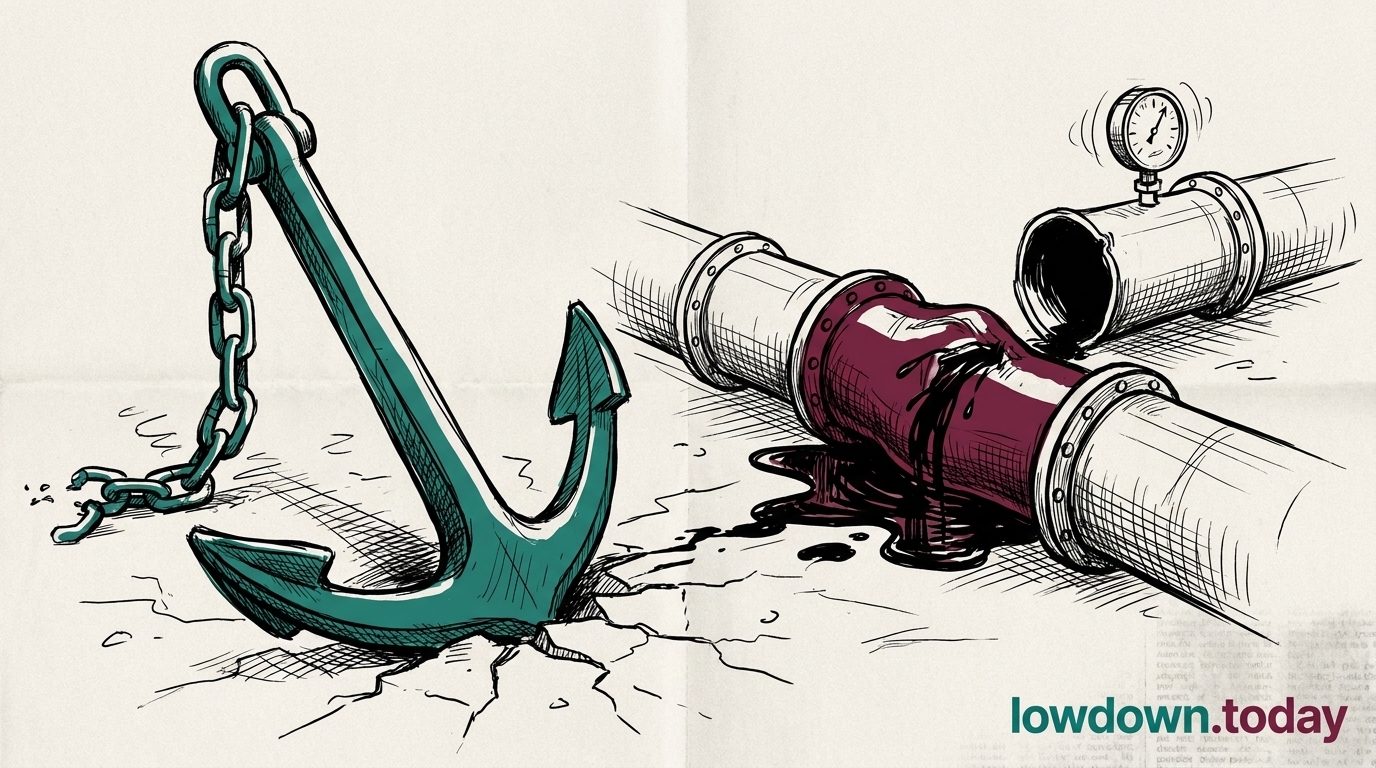
A Bab el-Mandeb closure alongside Hormuz would cut 25% of seaborne energy supply and neutralise Saudi Arabia's pipeline backup.

Ahmed Nagi, senior Yemen analyst at the International Crisis Group, told PressTV that Houthi forces are "very likely to escalate in Bab el-Mandeb" if the US blockade begins to bite Iran 1. A Yemeni military official quoted by the same outlet in late March called closure of the Red Sea strait "among the primary options" if escalation continued. Ali Akbar Velayati, a former Iranian foreign minister with continuing influence in the Iranian establishment, told PressTV that "the unified command of the Resistance front views Bab al-Mandeb as it does Hormuz".

Bab el-Mandeb is the narrow strait at the southern end of the Red Sea, between Yemen and Djibouti, that every Gulf-origin cargo bound for Europe via Suez must pass through. If it closes at the same time as Hormuz, the two closures together remove roughly 25% of global seaborne energy supply from market. Every Gulf-origin cargo bound for Europe or Asia then needs a Cape of Good Hope detour, 10 to 20 extra days at sea, with freight rates rising sharply before any insurance uplift. The scenario exceeds any case modelled in IEA emergency-release protocols.

Saudi Arabia's East-West pipeline, Petroline, was restored to its full 7 million barrels per day capacity as the contingency backup if Hormuz closed. Petroline bypasses Hormuz. It does not bypass Bab el-Mandeb. The pipeline ends at Yanbu on the Red Sea coast, and a Red Sea chokepoint closure eliminates that alternative routing entirely. The dual-chokepoint scenario is the one contingency the published Saudi infrastructure cannot resolve.

Markets already treat the Hormuz operation as a partial action rather than a full closure on the pullback. The dual-chokepoint scenario has not yet been re-priced into Brent at all. The caveat from Nagi matters: Houthi operational capacity in the Red Sea was degraded by the 2025 US campaign, and "very likely to escalate" from a senior analyst is not the same as confirmed operational readiness. The separate development that Hezbollah has received a new jet-powered Iranian loitering munition (see event 11) suggests the resupply network is still partially functional, which tilts the probability towards the Houthis having more than rhetoric to deploy.


Deep Analysis

In plain English

There are two narrow sea passages that most of the world's oil and gas must travel through. One is the Strait of Hormuz, between Iran and the Gulf states, which the US is currently blockading. The other is the Strait of Bab el-Mandeb, at the southern end of the Red Sea, between Yemen and Djibouti. The Houthi movement in Yemen, which fought a successful campaign against shipping in the Red Sea in 2023 and 2024, is now signalling it might close the second strait as well, if the US blockade starts hurting Iran. If both straits were closed at the same time, roughly a quarter of the world's energy supply would have no sea route. The Saudi pipeline that was restored as a backup route for Hormuz ends on the Red Sea coast, so it would be useless if Bab el-Mandeb were also blocked. Oil and gas prices for European and Asian buyers would rise sharply. The important caveat is that the Houthis' ability to actually close Bab el-Mandeb is uncertain after the US degraded their forces in 2025. The threat is real but the capability is unconfirmed.

What could happen next?
  • Risk

    A dual-chokepoint closure would cut roughly 25% of global seaborne energy supply and eliminate Saudi Arabia's Petroline alternative routing, exceeding any scenario modelled in IEA emergency-release protocols.

  • Consequence

    Current Brent crude pricing reflects partial Hormuz closure only; a credible Bab el-Mandeb threat materialising would trigger a repricing well above the blockade-day $103 peak.

First Reported In

Update #68 · Sanctioned tankers slip the blockade

PressTV· 14 Apr 2026
Read original
Different Perspectives
Greek shipping registries
Flag states dominating the tanker fleet await the EU's 15 July cap-freeze vote. A formula unlock toward $75 would loosen the ceiling squeezing insurance and crewing costs on their registered hulls.
US money managers
US money managers
NYMEX WTI managed-money net long fell 23% to +64,041 in the week to 7 July, trimming length into the rally on doubt the Hormuz premium survives without freight or war-risk confirmation.
European refiners (ARA)
ARA refiners are capturing an $80/bbl US diesel crack as Russian gasoil loadings collapsed to 234kbd before Novak's 31 July export ban even bites, widening the arbitrage straight into refining margins.
OPEC+
OPEC+
The seven-member group confirmed a fourth consecutive 188kbd August hike on 5 July, defending market share even though Saudi Arabia's $108-111/bbl breakeven means every added barrel costs Riyadh revenue it cannot recoup.
Indian refiners
Indian refiners
Refiners kept lifting discounted Urals as the India/Baltic split widened past $9-10 a barrel on 7 July. A wider Urals-Brent gap means cheaper feedstock locked in against Baltic buyers.
Russia
Russia
Urals traded $48.95-55.12 on 12-13 July, below Moscow's $59 budget floor even as Brent gained $6. Oil and gas fund roughly 30% of federal revenue, and Novak's diesel export ban is rationing a shrinking export base.