Skip to content
You can now search across every topic, entity and event.What's new
European Energy Markets
15JUN

IRGC rejects the Oman Hormuz route

3 min read
12:23UTC

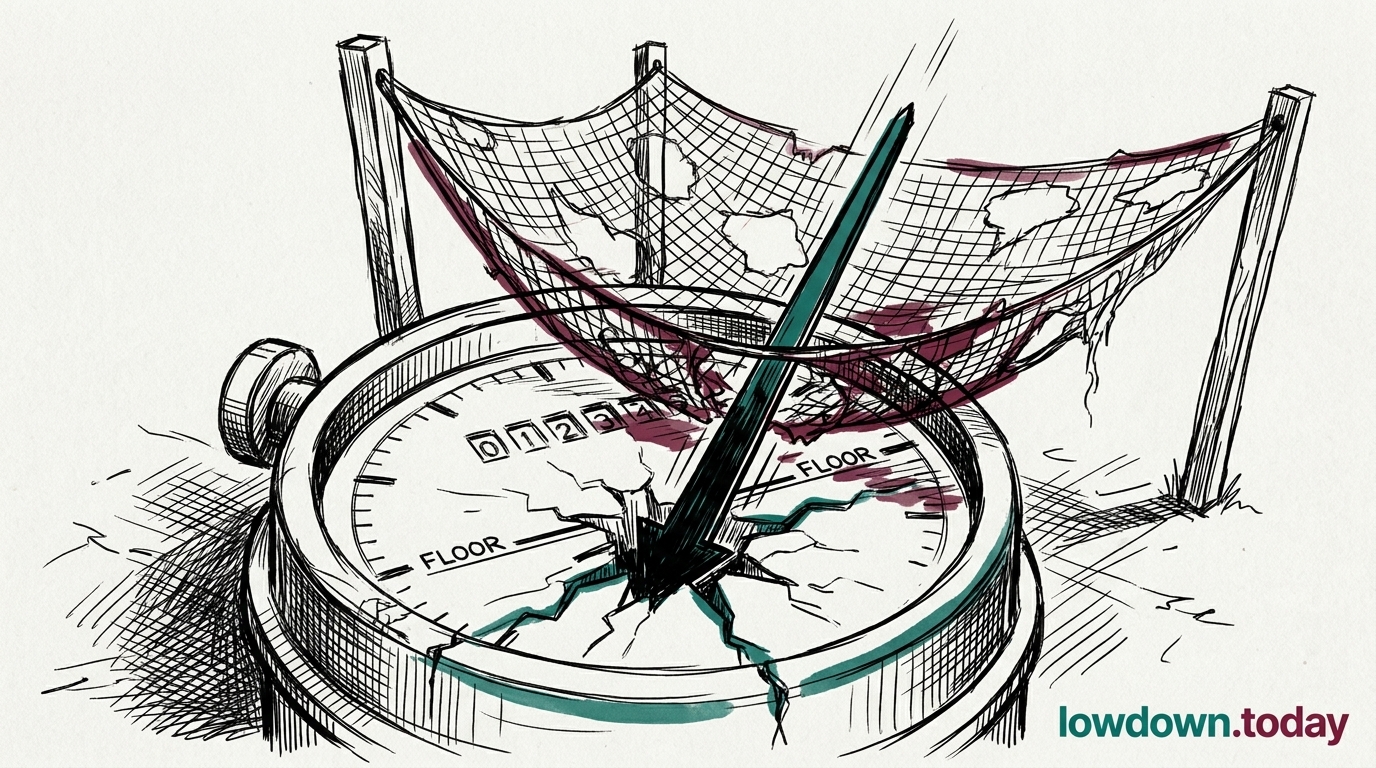
Iran's Revolutionary Guard declared the new Oman-IMO Hormuz corridor 'unacceptable and dangerous' on 25 June, ordering every vessel to coordinate on Channel 16 or face enforcement, the third authority to claim the same 33 kilometres of water.

EconomicDeveloping
Key takeaway

The IRGC claims the strait by declaration while ships transit it unhindered, a gap one boarding would close.

Iran's Islamic Revolutionary Guard Corps (IRGC), the country's ideological military force, declared the new Strait of Hormuz corridor backed by the International Maritime Organization (IMO) "unacceptable and dangerous" on Thursday 25 June, ordering every vessel to coordinate with the IRGC Navy on Channel 16 or face "enforcement measures" 1. The IMO is the United Nations agency that regulates international shipping; its coordination gave the toll-free Oman route procedural standing. The IRGC's rejection strips that standing in a single statement.

Hours earlier in Manama, US Secretary of State Marco Rubio told the six Gulf Cooperation Council (GCC) foreign ministers that the bloc backed free passage with no charges of any kind, a separate communique that rejects the IRGC scheme outright 2. The Iran-Oman fee committee signed in Muscat two days earlier is still negotiating its management mechanism with no published tariff. Three authorities now claim the same 33-kilometre chokepoint, through which a fifth of the world's oil passes, and each rules out the other two.

The Channel 16 demand rests on the corps's own prior declarations rather than any new capability. The IRGC formally closed Hormuz on 11 June citing Israeli strikes on Lebanon , then mandated insurance through its Persian Gulf Strait Authority and reserved fees from 17 August . Each step has been a press release, not an interdiction. The Korean masters sailed on Thursday; the corps issued a statement. One IRGC boarding of a foreign hull would collapse the divergence between word and act, and none has come.


Deep Analysis

In plain English

The Strait of Hormuz is a narrow waterway, only 33 kilometres wide at its narrowest, between Iran and Oman. About a fifth of the world's oil passes through it every day. Iran's military force, the Revolutionary Guards (IRGC), announced on 25 June that ships must contact them on radio Channel 16 before passing through, or face consequences. Earlier that same morning, international shipping body the IMO and neighbouring Oman had announced their own route for ships to use, toll-free. The IRGC declared that route unacceptable. Meanwhile, the Gulf Arab states and the United States said there should be no fees at all. On a single day, three different authorities announced three different rules for the same stretch of water. Ships from South Korea sailed through anyway, ignoring all three. Whichever authority ships choose to obey, they may be breaking the rules of one of the other two.

Deep Analysis
Root Causes

Iran never ratified the 1982 UN Convention on the Law of the Sea. Its domestic maritime law, updated in 2024, defines 'hostile-linked vessels' as those flagged to states that have imposed sanctions on Iran, a category covering most significant commercial flag states.

The IRGC's Channel 16 mandate derives legal authority from that domestic statute rather than from UNCLOS, which creates a foundational jurisdictional conflict: the international legal order says transit passage through international straits is non-suspendable; Iran's domestic law says the strait is under sovereign management for hostile-linked vessels.

The IRGC holds concurrent roles as Iran's military command, its domestic sanctions authority, and its de facto Hormuz toll operator. No other actor in Iran can countermand a Channel 16 declaration because no other Iranian institution has concurrent maritime jurisdiction.

The civilian Foreign Ministry can negotiate, but the IRGC retains unilateral enforcement authority, which means every diplomatic negotiation runs against a body that has not delegated its enforcement discretion to the parties at the table.

What could happen next?
  • Risk

    If the IRGC boards or detains a foreign-flag vessel that ignored the Channel 16 mandate, it would instantly collapse the price divergence between Brent and physical availability, repricing the war premium markets have fully discounted.

    Immediate · Assessed
  • Precedent

    The IRGC's simultaneous assertion of domestic jurisdiction alongside an Iranian-Omani fee committee and a GCC-US zero-fees position creates a three-body governance problem for Hormuz with no international arbitration mechanism; whichever body enforces first will set the de facto standard.

    Short term · Reported
  • Consequence

    London P&I clubs face a compliance paradox: complying with the IRGC's Channel 16 mandate to reinstate cover breaches OFAC obligations; not complying means no cover and no resumption of insured transits.

    Short term · Assessed
First Reported In

Update #138 · Three flags over Hormuz, none enforced

ANI· 25 Jun 2026
Read original
Causes and effects
This Event
IRGC rejects the Oman Hormuz route
Three incompatible governance claims now cover the Strait of Hormuz on the same day, and the IRGC's is the only one asserting enforcement it has not performed.
Different Perspectives
Spain's LNG terminal operators
Spain's 9,145 GWh terminal inventory is the largest single stock in the EU LNG network, an option value that can reroute cargoes wherever the winter strip pays best rather than a cavern gas obligation tied to a fixed date. That flexibility matters more as Germany's cavern shortfall pushes more of the winter security question onto import infrastructure.
European Commission
European Commission
Brussels holds the bloc to 90% on a flexible window while Germany, holding roughly a quarter of EU storage capacity, tracks toward missing its own lower 80% figure by 21 points. A national shortfall this size in the anchor market matters more to bloc security than the flexible timetable alone can absorb.
French power exporters and CRE
French day-ahead rose in step with Germany but by less, reopening a EUR 7-17 premium that makes northward export flows commercially attractive again after the EUR 43.09 discount evaporated in days. CRE separately authorised RTE and Enedis to buy flexibility locally, betting the coming winter's binding constraint is grid congestion rather than a shortage of firm capacity.
TTF trading desk
TTF trading desk
A visible national shortfall like Germany's 21-point gap is a directional signal, not noise, for a desk holding the summer-winter spread. TTF's flat EUR 58-60 range through this week's German price swings says the market has not yet chosen to reprice refill risk into the front of the curve.
German cavern and CCGT operators
German caverns kept buying prompt gas at TTF near EUR 58-60 through the inversion; the wind collapse to 2.4 GW then flipped the spark spread to plus EUR 29 and put turbines back in the same queue. Every day turbines win that bid, injection at a third of the 877 GWh/day pace needed falls further behind.
Slovakia
Slovakia
Slovakia says it dropped its hold-out on the 21st sanctions package only after Ursula von der Leyen personally signed written gas-price and supply guarantees. The Council of the European Union's own 17,238-character release on the package names neither Slovakia nor any guarantee, leaving Bratislava's account unconfirmed by the institutional record.



