VHF Channel 16
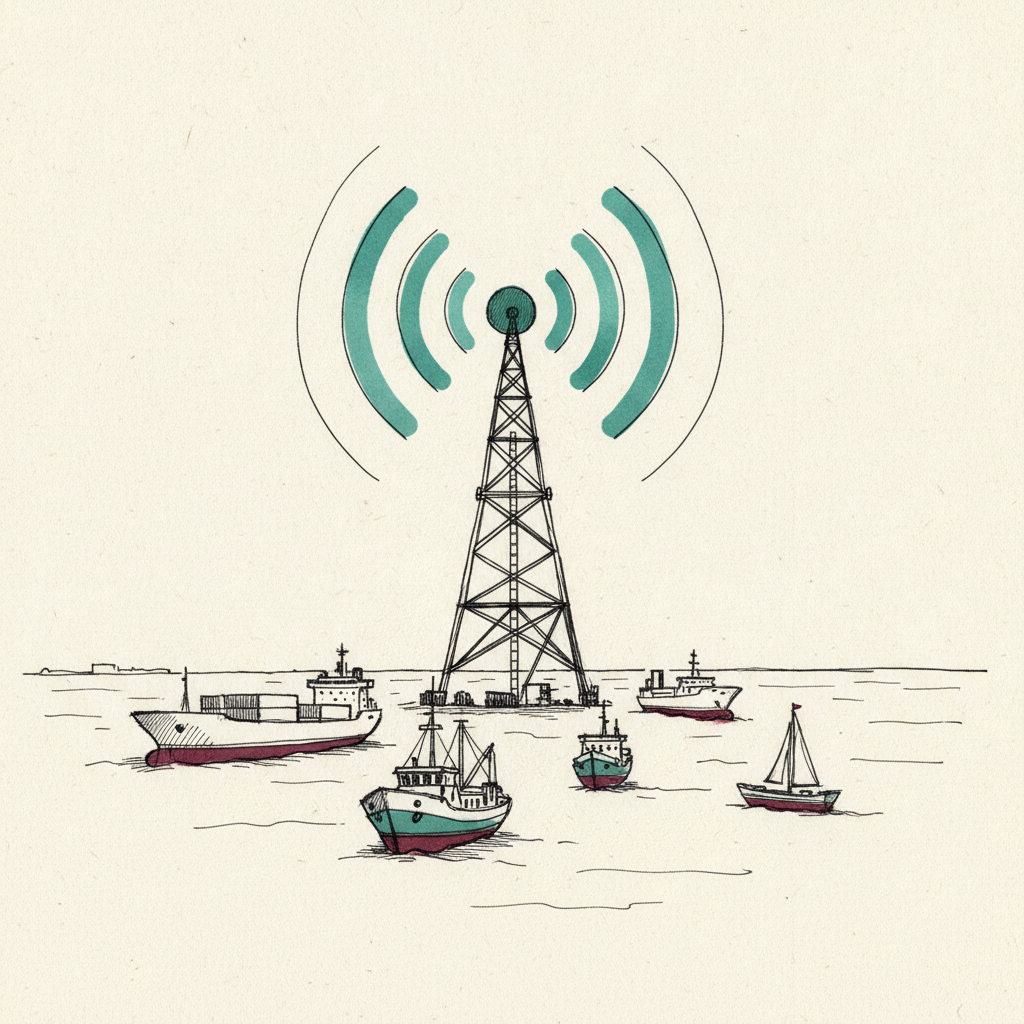
VHF Channel 16 is the internationally designated maritime distress, safety, and calling frequency, required to be monitored by all vessels at sea under SOLAS (Safety of Life at Sea) regulations. Broadcasting on this channel ensures maximum simultaneous reach to all ships in the area.
Last refreshed: 25 June 2026 · Appears in 1 active topic
Does the IRGC's Channel 16 demand violate international maritime law on a protected distress frequency?
Timeline for VHF Channel 16
Mentioned in: Brent falls below its pre-war level
Iran Conflict 2026Mentioned in: Insurers cut the price, not the risk
Iran Conflict 2026Korean ships sail past the IRGC order
Iran Conflict 2026IRGC rejects the Oman Hormuz route
Iran Conflict 2026Mentioned in: Second tanker hit; engine fire at Hormuz
Iran Conflict 2026Background
VHF Channel 16 became the legal and political fulcrum of the Hormuz navigation standoff on 25 June 2026. Iran's IRGC Navy declared the Oman-IMO corridor 'unacceptable and dangerous' and ordered every vessel transiting the Strait to coordinate with the IRGC Navy on Channel 16 or face 'enforcement measures.' South Korean vessels operating under the Islamabad MOU's toll-free window sailed through without making the mandated contact — a deliberate act of non-compliance that the IRGC has yet to enforce.
Channel 16 (156.8 MHz) is the internationally designated VHF maritime distress, safety, and calling frequency, mandated by the International Telecommunication Union and the International Maritime Organization's SOLAS convention. All vessels over 300 gross tonnes engaged in international voyages are required to maintain a continuous watch on Channel 16. It is the primary channel coast guards and naval forces worldwide use to hail commercial vessels. Under normal peacetime conditions, the IRGC uses Channel 16 to challenge vessels entering Iranian territorial waters and demand identification. Requiring vessels to coordinate their transits on Channel 16 — rather than simply monitoring it — extends this from a distress and identification function to a transit permission and surveillance function.
The IRGC's Channel 16 mandate is legally novel in the context of a strait used for international navigation. The IMO's designation of a neutral Hormuz corridor via Oman explicitly bypassed IRGC coordination requirements, and Iran's countermand on Channel 16 sets up a direct conflict between IMO-sanctioned freedom of navigation and Iranian enforcement posture. How the ITU and IMO respond — and whether the Channel 16 demand constitutes an abuse of an internationally protected distress frequency — is an open legal question with implications beyond the Hormuz crisis.
Why did the IRGC demand ships use Channel 16 at Hormuz?
What is VHF Channel 16 used for at sea?
Is it legal for the IRGC to require ships to contact them on Channel 16?






