Skip to content
You can now search across every topic, entity and event.What's new
European Energy Markets
15JUN

Brent falls below its pre-war level

3 min read
12:23UTC

Brent crude fell more than 4% to a $72.64-$73.72 range on 25 June, dropping under its pre-war February level and erasing the war premium that had pushed it past $116 at the height of the IRGC closure.

EconomicDeveloping
Key takeaway

Oil has declared the war over at $72-73, but the minefield and the underwriters have not.

Brent Crude fell to a range of $72.64 to $73.72 on Thursday 25 June, down more than four per cent in a single session and below its pre-war February level 1. Brent is the global oil benchmark that sets the price of roughly two-thirds of internationally traded crude, so its level feeds directly into petrol, diesel and inflation worldwide. The war premium that pushed it past $116 at the height of the IRGC closure is now entirely gone.

The fall extends a steady reversal. Brent traded at $76.14 only the day before , and held near $80.59 while Iran's Islamic Revolutionary Guard Corps (IRGC) still enforced its Hormuz closure . Traders have now priced the benchmark below where it sat before the 28 February strikes, on the same morning the IRGC rejected the Oman corridor and ordered vessels onto Channel 16.

The market is pricing a normalisation the water has not delivered. Mines remain uncleared and need 40 to 50 days of minimum sweeping, foreign-flag commercial flow runs at a fraction of the pre-war 94 transits a day, and no Protection and Indemnity club has reinstated war-risk cover. Traders are treating the corps's threats as bluff and the Korean sailings as the true signal. Because the premium is fully priced out, a single mine strike or one boarding would reprice the entire curve with no buffer to absorb it.


Deep Analysis

In plain English

Oil's global price is set by traders in markets like London, who buy and sell contracts based on what they expect the situation to be in the future. On Thursday, those traders decided the Iran crisis was effectively over and sold their 'war premium', the extra they had been charging because of the danger, pushing the price of oil below where it was before the war started. On the water, nothing has changed. Mines seeded by the IRGC in June remain uncleared. Shipping insurers still will not cover ships crossing the strait. And Iran's military declared that same morning that it would not accept the new safety route. Oil traders are betting everything will be fine; the mines and the insurers are not.

Deep Analysis
Root Causes

Futures markets price the expected outcome of a geopolitical resolution, not the physical state of the supply chain on the day of trading. The Korean transits and the diplomatic language of both Oman and the GCC signalled to algorithmic trading systems that the closure was ending, producing a cascade sell-off of the war premium regardless of whether ships could actually transit with cover.

Chinese buyers received Iranian crude throughout the conflict via the shadow fleet, suppressing the actual supply shortfall below the headline numbers implied by a closed Hormuz. With GL X now authorising Iranian oil sales through 21 August , the partial legalisation of those flows removed residual uncertainty about Chinese purchasing volumes, accelerating the premium sell-off.

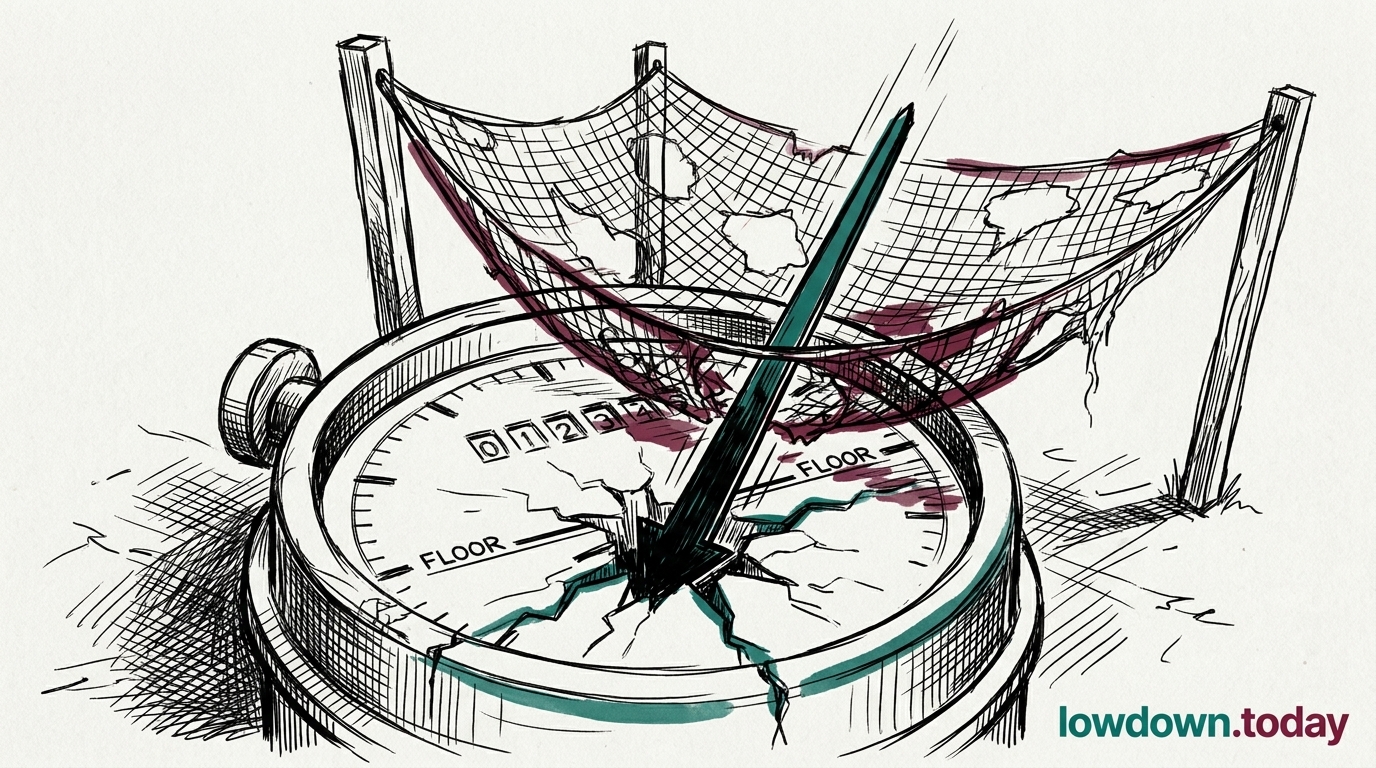
A price floor no longer exists: because the premium is fully priced out, a single mine incident or IRGC boarding would reprice from zero premium rather than from a cushioned level. Spot price carries none of the tail-risk cost that physical insurance markets are still pricing at 20 times pre-war rates.

What could happen next?
  • Risk

    Brent with zero war premium has no downside cushion: a single mine strike or IRGC boarding would produce a larger proportional price spike than any event during the conflict, because traders would be repricing from a fully discounted base.

  • Consequence

    Gulf producer state budgets, sized for $80-90 Brent, move into deficit at sustained $72-73, pressuring Saudi Arabia in particular to push OPEC+ for production cuts that would reverse the price decline and contradict their diplomatic stance on Hormuz normalisation.

First Reported In

Update #138 · Three flags over Hormuz, none enforced

Gulf News· 25 Jun 2026
Read original
Different Perspectives
Spain's LNG terminal operators
Spain's 9,145 GWh terminal inventory is the largest single stock in the EU LNG network, an option value that can reroute cargoes wherever the winter strip pays best rather than a cavern gas obligation tied to a fixed date. That flexibility matters more as Germany's cavern shortfall pushes more of the winter security question onto import infrastructure.
European Commission
European Commission
Brussels holds the bloc to 90% on a flexible window while Germany, holding roughly a quarter of EU storage capacity, tracks toward missing its own lower 80% figure by 21 points. A national shortfall this size in the anchor market matters more to bloc security than the flexible timetable alone can absorb.
French power exporters and CRE
French day-ahead rose in step with Germany but by less, reopening a EUR 7-17 premium that makes northward export flows commercially attractive again after the EUR 43.09 discount evaporated in days. CRE separately authorised RTE and Enedis to buy flexibility locally, betting the coming winter's binding constraint is grid congestion rather than a shortage of firm capacity.
TTF trading desk
TTF trading desk
A visible national shortfall like Germany's 21-point gap is a directional signal, not noise, for a desk holding the summer-winter spread. TTF's flat EUR 58-60 range through this week's German price swings says the market has not yet chosen to reprice refill risk into the front of the curve.
German cavern and CCGT operators
German caverns kept buying prompt gas at TTF near EUR 58-60 through the inversion; the wind collapse to 2.4 GW then flipped the spark spread to plus EUR 29 and put turbines back in the same queue. Every day turbines win that bid, injection at a third of the 877 GWh/day pace needed falls further behind.
Slovakia
Slovakia
Slovakia says it dropped its hold-out on the 21st sanctions package only after Ursula von der Leyen personally signed written gas-price and supply guarantees. The Council of the European Union's own 17,238-character release on the package names neither Slovakia nor any guarantee, leaving Bratislava's account unconfirmed by the institutional record.



