Skip to content
You can now search across every topic, entity and event.What's new
European Energy Markets
15JUN

GL 134A lapses toward quiet extension

3 min read
12:23UTC

Treasury's Russian crude waiver expired on 11 April with wire reporting from Reuters, Semafor and Bloomberg pointing to renewal worth roughly $150 million a day to Moscow at current Urals prices.

EconomicDeveloping
Key takeaway

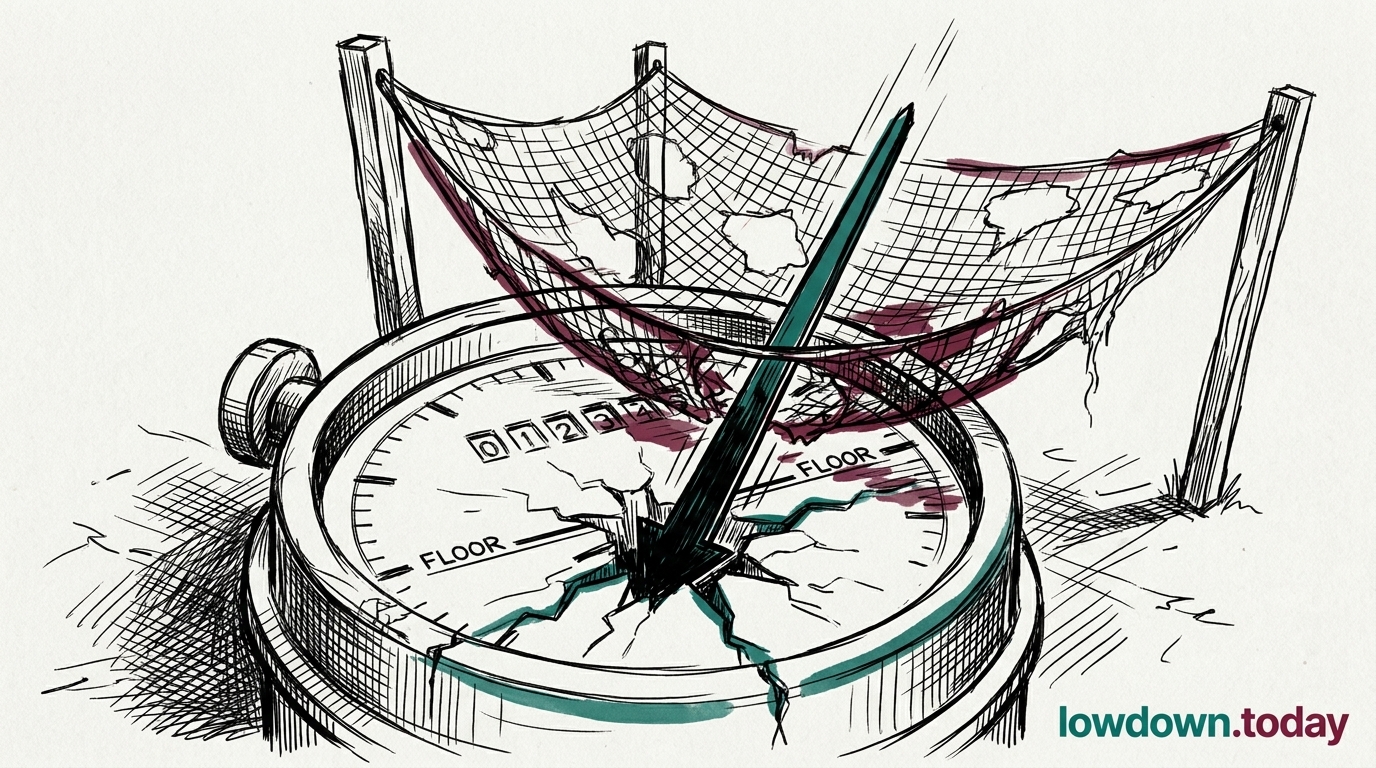
The Russian oil waiver is the same instrument doing the opposite job it was designed for.

General License 134A (GL 134A), the OFAC (Office of Foreign Assets Control) waiver that authorised transactions for Russian crude loaded before 12 March, expired on 11 April. Reuters, Semafor and Bloomberg report, citing people familiar with the discussions, that an extension is coming 1. A Treasury spokesperson offered only that the department "does not preview actions related to our sanctions."

Daniel Fried at the Atlantic Council called on Treasury Secretary Scott Bessent on 8 April to let the waiver lapse and fall back on the price cap. Asian governments led by India and the Philippines are pushing in the other direction. A week ago this was framed as a binary choice at $121 Urals . Bloomberg estimates the waiver is worth roughly $150 million a day in additional Russian budget revenue at $114 to $116 Urals.

One week of that uplift covers a fortnight of Kinzhal strikes. A full year covers a sum the EU has spent months trying to route to Kyiv against Hungarian opposition. The original GL 134 was defensible in March at $73 a barrel as market stabilisation after the Strait of Hormuz closed. At 64% above that price, and with the Iran ceasefire of 8 April partially reopening Hormuz, the same instrument now hands Moscow a surplus the sanctions architecture was designed to prevent. The Russia-Iran corridor that Israel struck at Bandar Anzali last month still runs.


Deep Analysis

In plain English

When the Iran conflict disrupted oil markets in March, the US Treasury issued a temporary waiver allowing banks and traders to continue processing payments for Russian crude already at sea. The idea was to prevent a sudden oil price spike. The waiver was set to expire on 11 April. The problem: when the waiver was issued, Russian oil was selling at $73 per barrel. By expiry it was trading at $114-116. That means every extra day of extension hands Russia roughly $150 million in war-funding revenue that sanctions were supposed to block.

Deep Analysis
Root Causes

GL 134A was issued on 12 March 2026 as a market-stabilisation measure when the Iran war disrupted Gulf crude flows. The structural problem is that the licence's dollar value is oil-price-sensitive: a barrel-price doubling since issuance means the waiver now hands Moscow a windfall the original policy never contemplated.

The secondary cause is bureaucratic path dependency. Once a sanctions waiver is issued to enable active market transactions, financial institutions and energy traders build positions around it. Lapse without a wind-down window triggers counterparty defaults that US regulators are reluctant to own.

What could happen next?
  • Consequence

    Each week of extension at current Urals prices transfers approximately $1.05 billion to Russia, partially offsetting the impact of the EU's phased gas import ban beginning 25 April.

  • Risk

    If the waiver is extended without a firm sunset date, it establishes precedent that sanctions can be indefinitely deferred when market conditions create lobby pressure, weakening the credibility of the entire OFAC architecture.

First Reported In

Update #12 · Three narrowings of US support for Kyiv

Reuters (via Kyiv Independent)· 11 Apr 2026
Read original
Different Perspectives
Spain's LNG terminal operators
Spain's 9,145 GWh terminal inventory is the largest single stock in the EU LNG network, an option value that can reroute cargoes wherever the winter strip pays best rather than a cavern gas obligation tied to a fixed date. That flexibility matters more as Germany's cavern shortfall pushes more of the winter security question onto import infrastructure.
European Commission
European Commission
Brussels holds the bloc to 90% on a flexible window while Germany, holding roughly a quarter of EU storage capacity, tracks toward missing its own lower 80% figure by 21 points. A national shortfall this size in the anchor market matters more to bloc security than the flexible timetable alone can absorb.
French power exporters and CRE
French day-ahead rose in step with Germany but by less, reopening a EUR 7-17 premium that makes northward export flows commercially attractive again after the EUR 43.09 discount evaporated in days. CRE separately authorised RTE and Enedis to buy flexibility locally, betting the coming winter's binding constraint is grid congestion rather than a shortage of firm capacity.
TTF trading desk
TTF trading desk
A visible national shortfall like Germany's 21-point gap is a directional signal, not noise, for a desk holding the summer-winter spread. TTF's flat EUR 58-60 range through this week's German price swings says the market has not yet chosen to reprice refill risk into the front of the curve.
German cavern and CCGT operators
German caverns kept buying prompt gas at TTF near EUR 58-60 through the inversion; the wind collapse to 2.4 GW then flipped the spark spread to plus EUR 29 and put turbines back in the same queue. Every day turbines win that bid, injection at a third of the 877 GWh/day pace needed falls further behind.
Slovakia
Slovakia
Slovakia says it dropped its hold-out on the 21st sanctions package only after Ursula von der Leyen personally signed written gas-price and supply guarantees. The Council of the European Union's own 17,238-character release on the package names neither Slovakia nor any guarantee, leaving Bratislava's account unconfirmed by the institutional record.



