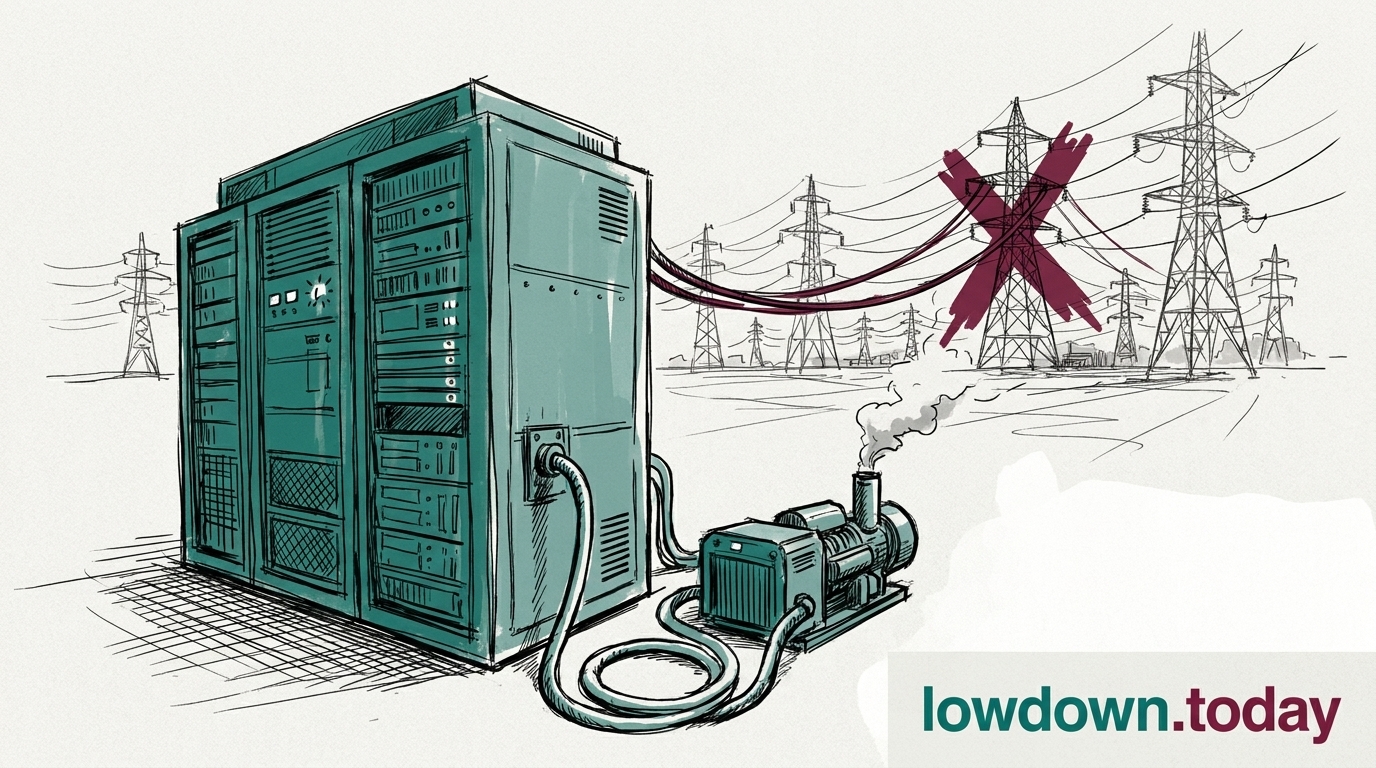
Chevron signed a 20-year Power Purchase Agreement (PPA), a long-term contract to buy electricity at a fixed price, with Microsoft on 22 June to build a 2.67 GW (gigawatt) gas plant beside a West Texas data centre. The roughly $7bn project, branded Project Kilby and run through Chevron's Energy Forge One unit, feeds the data centre directly, behind the meter, with no grid connection, no regional operator, and no curtailment order in the way1. At 2.67 GW it is the largest dedicated-generation deal struck for a data centre this year, ahead of xAI's 1.2 GW Colossus turbines and Meta's 365 MW Wyoming solar build2.
Operators are pouring capital into their own generation because every route to grid power slowed at once, and the cheaper escapes are closing as fast as they open. Washington has twice switched off the behind-the-meter route during heat events, when the Department of Energy ordered data centres running their own generation to curtail. Kilby answers that risk by owning the plant outright, but it inherits a different queue: its GE Vernova turbines come from a backlog already booked into 2029, so first power is not promised before 2028 and the final investment decision (FID) waits until the end of this year.
A 20-year contract on a single-customer plant resembles a project-financed power station more than a corporate clean-energy deal, with the data centre as its sole creditworthy anchor. That structure is why a supermajor will commit roughly $7bn against one offtaker. Energy-intensive industry has done this before: aluminium smelters built their own captive generation through the 20th century whenever grid supply was too slow or too thin. AI compute is repeating the pattern rather than inventing one.



