Does behind-the-meter generation help data centres avoid climate accountability as well as grid queues?
Timeline for behind-the-meter
Virginia taxes power behind the meter
Data Centres: Boom and BacklashMentioned in: Pure DC's 110 MW Dublin microgrid skips queue
Data Centres: Boom and BacklashxAI wins 41 gas turbines for Colossus
Data Centres: Boom and BacklashGE Vernova gas backlog hits 80 GW into 2029
Data Centres: Boom and BacklashBackground
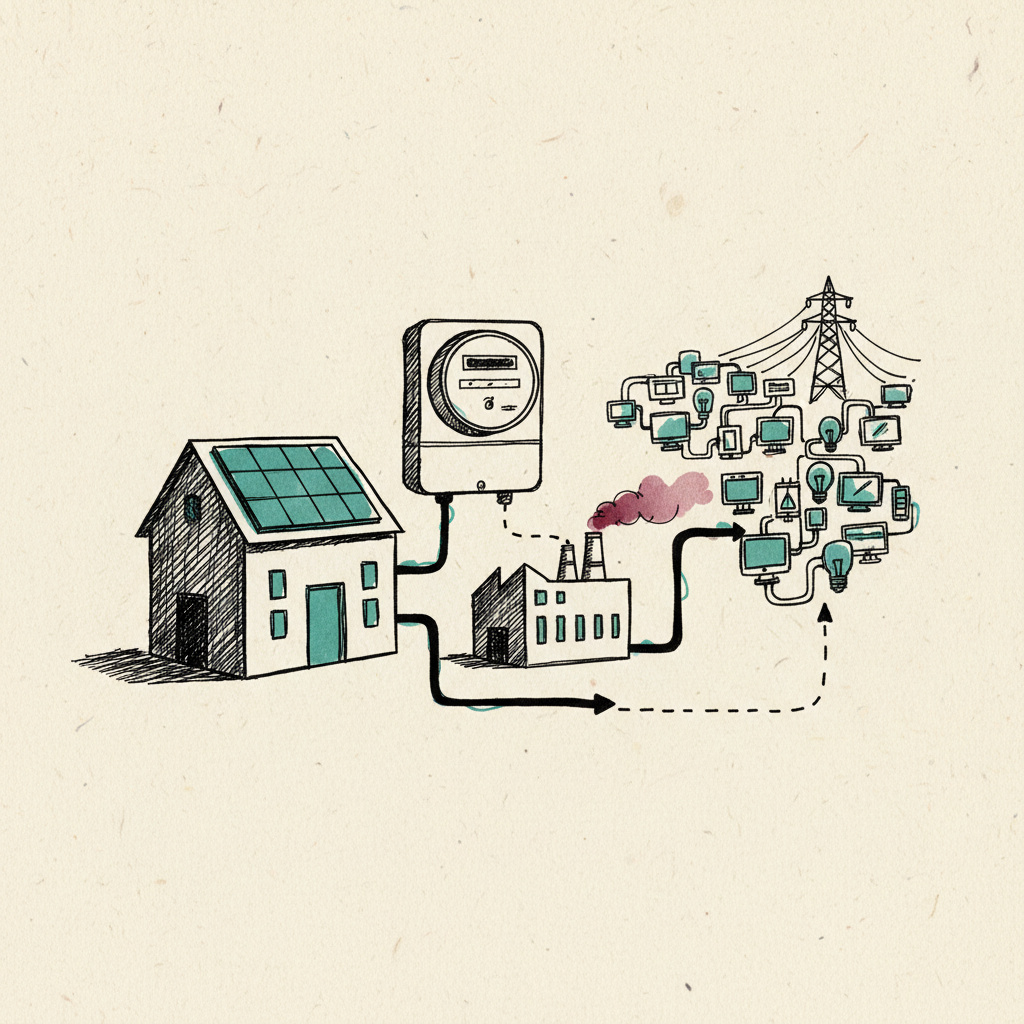
behind-the-meter (BTM) generation refers to electricity generation installed at a facility that feeds power directly to on-site loads without flowing through the public electricity grid or a utility meter. For data centres, BTM has become the primary strategy for bypassing grid-connection queues that stretch to three years or more in constrained markets.
BTM data centre projects range from natural gas turbines, such as the 1.2 GW of turbines approved for xAI's Colossus in March 2026, to renewable microgrids such as Pure DC's 110 MW Dublin scheme. Meta's El Paso data centre plans a dedicated 366 MW gas plant, which still awaited Texas regulatory approval in October 2026. The aim is to supply primary power on site rather than wait in the grid-connection queue.
BTM is distinct from grid-connected backup generation: in BTM architecture, onsite capacity is the primary power source, not a fallback. Virginia passed a $0.011 per kWh consumption tax on 22 June 2026 covering both utility-supplied and self-generated BTM power, capped at $600m per year and sunsetting 1 July 2028, the first US levy to reach past the utility meter. The Department of Energy separately issued two Section 202(c) curtailment orders against BTM generation in PJM territory in 2026, confirming federal oversight of the sector is active and expanding.