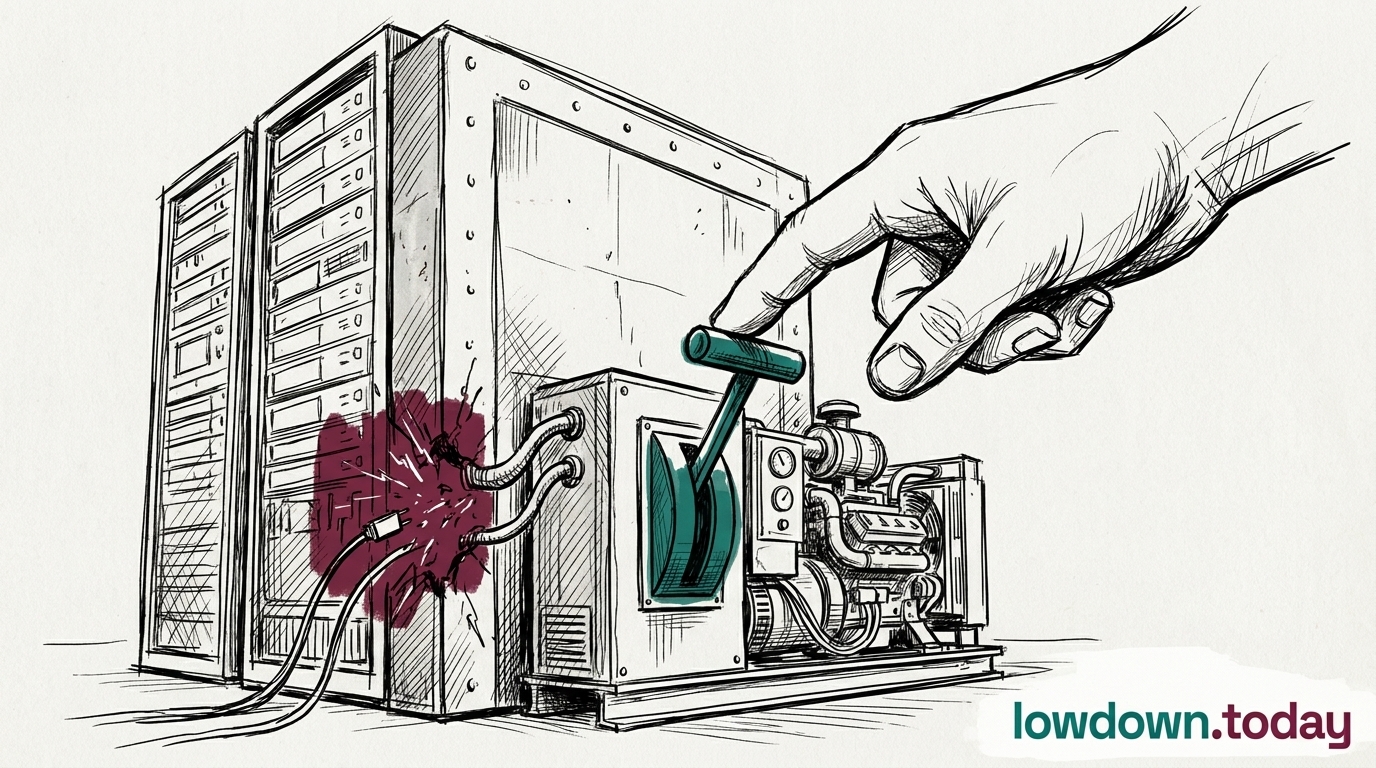
For three days from 18 May the US Department of Energy (DOE) gave grid operator PJM Interconnection, which runs the 14-state mid-Atlantic and midwest network, authority to curtail data centres equipped with their own backup generation. PJM activated it during a heat event with more than 40 GW of plant out for maintenance and a peak-load forecast of 135,961 MW, with Maryland and Virginia under the most strain.1 The DOE called it the second such emergency order in 2026.
The instrument is Section 202(c), the Federal Power Act emergency power that lets the energy secretary order generation or curtailment to keep the lights on. Its target marks the shift. Operators spent the past year building behind-the-meter (BTM) generation, private gas turbines and engines sited inside the campus fence, to escape the grid-connection queue and congestion pricing. xAI won approval for 41 turbines at Colossus and Meta's El Paso data centre awaited Texas approval of a dedicated 366 MW gas plant for that reason. GE Vernova's 80 GW turbine backlog and the IEA's 15-27 GW US onsite-gas projection had made that load class visible enough for regulators to name it. The first concrete federal action treats the fleet as the grid's shock-absorber, the load to drop first.
That runs against what the industry was lobbying for. PJM was due to file its revised co-located load tariff on the same 18 May date, seeking recognition for generation so operators could sit behind it and avoid curtailment. The emergency order arrived first and ran the opposite way: BTM capacity as interruptible reserve, not as a shield.
Operators argue this is weather, not a rulebook, and they are partly right: 202(c) is an emergency tool and the permanent rule is still pending. Then count the orders. DOE has reached for this power twice in five months, naming the BTM-equipped load class specifically, which reads as a disposition rather than an accident.



