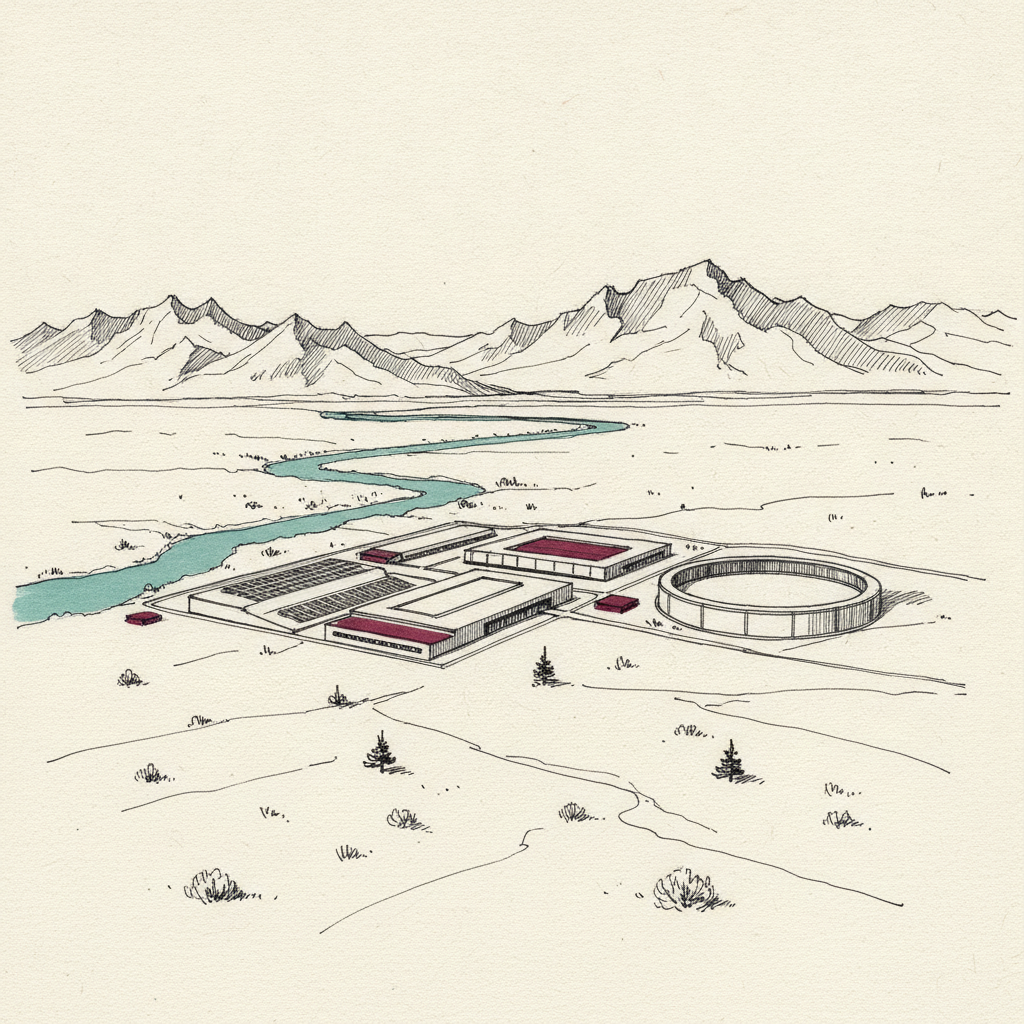
Wyoming
US Mountain West state; site of Meta's 365 MW solar-plus-storage data-centre power project in 2026.
Last refreshed: 28 June 2026 · Appears in 1 active topic
Is Wyoming's repurposed coal transmission infrastructure the template for large renewables-powered data centres?
Timeline for Wyoming
Mentioned in: Chevron builds Microsoft a gas plant
Data Centres: Boom and BacklashMeta buys Wyoming solar from Enbridge
Data Centres: Boom and BacklashBackground
Meta is building a 365 MW solar-plus-storage installation in Wyoming to power a data-centre campus, one of the larger renewables-plus-storage behind-the-meter commitments made by a hyperscaler in 2026. Wyoming's combination of open land, high solar irradiance in its southern and central basins, and available transmission infrastructure from retired coal plants makes it an attractive site for large renewable builds that would face longer consenting and interconnection timelines in more congested markets.
Wyoming is a US state in the Mountain West with a population of under 600,000. Its economy has historically been dominated by coal, natural gas, and ranching, giving it some of the highest per-Capita energy output in the United States and significant existing transmission capacity. The state has actively sought to diversify its energy economy as thermal generation declines, and its wind and solar resources are among the best in the country by capacity factor.
Meta's Wyoming project sits at the renewable end of the 2026 behind-the-meter build spectrum, a contrast to Chevron's gas-plant approach for Project Kilby in Texas. Both approaches bypass the grid interconnection queue by co-locating generation with the load, but with different fuel mixes and timeline profiles: solar-plus-storage requires lower capital per MW but introduces intermittency that gas-fired capacity avoids. Wyoming's repurposed transmission infrastructure reduces interconnection costs, making the renewable route viable at a scale that would be slower to achieve in greenfield locations.

