Skip to content
Welcome, thoughtbot's Giant Robots listeners!Start here
Cuba Dispatch
4JUN

Russian diesel tanker turns away from Cuba

4 min read
11:38UTC

The Sovcomflot tanker Universal abandoned its Cuba run on 26 May, leaving 270,000 barrels of diesel undelivered as the grid deficit widened and the informal dollar hit 568 pesos.

PoliticsDeveloping
Key takeaway

A cargo lawful everywhere but Cuba leaves the grid short and the peso sliding.

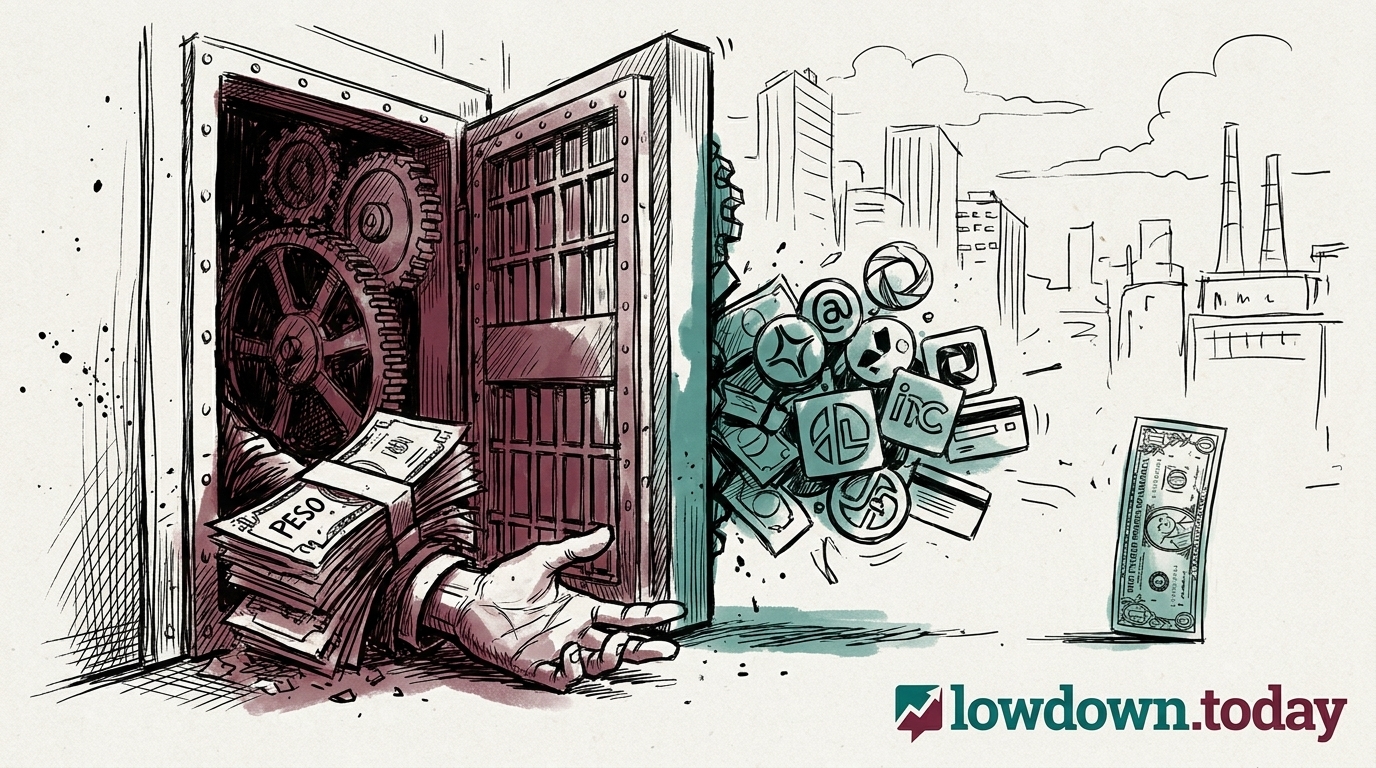
The Sovcomflot tanker Universal, carrying roughly 270,000 barrels of diesel that had drifted about 1,000 nautical miles off the island since mid-April, changed course on Tuesday 26 May, accelerated, and turned southeast into the South Atlantic⁠1. It declared no destination, never reached Matanzas or any Cuban port, and Russia has announced no replacement vessel⁠2. A supply line Lowdown has tracked since the cargo first stalled has closed without a delivery to the one island that needed it.

The legal reason it could not unload sits one topic away. When OFAC (the US Treasury's Office of Foreign Assets Control) extended the Russian-crude wind-down through 17 June around 18 May, Cuba stayed explicitly carved out, the waiver Cuba remains excluded from⁠3. So the Universal's diesel was lawful for most of the world and unlawful for the one port that needed it. The tanker meant to follow the depleted Anatoly Kolodkin, whose cargo Diaz-Canel had admitted on 4 May was running out with no confirmed replacement, turned out to be the one vessel that could not legally arrive.

The grid reads the consequence directly. UNE (Union Electrica Nacional, Cuba's state grid operator) forecast a deficit near 1,960 MW against demand of about 3,200 MW on 27 May, worse than the 1,680 MW it ran on in early May after the Guiteras plant's seventh failure⁠4. On the street the same pressure shows in the exchange rate: the informal dollar reached 568 pesos this week, up from 540 in early May⁠5. Two readings of one shortage, one off the meter and one off the kerb. Neither moves until fuel arrives, and the vessel that carried it has sailed past.


Deep Analysis

In plain English

Cuba needs roughly three million barrels of fuel every month to keep its power stations, water pumps, and transport running. It only produces about 40 per cent of that at home. The rest has to come in by tanker from Russia or Venezuela. In May 2026 both those supply routes broke down at the same time. A Russian tanker called the Universal was carrying about 270,000 barrels of diesel toward Cuba's main port at Matanzas when it abruptly changed course on 26 May and headed south into the open Atlantic without telling anyone where it was going. Russia announced no replacement vessel. The reason it turned away is a legal one: US sanctions rules that cover Russian oil shipments explicitly excluded Cuba, meaning the ship's insurance became invalid for a Cuba delivery once those rules took effect on 16 May. Without insurance, no port will accept the ship or its cargo. Without the cargo, Cuba's power stations, which were already running on fumes, face a deficit of roughly 1,960 MW ; equivalent to blacking out more than half the island's normal load ; at a moment when the informal dollar exchange rate has already climbed to 568 pesos, telling you that ordinary Cubans are paying for the shortage in real purchasing power every day.

Deep Analysis
Root Causes

Cuba's structural fuel dependency rests on three layers, all of which have now failed simultaneously.

Layer one is Venezuelan crude via PDVSA, Cuba's cheapest and historically most reliable source. Interrupted since November 2025, four months before the 18 March PDVSA carve-out that received most of the public attention. Cuba's domestic production of approximately 40,000 barrels per day against demand of 90,000 to 110,000 bbl/day means domestic supply covers roughly 40 per cent of need under ideal conditions.

Layer two is Russian tanker deliveries, which have functioned as emergency gap-fill since 2023. The delivery mechanism depends on OFAC wind-down licences (GL 134A, then GL 134B) because Sovcomflot vessels require P&I insurance coverage to call at Matanzas. GL 134B expired 16 May without a Cuba-specific successor, and GL 134C ; issued for the Russia-Ukraine sanctions context ; explicitly names Cuba as excluded.

Layer three is the Matanzas port's physical infrastructure. The September 2022 explosion and fire at the Supertanker Base destroyed more than a million barrels of storage capacity, reducing the port's ability to buffer between delivery gaps. Cuba entered the current crisis with degraded storage infrastructure, meaning each delivery gap translates to grid impact faster than before the 2022 fire.

All three layers failed within a six-month window. The 568-peso informal dollar rate reflects the market's assessment that no near-term fuel normalisation is visible.

What could happen next?
  • Risk

    Without a replacement tanker arriving within 30-45 days, Cuba's Antonio Guiteras and Lidio Ramón Pérez thermoelectric plants face cold-start damage from repeated shutdown-restart cycles, reducing their recoverable capacity even after fuel supply resumes.

    Short term · Assessed
  • Consequence

    Russia's failure to replace the Universal with a RNRC-covered vessel signals to Havana that Moscow's Cuba fuel commitment is contingent on OFAC licensing rather than unconditional, weakening the strategic value Cuba assigns to the Russia relationship.

    Medium term · Assessed
  • Risk

    Further peso depreciation beyond 600 CUP per dollar risks destabilising CADECA's recently launched dollar-acceptance programme, as the spread between the official and informal rates widens beyond the range at which state branches can compete.

    Short term · Assessed
First Reported In

Update #5 · Washington stacks three instruments at Cuba

Baker McKenzie / OFAC Recent Actions· 28 May 2026
Read original →
Causes and effects
This Event
Russian diesel tanker turns away from Cuba
The vessel Cuba waited weeks for could not lawfully unload, and its diversion converts a fuel shortage into a measurable grid and currency shock.
Different Perspectives
UN General Assembly
UN General Assembly
The Assembly passed last year's resolution against the US embargo by 165 votes to 7, with 12 abstentions, and votes again on 28 October. That count is the baseline against which Havana's lobbying claims and Washington's pressure will be measured.
Mexican Navy (Secretaría de Marina)
A Mexican Navy team inspected Grace at Progreso and found fuel in its ballast tanks, according to the US Coast Guard. The account of Mexico's role comes from Washington; the Mexican government's own position on the stop is not on record in the sources reviewed.
Pedro Monreal, independent Cuban economist
Monreal says the gazette contains no rule for the exchange-house licence ADT 64 received, so nobody knows how a second firm could apply. He says a representative rate would need at least ten houses in five provinces, Havana included.
Prisoners Defenders and OCDH (Madrid-based exile monitors)
Prisoners Defenders counted a record 1,351 political prisoners at the end of September, and OCDH logged at least 344 repressive actions that month. OCDH asked the European Union on 11 September to investigate possible trafficking in Cuba's medical brigade in Italy.
Florida Attorney General James Uthmeier
Uthmeier announced a no-bond state warrant for Raúl Castro on 19 October over the 1996 Brothers to the Rescue shootdown, after reopening the state investigation last year. The four men killed flew for a Miami exile group, and the warrant restricts Castro's travel rather than reaching him in Cuba.
Cuban government (Foreign Minister Bruno Rodríguez Parrilla)
Rodríguez said on 21 October that Washington is pressing governments to abstain or leave the hall in the 28 October UN vote and called Florida's Raúl Castro warrant worthless. Havana is presenting its October oil and trade rules as openings and the US measures as an energy blockade.

Written with AI from Lowdown's published reporting. Not individually reviewed by an editor. Editorial standards.
