Skip to content
Briefings are running a touch slower this week while we rebuild the foundations.See roadmap
Cuba Dispatch
4JUN

Informal dollar hits record 600 pesos

3 min read
11:38UTC

The informal exchange rate reached 600 pesos to the dollar on Thursday 4 June, a level no Cuban had paid before, up from 568 nine days earlier.

PoliticsDeveloping
Key takeaway

The informal dollar hit a record 600 pesos on 4 June, up 5.6 per cent in nine days.

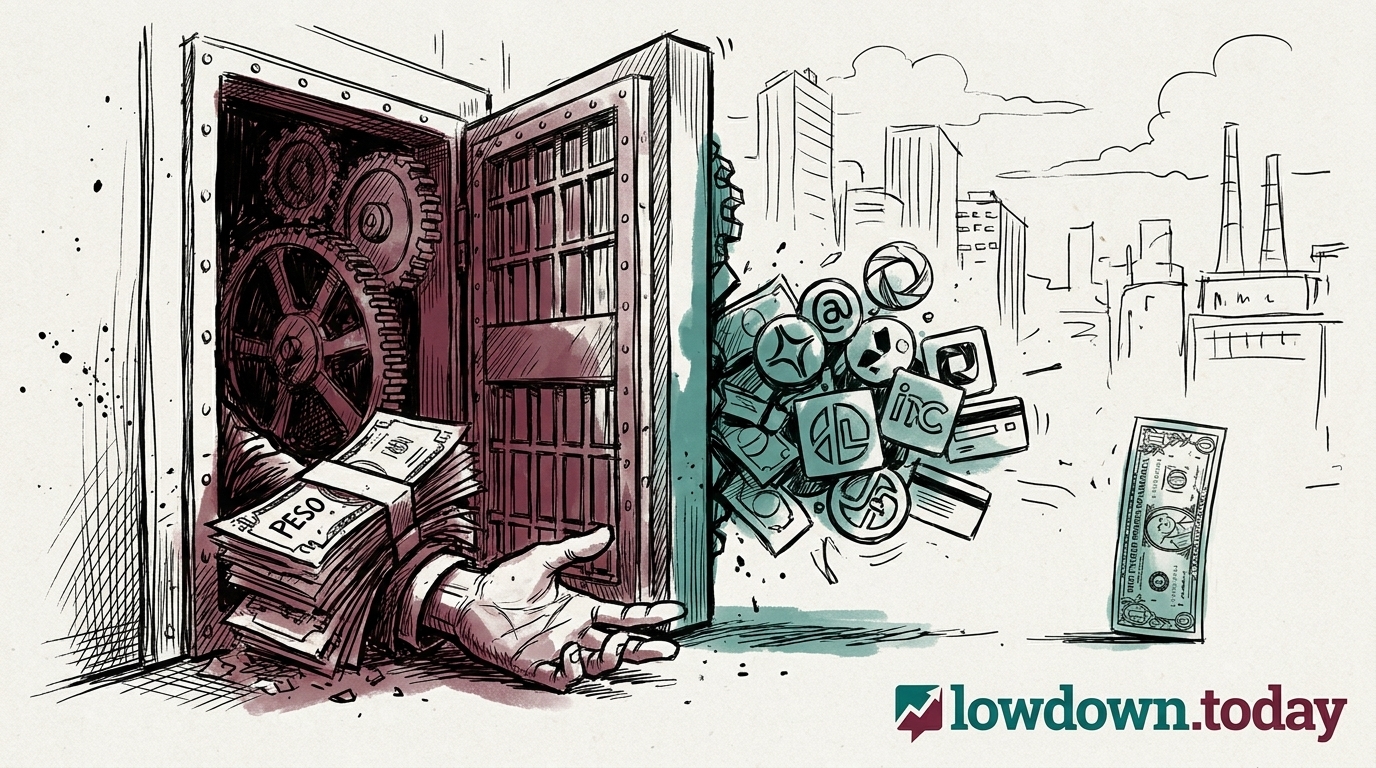
The informal dollar in Cuba reached 600 pesos on Thursday 4 June 2026, a new all-time high, according to El Toque, the diaspora outlet whose daily index is the most widely cited measure of Cuba's real exchange rate 1. The rate was 568 on Tuesday 26 May, a 5.6 per cent depreciation in nine days; the euro reached 680 pesos over the same window. El Toque derives its figures from peer-to-peer transactions rather than the official Banco Central rate, which lags far behind.

The dollar stood at 540 in early May , so this week's reading is roughly 11 per cent higher in a month, building on a baseline that was already climbing. What accelerated it was the loss of fuel: the Sovcomflot tanker Universal turned away from Cuba on 26 May , leaving 270,000 barrels of diesel undelivered and widening the grid deficit, which deepens the import scramble that the informal market prices.

In the exchange rate, the sanctions architecture and the older fuel crisis meet. A peso this weak is not the product of any one June order; it reflects a structural shortage of hard currency that predates 2026. What the GAESA wind-down adds is the removal of the tourism and card flows that injected dollars into the economy, which is why the slide arrived in the same week the foreign operators began to leave.


Deep Analysis

In plain English

Cuba has two exchange rates for its peso currency. The official government rate says one US dollar is worth about 492 pesos. The black-market rate, which most ordinary Cubans actually use, hit 600 pesos to the dollar on 4 June 2026. That gap matters enormously. A nurse paid in pesos effectively earns 18 per cent less in real purchasing power than the official numbers suggest, because anything priced in dollars (most food, medicine, and imported goods) has to be bought at the street rate. The closer the street rate gets to the 1993-94 level of 150, the more it signals a crisis of the same depth, even though 600 sounds like a very different number.

Deep Analysis
Root Causes

Three converging pressures drive the depreciation. First, hard-currency supply collapsed: Venezuelan crude cut-off since November 2025 and Russian tanker non-arrival removed the energy exports that had underpinned GAESA's hard-currency earnings, shrinking the dollars available to prop up the formal rate.

Second, remittance demand structurally outstrips supply. Formal remittances run approximately 70 per cent below the 2019 baseline, per the Havana Consulting Group, while informal banquero networks have captured the majority of diaspora transfers. Most remittances arrive as dollars, which recipients sell informally for pesos at the market rate, creating constant sell-pressure on the dollar and buy-pressure on the peso that the state cannot replicate through CADECA.

Third, the expectation channel. Cuban households and informal traders price future fuel and food scarcity into the current exchange rate. The tanker non-arrival functions as a forward signal: if no fuel, then no production, then food shortfalls, then further peso depreciation. The 5.6 per cent nine-day move to 600 reflects those expectations being front-run, not merely current conditions.

What could happen next?
  • Risk

    If the informal rate breaches 700 CUP before any new fuel shipment arrives, the 1993-94 rationing breakdown threshold is structurally within range.

  • Consequence

    Peso-denominated state wages lose purchasing power in real time, accelerating out-migration among professionals whose skills give them an exit option.

First Reported In

Update #6 · Cuba sanctions hit the cash economy

El Toque· 4 Jun 2026
Read original
Different Perspectives
Spanish hotel operators
Meliá and Iberostar exited GAESA-linked Cuban hotels before 5 June to protect their broader Caribbean and global portfolios from secondary-sanctions exposure. Spain's commercial stake in Cuban tourism makes Madrid a structural veto risk if the EU advances Cuba-specific restrictive measures under Ollongren's mandate.
Cuban opposition / OCDH
After the US Senate killed a Cuba war-powers check 51-47 on 29 April, the Madrid-based OCDH formally demanded an EU reparations fund for political prisoners on 4 June, routing its pressure campaign to Brussels where the EU's existing restrictive-measures machinery, used previously against Venezuela and Belarus, does not require a Senate majority.
China
China
Beijing paired a birthday telegram to Castro with no operational commitment on fuel or credit, using the occasion to signal non-abandonment ahead of the G20 without incurring the cost of a replacement tanker. China has no military-logistics presence in the Caribbean comparable to Soviet-era capacity.
Russia
Russia
Moscow sent an official birthday message to the indicted Raúl Castro on 3 June, a deliberate legitimacy signal to Global South partners, while Sovcomflot has announced no replacement for the Universal's 270,000-barrel cargo that turned away on 26 May. The pattern mirrors Soviet public solidarity during the 1962 crisis while privately managing exposure.
Trump administration / OFAC
Washington let a calendar date do the work: no new designations were needed after 18 May, and the looming 5 June expiry, which strips foreign firms' legal-exit defence, drove the hotel exodus and card suspension without a second executive action. The administration has not publicly commented on the compound utility failures.
Cuban government and citizens
Havana's only countermeasure this week was a Granma editorial defending GAESA by name, conceding the designation is biting hard enough to require a public answer. Residents of Havana and Guanabacoa banged pots on the nights of 3-4 June, the first confirmed capital protests, after gas, water, and the state milk ration all failed.
