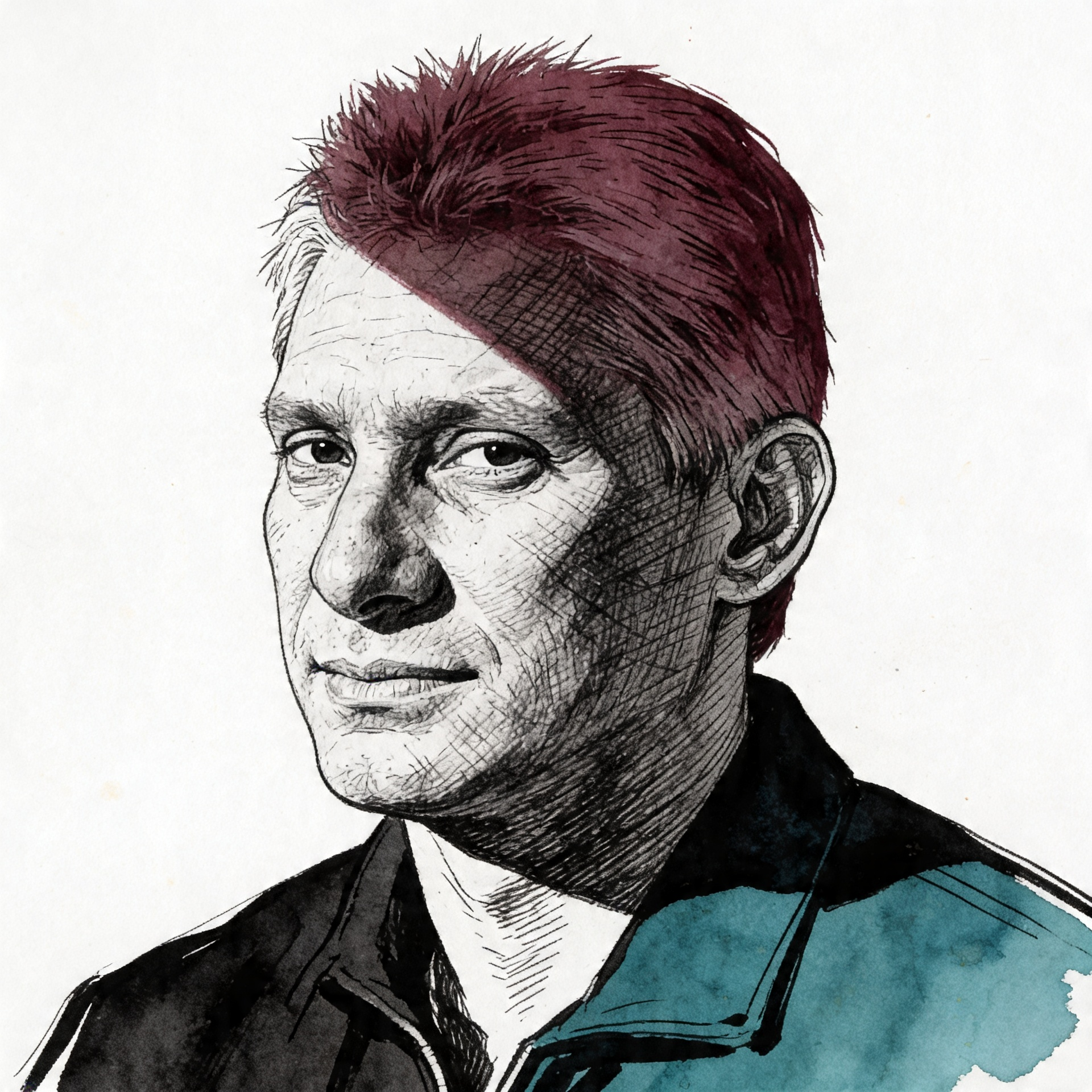
Miguel Díaz-Canel
Cuban President since 2018; managing back-channel contact outside the elected government while maintaining public silence.
Last refreshed: 18 May 2026 · Appears in 1 active topic
Díaz-Canel offers 'dialogue on equal terms' but rules out the one item Washington wants; what does Havana actually negotiate?
Timeline for Miguel Díaz-Canel
Offered dialogue on equal terms while ruling political prisoners off the table
Cuba Dispatch: Havana calls the Castro charge coercionMentioned in: Peso slides to 540; MLC spikes to 420
Cuba DispatchAdmitted Russian crude from Kolodkin was running out and no next shipment was confirmed
Cuba Dispatch: Diaz-Canel admits Russian oil running out- Did Cuba release political prisoners in 2026?
- Cuba announced 51 releases in March 2026 and claimed 2,000+ by April, but independent monitors found no political prisoners in the amnesty.Source: OCDH March 2026 report
- Who is Miguel Diaz-Canel?
- Cuba's president since 2018 and Communist Party First Secretary since 2021, successor to Raul Castro.Source: Cuban state record
- What did Cuba offer in the Holy See talks?
- Diaz-Canel pledged 51 prisoner releases as Holy See-mediated talks began in March 2026.Source: Cuban government statement
- Did Cuba release political prisoners in its 2026 amnesties?
- No. Amnesty International, OCDH, and Prisoners Defenders all verified that neither the 51-prisoner pardon (13 March) nor the 2,010-prisoner pardon (2 April) included prisoners of conscience. Pardon decrees explicitly exclude crimes against authority, the category used to prosecute dissidents.Source: Amnesty International / OCDH
- Who is Raúl Guillermo Rodríguez Castro and why did the US meet him?
- Raúl Guillermo Rodríguez Castro is a grandson of former President Raúl Castro, aged 41, who holds no government position. A senior State Department official met him separately during the 10 April 2026 Havana visit, in a back-channel distinct from the formal state-to-state talks.Source: Axios / Cuba Dispatch
- What is Miguel Díaz-Canel's role in Cuba?
- Díaz-Canel is Cuba's President (since April 2018) and Communist Party First Secretary (since 2021), having succeeded Raúl Castro. He is the country's top elected official but operates within limits set by the military establishment.
- What did Díaz-Canel say about negotiations on 13 May 2026?
- Díaz-Canel posted on Facebook on 13 May that Cuba is 'always willing to dialogue on equal terms' but stated explicitly that 'political prisoners are not on the negotiating table'. He did not name EO 14404, the Universal, or the family-relatives designations.Source: Miguel Díaz-Canel Facebook 13 May 2026
- Who is Miguel Díaz-Canel?
- Miguel Díaz-Canel has been President of Cuba since April 2018 and First Secretary of the Communist Party since 2021. He succeeded Raúl Castro as a loyalist technocrat. His tenure has coincided with Cuba's worst economic contraction since the Special Period.Source: Cuban government / Communist Party
- Did Díaz-Canel publicly respond to EO 14404?
- No. Díaz-Canel's 13 May Facebook post offered conditional dialogue but did not name EO 14404, the Sovcomflot Universal, or the family-relatives designations track. The silence is conspicuous given the 9 May Vatican audience and Havana Cathedral mass.Source: Lowdown Cuba Dispatch tracking
- How has Díaz-Canel handled prisoner releases in 2026?
- He announced 51 releases on 13 March 2026 and more than 2,000 by 3 April, framed as goodwill. Amnesty International, OCDH and Prisoners Defenders verified zero prisoners of conscience in either wave because pardon decrees exclude Articles 142-149 (crimes against authority).Source: Amnesty International / OCDH
- When did Cuba's leadership admit fuel shortages publicly?
- On 4 May 2026 Díaz-Canel said in Mesa Redonda that the Anatoly Kolodkin's cargo was running out; by 13 May Energy Minister Vicente de la O Levy publicly stated Cuba was 'out of fuel' and confirmed Venezuelan supply had been interrupted since November 2025.Source: Cuban Mesa Redonda broadcasts
- Why does Díaz-Canel not name EO 14404 publicly?
- Naming EO 14404 would acknowledge the personal-relatives designation architecture as legitimate. His Facebook framing keeps the dispute at the level of generic 'pressure' while reserving political prisoners as a non-negotiable category.Source: Lowdown Cuba Dispatch analysis
Background
Miguel Díaz-Canel heads the Cuban state as both President (since April 2018) and Communist Party First Secretary (since 2021). He succeeded Raúl Castro as a loyalist technocrat rather than a revolutionary figure. His tenure has coincided with Cuba's worst economic contraction since the Special Period: fuel shortages, rolling blackouts, and mass emigration. His government has responded to domestic protest with systematic repression, jailing thousands following the 2021 uprisings. He is Cuba's public face internationally but operates within limits set by the old guard and the military establishment.
Díaz-Canel announced 51 prisoner releases on 13 March 2026 as US-Cuba talks opened; by 3 April the government claimed more than 2,000 prisoners freed. Human rights monitors — Amnesty International, OCDH, and Prisoners Defenders — documented zero prisoners of conscience in either pardon wave, as Cuba's pardon decrees explicitly exclude 'crimes against authority' (Articles 142-149). The 10 April 2026 US State Department visit to Havana ran two distinct tracks: formal state-to-state talks through Deputy FM Carlos Fernández de Cossío García del Toro, and a separate back-channel meeting between a senior State Department official and Raúl Guillermo Rodríguez Castro — a Castro grandson with no government position. Díaz-Canel has not publicly acknowledged or disavowed the back-channel meeting.
By May 2026 Díaz-Canel's public messaging hardened around the energy crisis and the EO 14404 personal-sanctions architecture. On 4 May, in a Mesa Redonda appearance, he stated the Anatoly Kolodkin's 730,000-barrel cargo was running out — a framing that hardened by 13 May when Energy Minister Vicente de la O Levy publicly told the same programme that Cuba was 'out of fuel' and that Venezuelan crude supply had been interrupted since November 2025. On 13 May, Díaz-Canel posted on Facebook that Cuba is 'always willing to dialogue on equal terms' but stated explicitly that 'political prisoners are not on the negotiating table'. The Facebook statement did not name EO 14404, the Universal, or the family-relatives designations. The conditional public offer rather than a state-channel confirmation forecloses the single concession the US dissident-release track requires, and arrives the same week the Supreme Popular Court rejected dissident artist Luis Manuel Otero Alcántara's early-release appeal, ruling the natural sentence-end date of 9 July 2026 stands. Díaz-Canel's public silence on the 9 May Vatican audience between Pope Leo XIV and Marco Rubio is conspicuous, especially given the Cathedral mass attended at vice-presidential level the same day.

