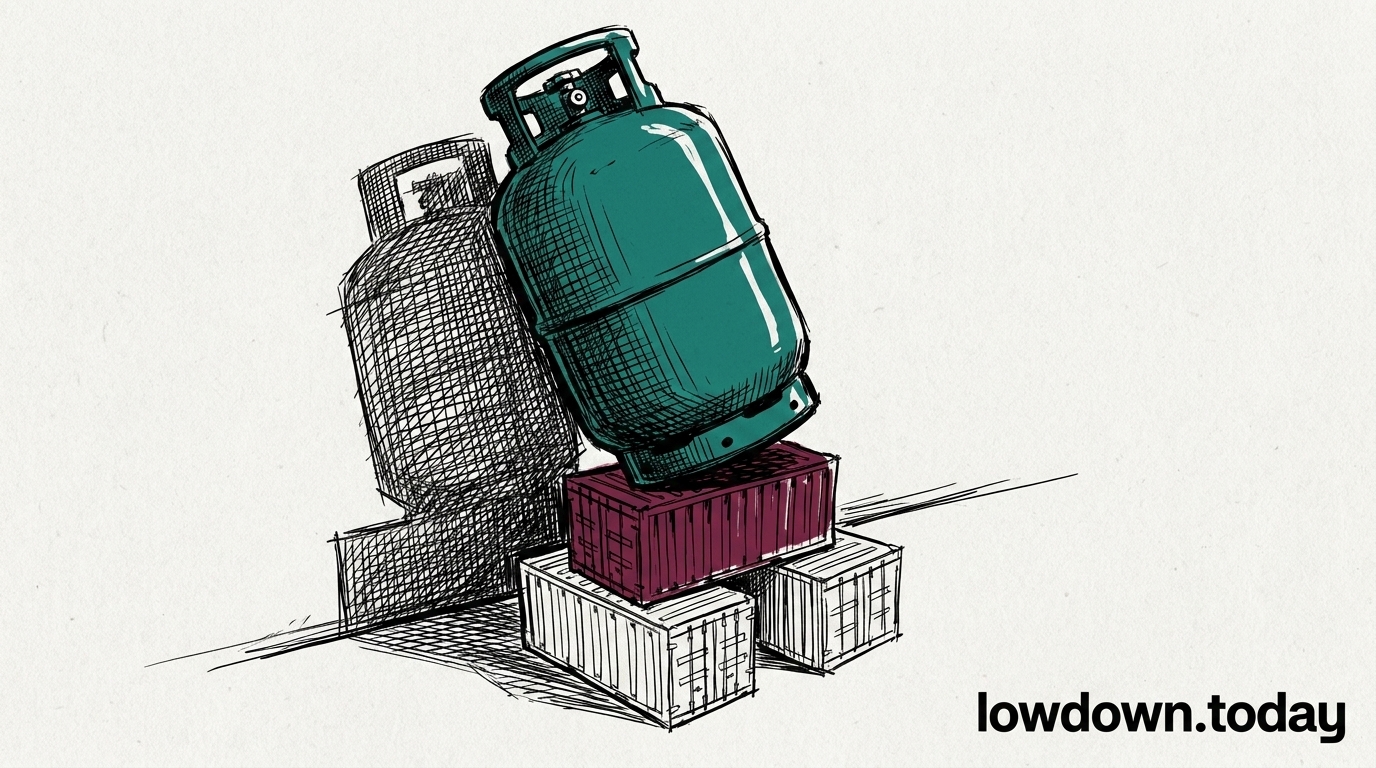
Resolution 155/2026 took a standard 10kg cooking gas cylinder from 213 to 350 CUP (Cuban pesos) on Thursday 16 July, a 64 per cent rise reaching 1,707,763 contracted customers, 26 per cent of them in Havana and a further 37 per cent across Matanzas, Villa Clara, Camagüey, Holguín and Santiago de Cuba1. The Ministry of Finance and Prices set liquefied petroleum gas (GLP, the bottled fuel most Cuban kitchens cook on) at 35 CUP per kilogram, effective the day it appeared in Gaceta Oficial No. 592. Cuba's state gas company cut piped supply to Havana on 3 June; the households that fell back on cylinders are the ones now paying 350 CUP for one.
The state justified the rise, as reported by Granma and Escambray, by the "recrudecimiento del bloqueo económico, comercial, financiero y energético" and its effect on oil imports3. Cubadebate and the Cuban Foreign Ministry were unreachable throughout the reporting window, so that attribution reaches us through state-media pickup rather than a primary text. Washington did escalate. The US State Department designated the fuel importers Enetec S.A. and Coreydan S.A. on Monday 13 July for operating in Cuba's energy sector4. Those designations were three days old when the price took effect, and a decree carrying a customer count broken down by province is not drafted in seventy-two hours.
Havana's own ministers had already put the supply failure somewhere older. On Friday 3 July, Vice Prime Minister and Foreign Trade Minister Óscar Pérez-Oliva said Cuba now takes fuel in shipping containers rather than tanker cargoes, calling the arrangement "unsustainable for an economy", in remarks reported by Periódico Cubano and carried by no other outlet5. He would not say who moves it, in what volume, or whether the state or private operators control it. Energy Minister Vicente de la O Levy dated the interruption of Venezuelan crude to November 2025, and no tanker has reached Matanzas, Santiago or Mariel since OFAC (the US Treasury's Office of Foreign Assets Control) designated the state oil company CUPET (Cuba Petróleo) on 11 June.
Sanctions sit in the causal chain and the humanitarian cost of that is real: the fuel famine is externally imposed, and a government facing one that raises the price of a scarce good is doing what governments do. The narrower point survives that steelman. The state reached for a three-day-old escalation to explain a price its own Vice Prime Minister had already explained better, and earlier, with a fact about containers. El Toque's index put the informal dollar at 660 CUP on 16 July against 645 on 4 July6, so the cylinder costs more in a currency worth less.




