Skip to content
Briefings are running a touch slower this week while we rebuild the foundations.See roadmap
Cuba Dispatch
4JUN

Peso slides to 540; MLC spikes to 420

4 min read
11:38UTC

The informal USD/CUP rate reached 540 by early May per the elToque tracker; the MLC spiked to 420 on 4 May before settling at 400.

PoliticsDeveloping
Key takeaway

CADECA's reform did not close the gap; the peso slide now reads as hard-currency shortage.

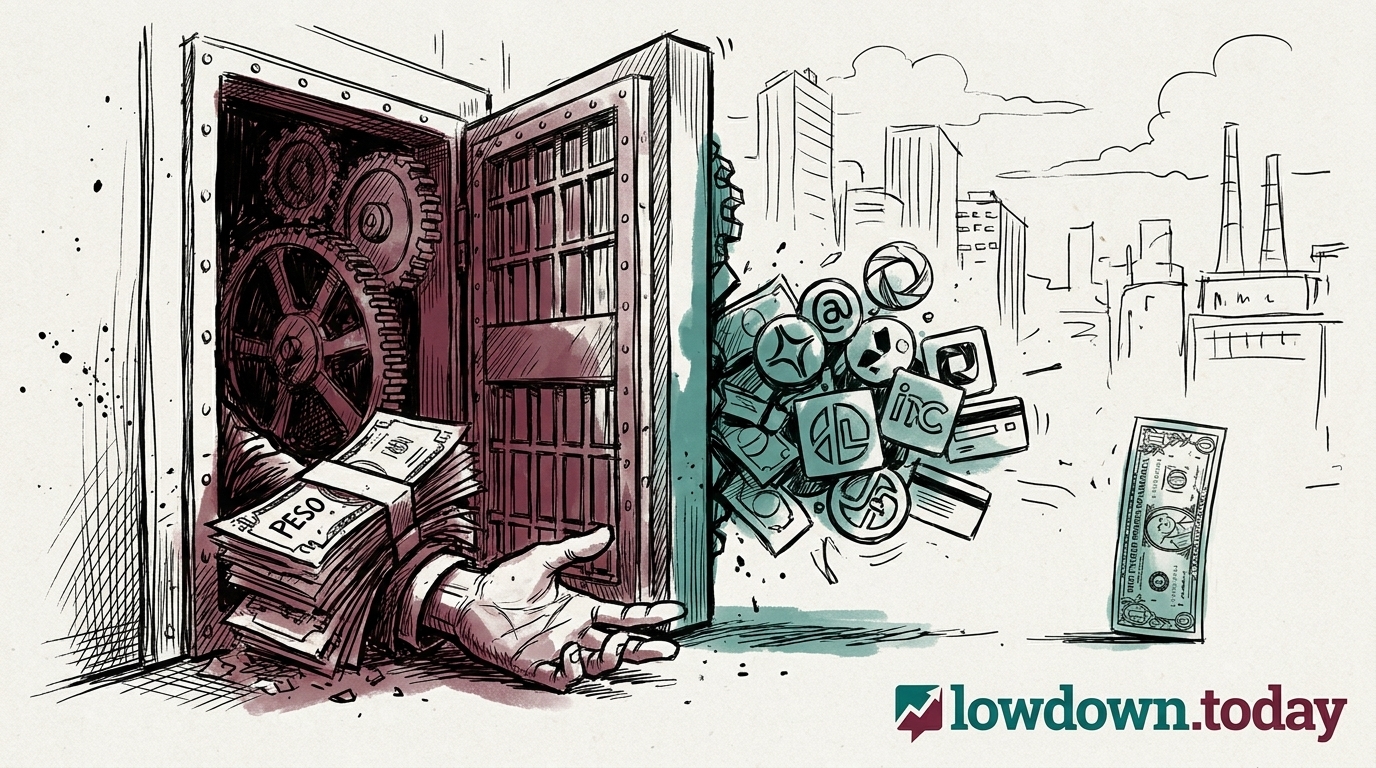
The informal USD/CUP rate reached 540 pesos by early May 2026 per the elToque tracker that traders use as the working reference, up from the 530 baseline of 22 April 1. The euro reached 618 CUP. The MLC (Moneda Libremente Convertible, the digital currency Cubans use to clear hard-currency goods in state shops) spiked to 420 on 4 May before settling at 400 on 6 May.

The slide has now run continuously since elToque first crossed the 500-peso line in late February. CADECA's (Casas de Cambio, the state currency exchange) dollar-acceptance reform on 7 April was framed as a measure to close the spread between the state rate of about 502 pesos to the dollar and the informal rate; one month on, the spread has widened by ten pesos rather than compressed. The reform did not change the underlying problem, which is that hard currency does not enter the state circuit at the rate the state quotes for it.

The currency move tracks the fuel position. The MLC spike to 420 on 4 May landed the same day Miguel Díaz-Canel admitted Russian crude was running out (see related event in this dispatch for the admission's terms). Hard-currency holders read presidential admissions as supply signals; the convertible unit responded within hours. The peso slide is then the slower, household-side consequence: salaries paid in pesos buy less every fortnight while imported goods continue to be priced against the informal rate.

The Russian-oil cushion that paused the worst grid stress through April has not paused the currency one. For Cuban households, the practical reading is that the cost of a litre of cooking oil at the agromercado, the price of paracetamol on the parallel market, and the remittance value parents in Spain send for school costs are all moving at the elToque rate, not the state one. The reform Havana hoped would close the gap has not yet bitten on the demand side, and the supply side keeps tightening.


Deep Analysis

In plain English

Cuba has a complicated money system. The regular Cuban peso (CUP) is the currency most Cubans are paid in, but it buys very little because of inflation. There is also a digital hard-currency called MLC that is used in state shops that sell imported goods, electronics, food items, cleaning supplies. And then there is the informal market where people buy and sell actual US dollars and euros at rates set by supply and demand. By early May 2026, you needed 540 Cuban pesos to buy one US dollar on the street, up from 530 in late April. The euro cost 618 pesos. For context, the average monthly Cuban state wage is around 4,500 pesos, so a month's pay buys about eight US dollars at the street rate. When Cuba's president admitted the Russian oil was running out, the MLC rate spiked to 420 pesos before settling back to 400, because people anticipated shortages and tried to protect their savings.

Deep Analysis
Root Causes

Cuba's monetary system has three parallel price levels: the official CUP wage economy, the MLC hard-currency shop economy, and the informal USD/EUR street market. CADECA's April reform acknowledged dollars at a rate of approximately 120 CUP/USD, still less than a quarter of the informal rate of 540.

The gap persists because CADECA's supply of dollars is limited to tourist exchange and remittance flows, while demand comes from the entire population seeking to preserve purchasing power against inflation.

The MLC's 4 May spike to 420 from a 400 base reflects the specific channel through which domestic uncertainty manifests: Cubans who receive MLC-denominated transfers (typically from diaspora remittances via Western Union and informal networks) sell MLC at the informal rate to access CUP for domestic expenses, or hold MLC as a store of value. The spike follows the fuel-gap admission because MLC holders anticipated potential import disruptions that would reduce MLC-shop inventory.

What could happen next?
  • Consequence

    Without a confirmed fuel delivery or a credible CADECA dollar supply increase, the informal rate is likely to continue sliding as the fuel cushion that paused April's worst pressures is exhausted.

  • Risk

    If the informal rate decouples from supply-event anchors and begins reflecting pure confidence collapse, as occurred in Venezuela from 2018, the pace of depreciation could accelerate independently of fuel delivery outcomes.

First Reported In

Update #3 · Family sanctions land as the grid relapses

elToque· 7 May 2026
Read original
Different Perspectives
Spanish hotel operators
Meliá and Iberostar exited GAESA-linked Cuban hotels before 5 June to protect their broader Caribbean and global portfolios from secondary-sanctions exposure. Spain's commercial stake in Cuban tourism makes Madrid a structural veto risk if the EU advances Cuba-specific restrictive measures under Ollongren's mandate.
Cuban opposition / OCDH
After the US Senate killed a Cuba war-powers check 51-47 on 29 April, the Madrid-based OCDH formally demanded an EU reparations fund for political prisoners on 4 June, routing its pressure campaign to Brussels where the EU's existing restrictive-measures machinery, used previously against Venezuela and Belarus, does not require a Senate majority.
China
China
Beijing paired a birthday telegram to Castro with no operational commitment on fuel or credit, using the occasion to signal non-abandonment ahead of the G20 without incurring the cost of a replacement tanker. China has no military-logistics presence in the Caribbean comparable to Soviet-era capacity.
Russia
Russia
Moscow sent an official birthday message to the indicted Raúl Castro on 3 June, a deliberate legitimacy signal to Global South partners, while Sovcomflot has announced no replacement for the Universal's 270,000-barrel cargo that turned away on 26 May. The pattern mirrors Soviet public solidarity during the 1962 crisis while privately managing exposure.
Trump administration / OFAC
Washington let a calendar date do the work: no new designations were needed after 18 May, and the looming 5 June expiry, which strips foreign firms' legal-exit defence, drove the hotel exodus and card suspension without a second executive action. The administration has not publicly commented on the compound utility failures.
Cuban government and citizens
Havana's only countermeasure this week was a Granma editorial defending GAESA by name, conceding the designation is biting hard enough to require a public answer. Residents of Havana and Guanabacoa banged pots on the nights of 3-4 June, the first confirmed capital protests, after gas, water, and the state milk ration all failed.
