Skip to content
Briefings are running a touch slower this week while we rebuild the foundations.See roadmap
Cuba Dispatch
28MAY

Washington stacks three instruments at Cuba

2 min read
08:42UTC

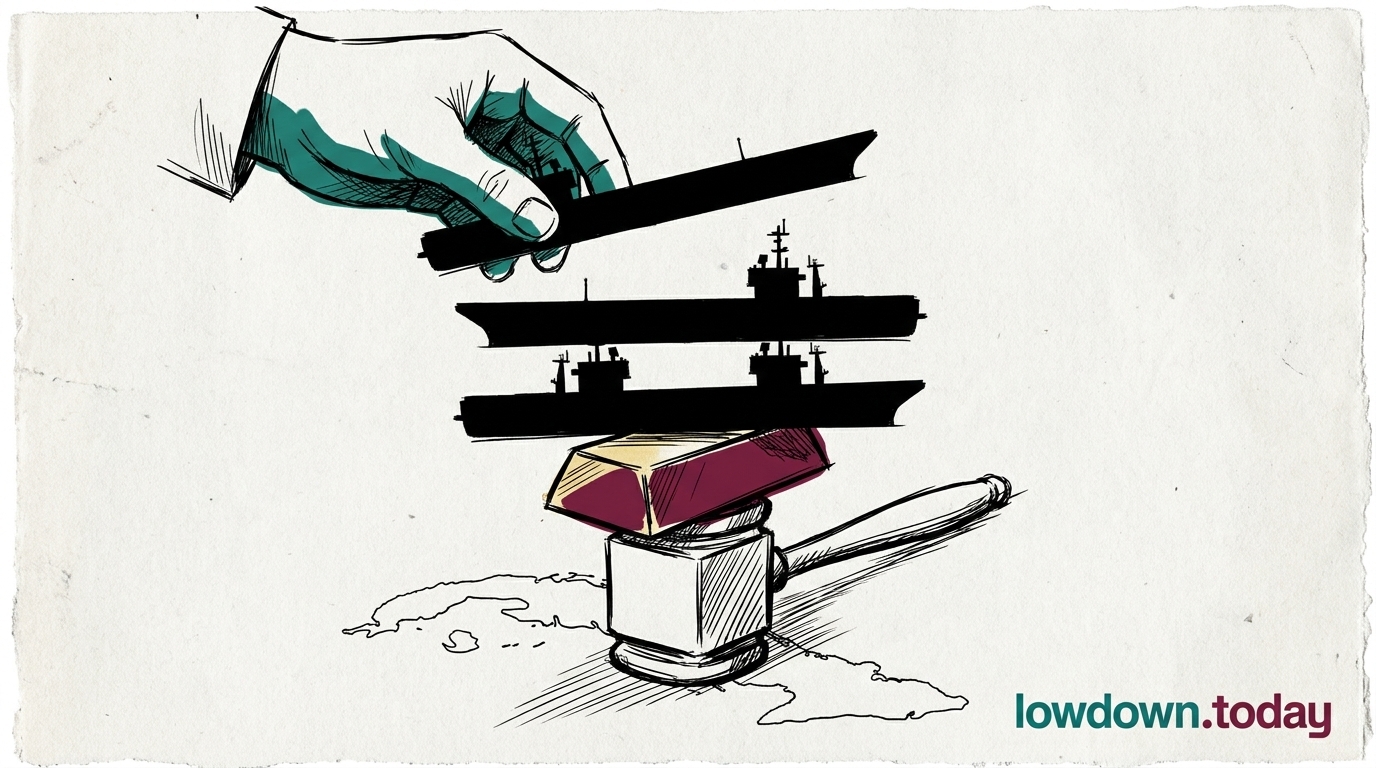
In 72 hours Washington moved on Cuba across three fronts: a second sanctions wave reaching the civilian ministries and the party, a criminal indictment of Raul Castro over the 1996 Brothers to the Rescue shoot-down, and a carrier strike group in the Caribbean. The economic siege is now a multi-domain pressure posture. Havana calls it coercion.

Key takeaway

Four US instruments, legal, personal, military, and fuel, landed in one week, and none can be normalised away without resolving all four.

This briefing mapped
Loading map…
Legal
Regulatory
Military
Economic
Diplomatic
Humanitarian
Domestic

The Department of Justice unsealed a murder indictment of Raul Castro on Cuban Independence Day, charging the 94-year-old former president over the 1996 Brothers to the Rescue shoot-down that killed four men.

Sources profile:This story draws on neutral-leaning sources

The Department of Justice unsealed a grand jury indictment on 20 May. It accuses Raul Castro, now 94, of conspiracy and four murder counts over the 1996 downing of two Brothers to the Rescue planes.

The four deaths in 1996 are established; the indictment alleges culpability it has not proven. The grand jury acted on 23 April, yet Castro faces no extradition and no trial. 

The State Department named eleven Cuban officials and three security institutions under Executive Order 14404, extending asset-blocking from the military economy into the interior ministry, the police and the National Assembly.

Sources profile:This story draws on neutral-leaning sources

Washington's second sanctions wave under Executive Order 14404 landed on 18 May. It blocked 11 named Cuban officials and three bodies: the interior ministry, the national police and the intelligence directorate.

Energy chief Vicente de la O Levy and Assembly head Juan Esteban Lazo Hernandez feature on the list. The roster is reported by outlets, not confirmed verbatim from the primary source. 

The USS Nimitz carrier strike group reached the Caribbean on the same day the Raul Castro indictment was unsealed, deployed under the campaign that captured Venezuela's Nicolas Maduro in January.

Sources profile:This story draws on neutral-leaning sources from United States
United States
LeftRight

The aircraft carrier Nimitz reached the Caribbean on 20 May, the day the Castro charges surfaced. US Southern Command logs the visit as the Southern Seas 2026 exercise, its eleventh edition.

Reading the carrier as Cuba pressure is Lowdown's analysis, not the command's stated mission. It carries weight because it sails under Operation Southern Spear, which seized Nicolas Maduro in January 2026. 

The Sovcomflot tanker Universal abandoned its Cuba run on 26 May, leaving 270,000 barrels of diesel undelivered as the grid deficit widened and the informal dollar hit 568 pesos.

Sources profile:This story draws on neutral-leaning sources

Russia's Sovcomflot tanker Universal abandoned its run to Matanzas on 26 May. It stranded 270,000 barrels of diesel, with no stated port and no Moscow-named replacement.

The state grid operator pencilled a shortfall near 1,960 MW for 27 May, and the informal dollar hit 568 pesos. A US Russian-crude waiver still carves Cuba out, blocking the cargo from any island port. 

Cuba's foreign ministry condemned the Raul Castro charges as political coercion, and on 24 May the US Deputy Secretary of State answered Havana's formal protest directly.

Sources profile:This story draws on neutral-leaning sources

Cuba's foreign ministry branded the Raul Castro charges 'political coercion' through state outlet Cubadebate. The US Deputy Secretary of State answered the Cuban embassy's protest directly on 24 May.

President Miguel Diaz-Canel still offers talks 'on equal terms', but keeps jailed critics off the table. Havana rebuts the charge, protests the sanctions and concedes nothing. 

Prisoners Defenders logged 1,260 political prisoners in its April census, a record, even as the diplomatic confrontation with Washington sharpened.

Sources profile:This story draws on neutral-leaning sources

The Madrid-based monitor Prisoners Defenders put Cuba's political-prisoner tally at 1,260 in its April 2026 census. That is ten above the 1,250 a month earlier and the highest it has logged.

The group builds the figure from named cases that families and witnesses corroborate. It stays far above Havana's line that it jails nobody for politics. 

Jailed dissident Maykel Osorbo rejected a State Security offer of exile or imprisonment until 2030, refusing the trade that has emptied earlier dissident cases.

Sources profile:This story draws on neutral-leaning sources

Imprisoned rapper Maykel Osorbo turned down a State Security bargain. It offered either banishment abroad or a cell until 2030.

Jailed since the 2021 unrest, he rejected the swap Havana uses to send critics overseas. His refusal keeps a prominent name in the prisoner registry rather than cleared from it. 

Caritas Cuba has distributed 82 per cent of a $3M tranche to about 8,800 families, while a larger $100M US offer carries conditions Havana is unlikely to accept.

Sources profile:This story draws on neutral-leaning sources

Caritas Cuba has handed out 82 per cent of a first $3M batch of US relief. It reached roughly 8,800 households in the hard-hit east through the Catholic Church, not the state military business empire.

A far larger $100M package stays parked. Washington attaches political demands that Archbishop Thomas Wenski likened to surrender, and Havana has neither agreed nor refused. 

Closing comments

Direction: up. The specific mechanism that would tip further escalation is a third EO 14404 designation wave naming GAESA principals or senior FAR commanders; OFAC has the legal architecture under the order's 'materially supported' limb and has already moved from one designee on 7 May to fourteen on 18 May, a fourteen-fold jump in eleven days. The named decision point is whether the administration issues a third wave before the Nimitz departs the Caribbean exercise area, estimated within 30-45 days. The de-escalatory off-ramp is a Cuba-specific OFAC general licence replacing the expired GL 134B, which would allow the next Sovcomflot tanker to obtain P&I insurance cover and call at Matanzas. As of 28 May 2026, neither move has been announced.

Different Perspectives
Trump administration and Florida delegation
The administration framed the 18 May designation wave and 20 May indictment as accountability for Cuba's security apparatus; Florida Republicans Gimenez, Diaz-Balart, and Salazar credited constituent pressure for the EO 14404 architecture. Senate Democrats Kaine, Schiff, and Gallego, having lost S.J.Res.124 51-47 on 29 April, called the Nimitz deployment under Operation Southern Spear a constitutional overreach.
MINREX and Cuban government
Cuba's foreign ministry condemned the indictment as 'political coercion' and filed a formal protest met by the US Deputy Secretary of State on 24 May. Diaz-Canel offered dialogue 'on equal terms' but ruled political prisoners off the table, while Cuba's pardon decrees structurally exclude crimes-against-authority charges from every amnesty wave, leaving the 1,260-prisoner count unchanged.
Prisoners Defenders and OCDH human rights monitors
Prisoners Defenders' April 2026 census of 1,260 political prisoners, its highest on record, documents the caseload rising by ten in a month despite repeated Cuban pardon announcements. Maykel Osorbo's refusal of the State Security exile-or-2030 ultimatum in May kept a high-profile name inside the registry Havana would need cleared before any prisoner-release negotiation proceeds.
Sovcomflot and Russia
Moscow has announced no replacement for the Universal after it diverted on 26 May, and Sovcomflot's failure to activate Russia's National Reinsurance Company cover as a substitute for the expired P&I insurance signals that Russian fuel deliveries to Cuba now depend on OFAC-compatible licensing rather than on an unconditional bilateral commitment.
Holy See and WOLA engagement-track analysts
Caritas Cuba distributed 82 per cent of a $3M tranche to 8,800 families via the Church channel Rubio proposed at his 9 May Vatican audience. WOLA analysts note that personal sanctions on peso-denominated officeholders carry limited coercive effect; the Church track is the one instrument that reaches ordinary Cubans directly.
