Skip to content
You can now search across every topic, entity and event.What's new
Washington
Nation / PlaceUS

Washington

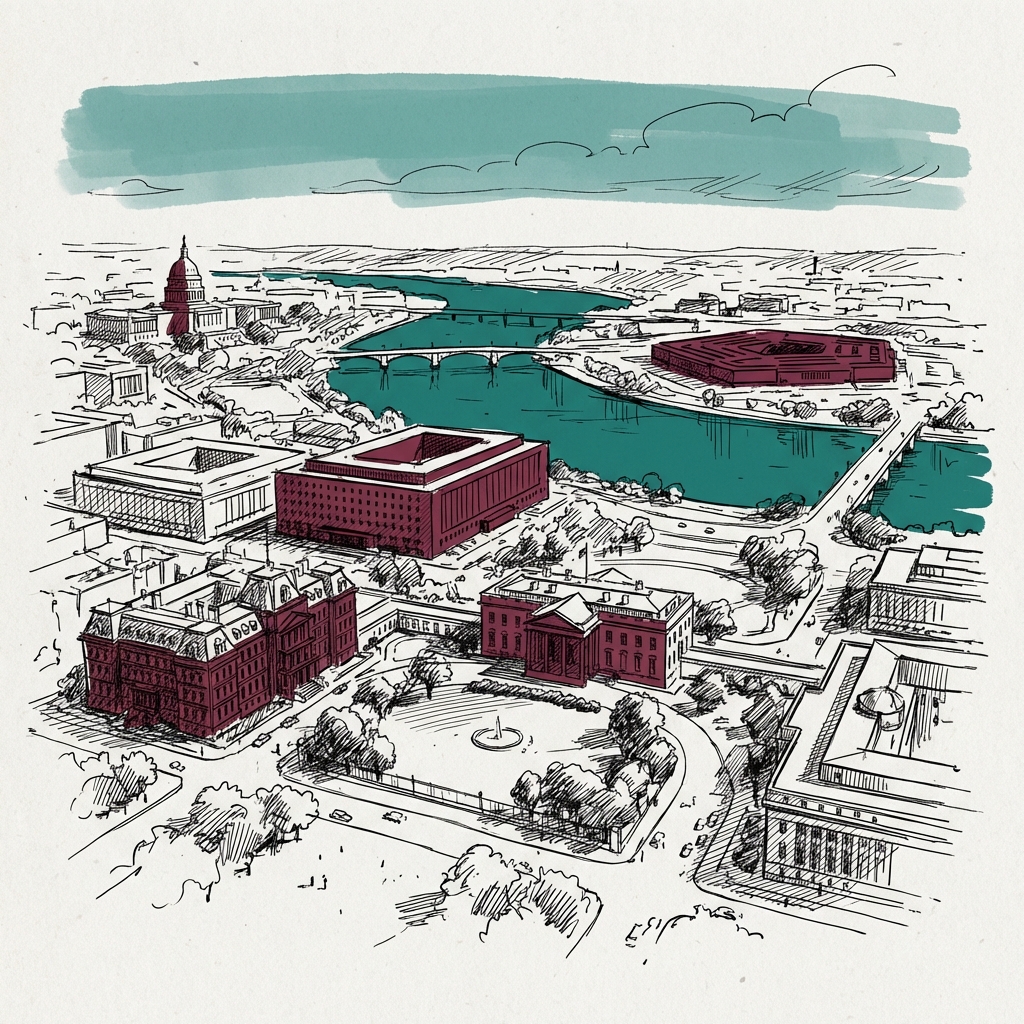
Shorthand for the US executive branch: White House, Pentagon, and State Department acting as one.

Last refreshed: 14 July 2026 · Appears in 6 active topics

Key Question

Has Washington signed a single Iran war instrument in 90 days?

Timeline for Washington

View full timeline →
Common Questions
What did Trump decide about Iran's uranium stockpile on 27 May 2026?
At a 27 May Cabinet meeting, Trump rejected both Russia and China as custodians for Iran's 440.9 kg stockpile of 60%-enriched uranium, eliminating the only third-country storage arrangement on the table and telling his negotiators not to rush a deal.Source: Lowdown Iran Conflict 2026 briefing
Has the United States signed any formal Iran war order since February 2026?
No. By Day 90 of the Iran conflict (27 May 2026), the White House presidential-actions index showed zero signed Iran executive instruments: no Ceasefire order, no use-of-force authorisation, and no directive formally governing the naval blockade.Source: Lowdown Iran Conflict 2026 briefing
Why did the US Congress not pass a war-powers resolution on Iran?
The House pulled its war-powers vote before the Memorial Day recess and rescheduled it to early June, leaving no matching text for the Senate's Kaine resolution floor vote on 1 June. The administration prevailed on timing: both chambers must pass matching text before it reaches the President, and the absent House supplied none.Source: Lowdown Iran Conflict 2026 briefing

Background

Washington is shorthand throughout these briefings for the US executive branch: the White House, the Pentagon, and the State Department. The city itself is a federal district on the Potomac; as a metonym it connotes the US government's collective foreign-policy voice, internal fissures included.

On the Iran front, Washington's defining feature since February 2026 is the gap between stated aim and signed instrument. The White House presidential-actions index showed zero Iran executive instruments across more than 120 days of conflict: no Ceasefire order, no use-of-force authorisation, no directive bounding the naval blockade. Trump rejected both Russia and China as uranium custodians at the 27 May Cabinet meeting, eliminating the only third-country storage arrangement on the table. The whitehouse.gov objectives page had already silently dropped Hormuz reopening from official US war aims. Congress failed to align war-powers texts before the 1 June Senate floor vote; the House pulled its vote before the Memorial Day recess and the administration prevailed on timing. On 29 June, Washington and Tehran verbally agreed to halt offensive operations; no instrument was signed. On 30 June, envoys Witkoff and Kushner travelled to Doha for indirect shuttle talks with Qatari and Pakistani mediators; no direct US-Iran meeting occurred and no new instrument was signed in the window.

Across other topics, Washington runs simultaneous competing policy tracks. On Cuba, Treasury's Scott Bessent manages OFAC SDN designations while Secretary of State Marco Rubio maintains a Vatican humanitarian track alongside a State Department bilateral channel opened in April. On domestic elections, the DOJ filed suit against 29 states for voter-registration data, three federal courts blocked seven provisions of the ballot executive order, and the Senate deadlocked over the SAVE Act. Washington is not monolithic: the DOJ, federal courts, the Senate, allied capitals, and the White House frequently operate in parallel, contradicting each other on timing if not on aim.

Washington's Russia-facing crude-oil waiver has lapsed with no successor. The last of three consecutive 30-day licences, General License 134C, expired on 17 June 2026; as of 13 July the gap runs to 26 days, the longest of the war, read from the absence of any new licence on OFAC's recent-actions listings and specialist trackers rather than from any Treasury announcement. The lapse is separate from the Lukoil-sale licence, which expires on 25 July 2026. The gap sits alongside NATO's 7-8 July Ankara pledge of EUR 70bn for Ukraine, on which Washington was one signatory among an alliance whose own declaration text now records Europe and Canada funding the vast majority of Ukraine's security assistance.

More questions
What three military options against Iran did the US leak in May 2026?
Axios reported three options under White House review on Day 74: resume bombing at 25% intensity, a special-forces operation to seize Iranian uranium stockpiles, and a ground operation to take control of the Hormuz strait. No signed order existed for any of them.Source: Axios
Why has Trump not signed any executive orders about the Iran war?
As of Day 59 (27 April 2026), the White House presidential-actions index records zero Iran-related signed executive instruments. Trump has governed the war entirely through Truth Social posts and verbal orders, none of which have been published in the Federal Register.Source: White House presidential-actions index
Why is Congress threatening to pass an Iran AUMF?
Operation Epic Fury has run 50 days without congressional authorisation. Senator Murkowski is drafting an AUMF while Senator Hawley has committed to a floor push if the war is not over by Day 60, the 29 April WPR Deadline. Thirteen senators have co-sponsored a WPR resolution.Source: Bloomberg / Senate records
What is the US policy on the Strait of Hormuz?
Washington silently dropped Hormuz reopening from its official war aims on whitehouse.gov in April 2026. The US simultaneously operates a CENTCOM naval blockade redirecting commercial vessels and a Project Freedom escort mission in the same chokepoint — a structural paradox reflecting the gap between stated aims and operational orders.Source: Lowdown Iran Conflict 2026 briefing
How is the US managing Russian sanctions while fighting Iran?
Treasury extended Russia's GL-134B seaborne-oil waiver on 19 April — the same day Iran's GL-U lapsed without renewal, creating the first signed Russia-yes, Iran-no asymmetry in US sanctions policy text.Source: OFAC / Federal Register
What does Washington mean in Lowdown's coverage?
Washington is shorthand for the US executive branch: the Trump White House, the Pentagon, State Department, and National Security Council. It covers the apparatus making US policy on Iran, elections, and international diplomacy.Source: Lowdown
Has Washington given up on opening the Strait of Hormuz?
In writing, yes. The whitehouse.gov Clear and Unchanging Objectives page omits Hormuz reopening from official US war aims. The carrier reposition on 7 April and Northwood drafting independent Hormuz ROE reinforce the climbdown operationally.Source: Lowdown
Source Material