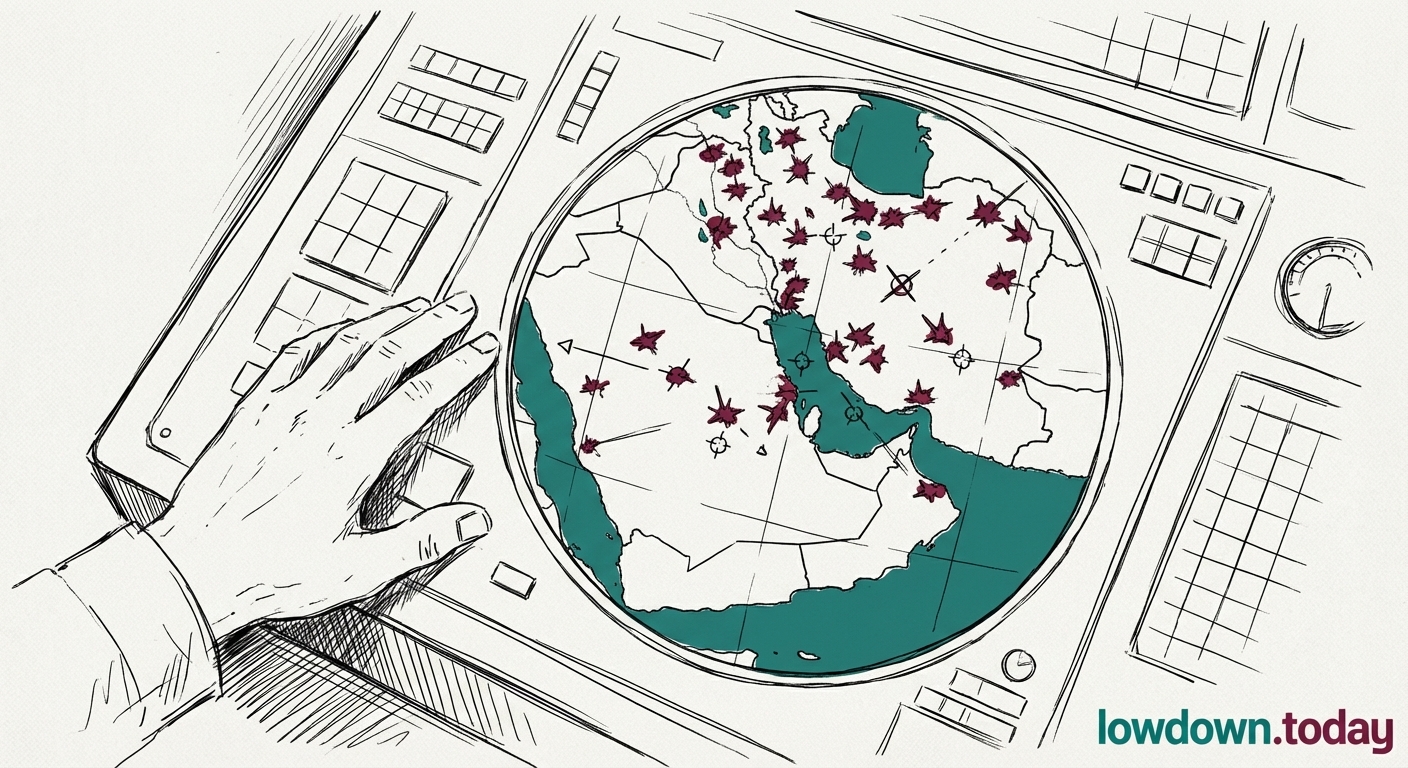
Operation Roaring Lion / Epic Fury
US-Israeli campaign against Iran since 28 Feb 2026; Pentagon recategorised its casualties 26 July.
House Oversight members gave the Pentagon until 18 August to hand over its full casualty change log, after the toll moved between 18 and 14 without explanation and the campaign was renamed from EPIC FURY to Overseas Operations on 26 July.
Last refreshed: 6 August 2026 · Appears in 1 active topic
Three weeks, 7,000 strikes, $19 billion: what exactly is the US trying to win?
Timeline for Operation Roaring Lion / Epic Fury
Accounted for 436 of the 880 dead and wounded over 18 weeks
Iran Conflict 2026: Pentagon adds a 19th name to its tollCongress wants the casualty change log
Iran Conflict 2026Named campaign the administration says ended in May
Iran Conflict 2026: The Iran war gets a new file nameSenate rejects Iran war-powers vote 49-50; Murkowski crosses first time
Iran Conflict 2026Expired without congressional authorisation, creating the legal liability Sledgehammer addresses
Iran Conflict 2026: Pentagon weighs Sledgehammer rename to reset WPR clockBackground
Operation Roaring Lion (Israeli designation) and EPIC FURY (US designation) is the joint US-Israeli air campaign against Iran that opened on 28 February 2026, a separate conflict from the June 2025 Twelve-Day War in which Operation Rising Lion and Operation Midnight Hammer had already destroyed or disabled Iran's Natanz, Esfahan and Fordow nuclear sites. By the time this campaign launched, those facilities had been non-operational for eight months, so its early strikes on nuclear-adjacent infrastructure were access-denial hits on already-ruined sites rather than fresh nuclear damage.
The campaign's actual targets have run to IRGC military leadership, air-defence networks, missile infrastructure and administrative Tehran, alongside later strikes on uranium-processing and heavy-water facilities. Its stated objective shifted without formal declaration from neutralising Iran's nuclear programme toward signalling Regime change, a goal Israeli prime minister Netanyahu has publicly conceded he cannot guarantee.
Congress has never authorised the operation under the War Powers Resolution, and repeated resolutions to force a withdrawal vote have failed on the floor. The Pentagon's later administrative renaming of the operation, and Congress's difficulty pinning down its own casualty figures, have made the operation's naming and accounting a recurring flashpoint distinct from the fighting itself.
Its casualty count keeps shifting
The Pentagon moved its Iran war casualty tracking from Operation Epic Fury into a new Overseas Operations category on 26 July. If EPIC FURY is treated as having formally ended in May, the rename opens a fresh legal window for challenging the operation's authorisation, one Congress has already tried and failed to use twice this year under separate resolutions.
House Oversight Committee members Robert Garcia and Suhas Subramanyam then demanded the Pentagon's full casualty change log, giving officials until 18 August to respond; the death toll has moved between 18 and 14 more than once without explanation.
Congress keeps failing to bind it
The Senate rejected the seventh Democratic Iran war-powers resolution 49-50 on 13 May, the closest result of the conflict; Lisa Murkowski voted yes for the first time, joining Susan Collins and Rand Paul. Six previous resolutions had failed by double digits, and a fourth Republican crossing would produce a binding floor result against the operation.
The Pentagon was separately reported on 12 May to be weighing a rename to 'Operation Sledgehammer' on the theory that a new name resets the 60-day War Powers clock, an argument most Independent legal scholars judge unlikely to survive scrutiny since the 1973 law attaches the clock to the fighting itself.
What is Operation Epic Fury?
How much has Operation Epic Fury cost so far?
How many US troops have died in the Iran war?
Did the US use AI to pick targets in Iran?
How does Operation Epic Fury compare to the 2003 Iraq invasion costs?
Why did the Pentagon stop tracking Iran war casualties under Operation Epic Fury?





