Did the Twelve-Day War actually set back Iran's nuclear programme permanently, or just by months?
Timeline for Twelve-Day War
Fordow inoperable since June 2025 bunker-busters
Iran Conflict 2026Mentioned in: IAEA: bombs won't end Iran's nuclear bid
Iran Conflict 2026Mentioned in: Bunker busters hit Hormuz coastal forts
Iran Conflict 2026Mentioned in: $900 million a day: the war's burn rate
Iran Conflict 2026Mentioned in: $826m interceptor buy; shortage denied
Iran Conflict 2026Background
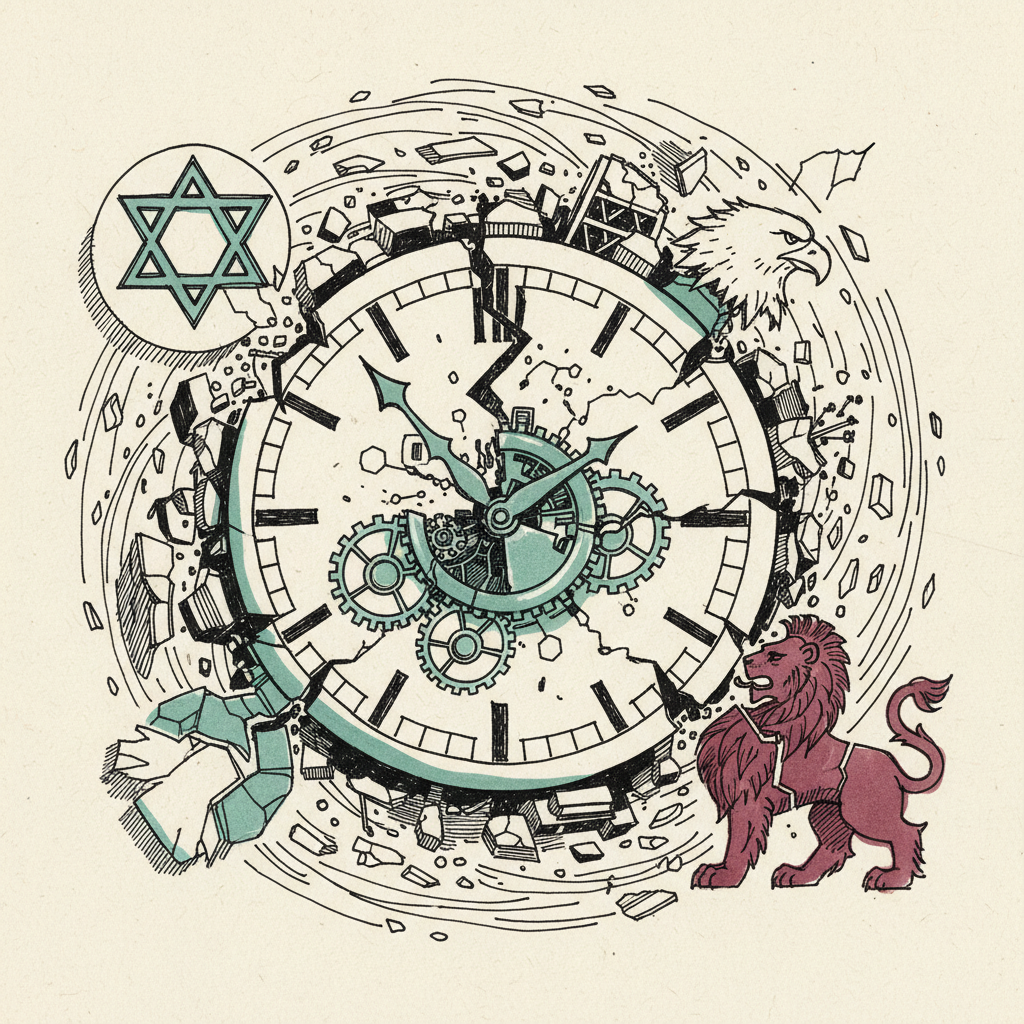
The Twelve-Day War was a 13-24 June 2025 conflict between Israel, the United States, and Iran that destroyed the operational core of Iran's nuclear-enrichment infrastructure. Israel launched Operation Rising Lion on 13 June, deploying 200+ fighter jets in five waves against Natanz, Esfahan, IRGC leadership, and air defences. The United States followed on 22 June with Operation Midnight Hammer, deploying seven B-2 bombers to deliver 12 GBU-57 bunker-buster bombs against Fordow and Natanz and more than two dozen Tomahawk missiles against Esfahan. The conflict also included Iranian retaliation: the IRGC fired ballistic missiles and drones into Israel and struck the US Al Udeid Air Base in Qatar. The war ended on 24 June 2025 with a Ceasefire brokered by President Trump.
The strategic outcome was assessed as the most significant single degradation of a nation-state's nuclear programme since Iraq's Osirak in 1981. Natanz's above-ground plant was destroyed; its underground Cascade halls were assessed by IAEA as "seriously damaged." Fordow was rendered inoperable; its ventilation system was destroyed by GBU-57s. Esfahan's surface facilities were destroyed and all four tunnel entrances collapsed, though an underground storage area holding approximately 200 kg of 60%-enriched uranium survived. Five months after the strikes, no enrichment activity had resumed at any of the three sites per ISIS satellite analysis.
The Twelve-Day War directly shaped the wider 2026 Iran conflict. Iran's Ceasefire decision in June 2025 was later cited by Iranian officials as a strategic error that gave the US and Israel eight months to prepare a second campaign. The unresolved question of Iran's surviving fissile material at Esfahan and the IAEA's denial of access to all three major sites remained live concerns through the spring of 2026 when the 22-Day War erupted.
What was the Twelve-Day War between Israel and Iran?
How much did the June 2025 war set back Iran's nuclear programme?
Did Trump broker the ceasefire that ended the Twelve-Day War?
What happened to Iran's enriched uranium after the 2025 strikes?
How is the 2025 Twelve-Day War related to the 2026 Iran conflict?



Written with AI from Lowdown's published reporting. Not individually reviewed by an editor. Updated 20 April 2026. Editorial standards.