Skip to content
Russia-Ukraine War 2026
15MAR

430 drones and 68 missiles — one night

3 min read
06:46UTC

Russia launched 430 drones and 68 missiles at Ukraine's energy grid in a single night — the heaviest combined strike in months, with ceasefire talks frozen and no restraint in sight.

ConflictDeveloping
Key takeaway

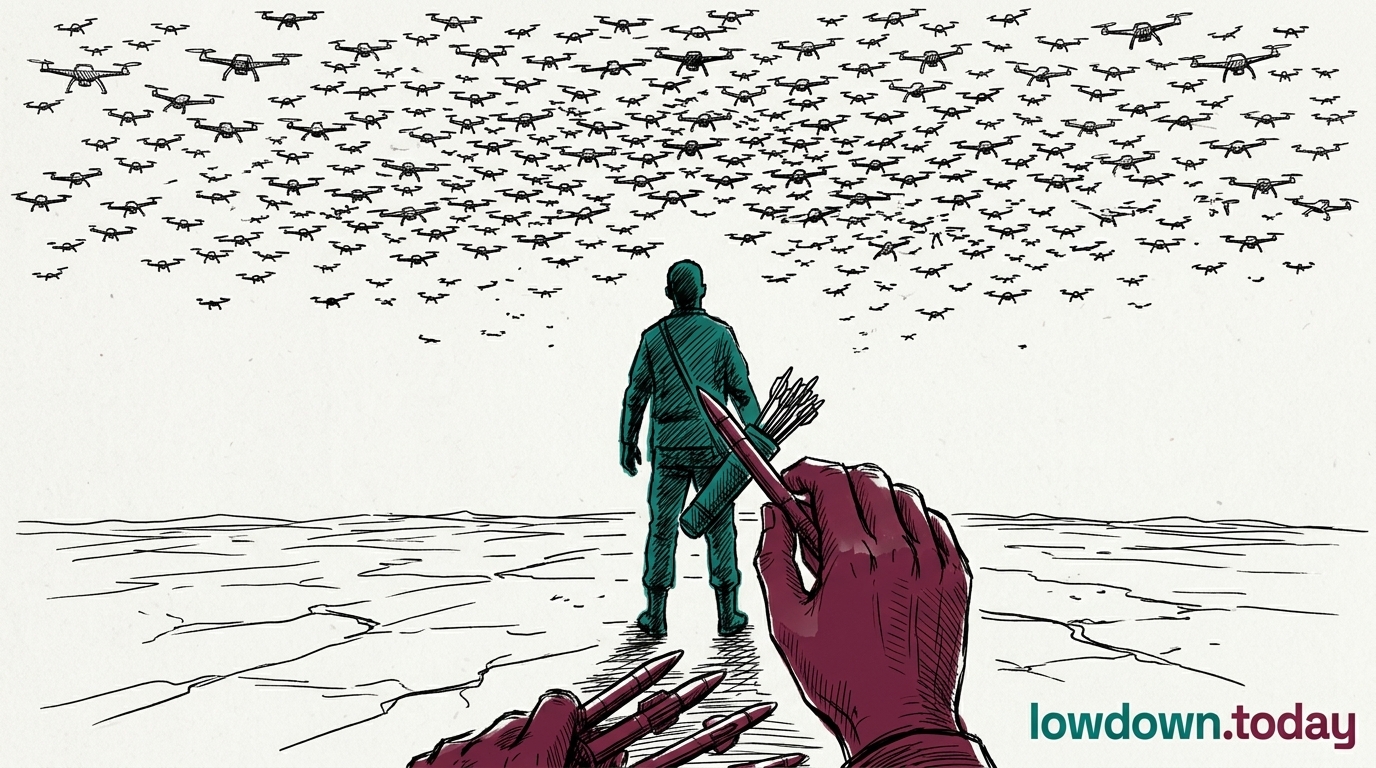
Weekly 9,000-drone volumes signal Alabuga production now structurally outpaces Ukrainian interceptor procurement.

Russia struck Ukraine with 430 drones and 68 missiles on the night of 13–14 March, the heaviest combined barrage in months 1. The missile volley comprised one Zirkon hypersonic, seven Iskander-M ballistic, 25 Kalibr cruise, and 24 Kh-101 cruise missiles. Ukrainian air defences intercepted 402 drones (93.5%) and 58 missiles (85.3%). Four people were killed and 15 wounded in Kyiv region 2. Energy infrastructure was the primary target across four districts.

The barrage was the latest in an escalating series. On 2 March, the Ukrainian General Staff recorded 8,828 kamikaze drones in 24 hours — triple the 2025 daily average. On 7 March, 29 missiles and 480 drones struck energy targets in a single night . Weekly Russian drone launches now exceed 9,000. The industrial base sustaining this tempo rests on the Alabuga plant in Tatarstan and expanded domestic production that sanctions have not disrupted.

The strike came with no diplomatic process imposing restraint. The US-Russia-Ukraine trilateral has been suspended since 4 March ; no date has been set for resumption. The cost asymmetry compounds the pressure: each Shahed costs Russia a fraction of what Ukraine must spend to intercept it, and the Iran war has further strained Patriot stocks . The ten missiles that penetrated defences on this single night translated directly into infrastructure damage and civilian casualties.

Energy targeting follows Russia's established winter campaign doctrine, now in its fourth year: degrade Ukraine's power grid during the final weeks of cold weather to raise civilian pressure on Kyiv. Each successive barrage finds less redundancy in the grid to destroy. It also finds less capacity remaining to lose.

Deep Analysis

In plain English

Russia is flooding Ukraine's air defences with cheap attack drones to force the use of expensive interceptor missiles. Once the cheap drones exhaust the interceptors, precision missiles and hypersonic rounds face a thinned defence. Ukraine shot down 93.5% of this barrage, which sounds impressive. But at 430 drones in a single night, even a 6.5% leak means roughly 28 weapons get through. The deeper problem is industrial. Russia can now launch more drones per week than Ukraine can manufacture interceptors to replace. The arithmetic favours the attacker unless Western supply chains accelerate significantly.

Deep Analysis
Synthesis

A 93.5% intercept rate simultaneously represents Ukraine's greatest tactical achievement and Russia's operational calculation. At sufficient scale, residual leakage generates strategically meaningful damage while burning irreplaceable interceptor stocks. Russia is wagering the exchange ratio favours its industrial depth over Ukraine's Western-supplied precision inventory.

Root Causes

The Alabuga plant in Tatarstan reached full Shahed production scale in late 2024 after two years of post-licensing ramp-up. The 9,000-drone weekly figure reflects that industrial capacity finally meeting operational tempo — not an escalation decision by Moscow, but a production threshold crossed.

Escalation

The inclusion of a single Zirkon alongside mass drones and cruise missiles is a doctrinal test: Russia is probing whether saturation creates a radar-tracking gap that hypersonic weapons can exploit. This is not a one-off targeting decision — it is an operational concept under live evaluation.

What could happen next?
  • Risk

    Sustained 9,000-drone weekly volumes will exhaust Ukrainian interceptor stocks faster than Western supply chains can replenish them.

    Short term · Assessed
  • Consequence

    Repeated energy infrastructure strikes risk reducing Ukrainian electricity exports to the EU, with marginal upward pressure on European wholesale power prices.

    Short term · Suggested
  • Precedent

    Russia's drone-saturation-plus-hypersonic doctrine is establishing a template other state actors are actively studying for contesting peer air-defence networks.

    Long term · Suggested
  • Risk

    If intercept rates fall below 85%, civilian casualties and infrastructure damage will increase non-linearly given the volume of incoming weapons.

    Medium term · Assessed
First Reported In

Update #4 · Ukraine pivots to drone exporter

NPR· 15 Mar 2026
Read original
Causes and effects
This Event
430 drones and 68 missiles — one night
Russian drone and missile volumes have tripled year-on-year, and the heaviest combined barrage in months struck energy infrastructure with no diplomatic process imposing restraint. The interceptor cost asymmetry — cheap drones against expensive defensive missiles — compounds supply pressures the Iran war has already created for Western air defence stocks allocated to Ukraine.
Different Perspectives
Volodymyr Zelenskyy, President of Ukraine
Framed the Washington meeting as Ukraine ending an externally imposed diplomatic pause while pressing military advantage through the air defence campaign and Zaporizhzhia counteroffensive. Ukraine is approaching negotiations from the strongest battlefield position since 2023.
Abu Dhabi mediators
Abu Dhabi mediators
Invested diplomatic credibility in sustaining the peace process through two rounds and a planned March trilateral. Russia's suspension threat tests whether the UAE can exert enough influence on Moscow to keep the talks on track.
Kremlin (Dmitry Peskov)
Russia has not acknowledged the spring offensive designation or the 206,200 confirmed death toll. State media frames the 948-drone barrage as a legitimate response to Ukrainian strikes on Russian territory and dismisses Mediazona casualty figures as fabricated.
Former US sanctions enforcement officials
Former KleptoCapture leader Andrew Adams and former Secretary of State Mike Pompeo both warned the dismantling of enforcement infrastructure is structural, not temporary, and difficult to reverse.
Viktor Orbán
Viktor Orbán
Hungary is the only EU member frozen out of the SAFE rearmament fund, now also halting reverse gas exports to Ukraine. Budapest frames both moves as legitimate pressure over the Druzhba pipeline shutdown ahead of Hungary's 12 April elections.
Keir Starmer, UK Prime Minister
Positioned the UK-Ukraine drone partnership as a national security imperative extending beyond Ukraine, rebuking the Iran conflict's pull on Western attention. The defence industrial declaration commits British manufacturing to Ukrainian drone designs.
