Skip to content
Briefings are running a touch slower this week while we rebuild the foundations.See roadmap
Russia-Ukraine War 2026
1APR

State Dept shields Chevron from Kyiv

2 min read
16:30UTC

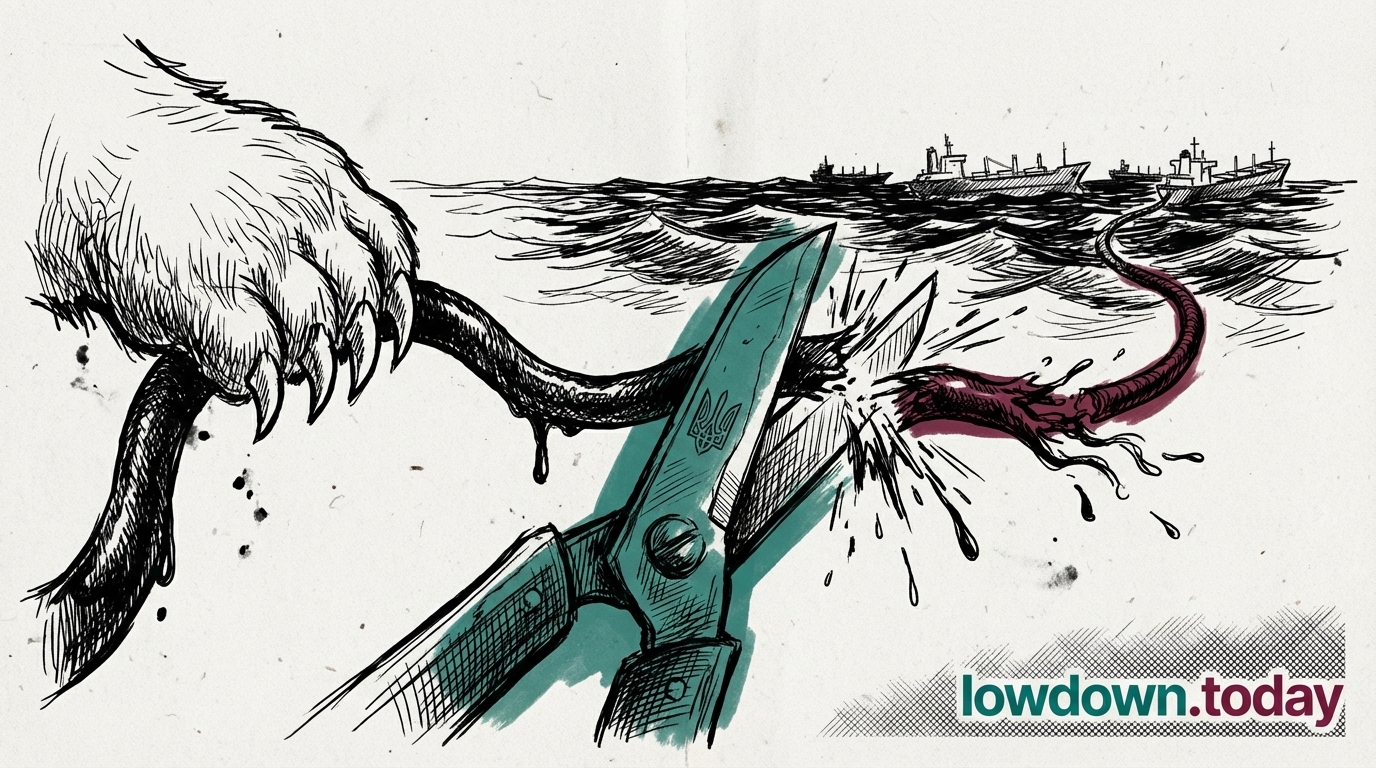
A formal warning told Ukraine to stop hitting the Caspian Pipeline Consortium terminal at Novorossiysk, protecting an American commercial asset rather than a Russian one.

ConflictDeveloping
Key takeaway

Kyiv's targeting discretion now runs through US commercial channels, not strategic ones.

The State Department formally warned Kyiv to stop "targeting its interests at the port" after Ukrainian drones struck the Caspian Pipeline Consortium (CPC) terminal at Novorossiysk on 6 April 1. CPC is not a Russian asset in the ordinary sense. Chevron and ExxonMobil sit on the shareholder register alongside KazMunayGas, and Chevron's Tengiz fields in Kazakhstan rely on the terminal to reach tidewater.

Read plainly, the warning protects two American oil majors, not Moscow. Kyiv defied the request and Zelenskyy then proposed a mutual energy ceasefire via US intermediaries. Moscow had already rejected that proposal once in late March , when it was floated in response to Russian strikes on Ukrainian energy infrastructure.

The mechanism matters. A demarche routed through State, protecting commercial shareholders of a transit joint venture, is not the same instrument as a strategic red line drawn by the White House against escalation. But in the actions ledger, the difference dissolves: Ukrainian targeting discretion is being contested through US commercial channels, and the contestation has a documented outcome requesting restraint.

Deep Analysis

In plain English

Ukraine struck a pipeline terminal at Novorossiysk that ships oil out of Russia. But the US State Department told Kyiv to stop, because American oil companies Chevron and ExxonMobil own a share of the terminal's infrastructure. Chevron uses the same terminal to export oil from Kazakhstan, a country that is not at war with anyone. Damaging the terminal hurts Kazakhstan's economy and Chevron's profits, even if the intended target was Russia's oil revenue. This is a case where Ukraine's military strategy conflicts directly with US corporate interests.

Deep Analysis
Root Causes

The CPC terminal is the only deep-water Black Sea export route for Chevron's Tengizchevroil stake, which produces roughly 650,000 barrels per day from Kazakhstan. Chevron has invested over $45 billion in the Tengiz field and holds no viable alternative export route if the CPC terminal is rendered non-operational.

The secondary root cause is that the Abu Dhabi Round 2 process explicitly left energy infrastructure targeting as an unresolved issue. Zelenskyy's mutual energy ceasefire offer via US intermediaries was rejected by Moscow in late March, meaning Ukraine had no diplomatic channel to constrain Russian energy targeting in exchange for halting its own strikes.

What could happen next?
  • Consequence

    The warning effectively grants Russia de facto protection for the CPC terminal, one of its key export routes, as long as American energy majors hold stakes in the infrastructure.

    Immediate · 0.8
  • Risk

    If Ukraine continues strikes on Novorossiysk outside the strict CPC perimeter, it risks losing US diplomatic support at a moment when the Witkoff-Kushner channel is already delayed.

    Short term · 0.72
  • Precedent

    The episode establishes that US energy corporate interests can override support for Ukrainian targeting decisions, creating a template for future infrastructure-protection warnings.

    Long term · 0.65
First Reported In

Update #12 · Three narrowings of US support for Kyiv

Kyiv Independent· 11 Apr 2026
Read original
Causes and effects
This Event
State Dept shields Chevron from Kyiv
A diplomatic red line drawn by US commercial interest inside a joint venture, not by strategy toward Moscow.
Different Perspectives
NATO eastern flank (B9 + Nordics)
The B9+Nordic Bucharest joint statement on 13 May reaffirmed Ukraine's sovereignty within internationally recognised borders and backed NATO eastern flank reinforcement; the summit accepted Zelenskyy's bilateral drone deal proposal as a structural alternative to the stalled US export approval pathway, treating it as a European defence architecture question rather than aid delivery.
IAEA / Rafael Grossi
Grossi is still negotiating a sixth ZNPP repair ceasefire with no agreement after 50 days of 750 kV line disconnection; the 3 May ERCL drone strike that destroyed environmental monitoring equipment represents a qualitative escalation in infrastructure degradation that the IAEA has documented but cannot compel either party to halt.
Péter Magyar / Hungary
Magyar's incoming foreign minister pledged on 12 May that Hungary will stop abusing EU veto rights; the pledge is a statement of intent rather than a binding legal commitment, and Magyar's MEPs voted against the €90 billion loan as recently as April, while a planned referendum on Ukraine's EU accession preserves a downstream blocking lever.
EU Council and European Commission
The Magyar cabinet formation on 12 May removes the Hungary veto that had blocked the €9.1 billion first tranche since February; the Commission is now coordinating the three-document disbursement package for an early-June vote. The structural blocker is gone; the disbursement question is now scheduling, not politics.
Donald Trump / White House
Trump announced a 9-11 May three-day ceasefire with a 1,000-for-1,000 prisoner exchange attached, then called peace 'getting very close' on 11-13 May while Russia's 800-drone barrage was under way; his public framing adopted Russian diplomatic language without securing any Russian operational concession or verifying the exchange was agreed.
Vladimir Putin / Kremlin
Putin told reporters on 9 May the war is 'coming to an end' while Peskov confirmed on 13 May that territorial demands are unchanged and Russia requires full Ukrainian withdrawal from all four annexed regions; the verbal accommodation costs Moscow nothing and conditions any summit on a pre-finalised treaty Kyiv cannot accept.
