Ukrainian naval drones
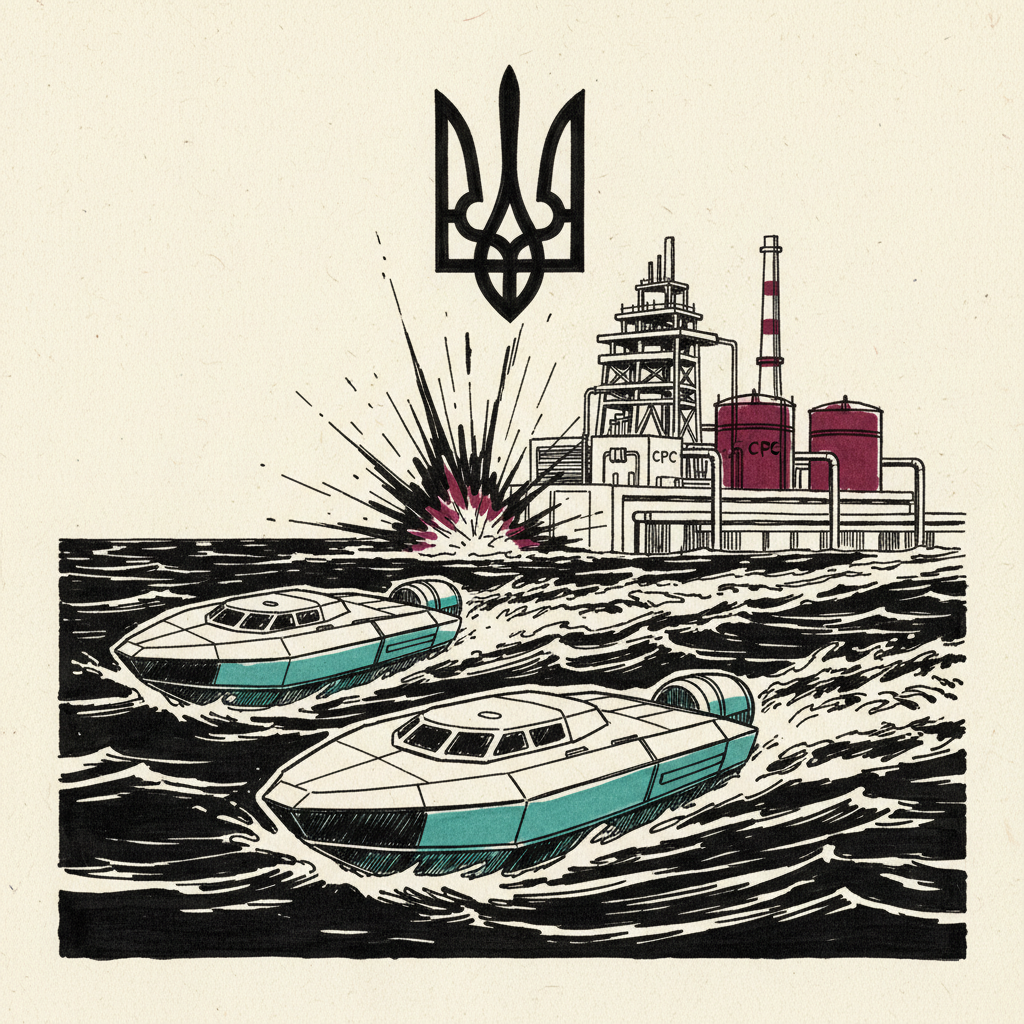
Ukrainian uncrewed surface vessels used for Black Sea strikes; Magura V5 class and similar types attacked CPC terminal at Novorossiysk.
Ukraine's SEA drones took the oil war into the Black Sea on 6 April 2026, striking the Caspian Pipeline Consortium terminal at Novorossiysk and striking again after a US warning. On 12 September a gun-armed Sargan-3000 destroyed a Russian SEA drone outright.
Last refreshed: 7 October 2026 · Appears in 1 active topic
Ukraine's naval drones have moved from sinking warships to striking oil terminals; does that change what they are for?
Timeline for Ukrainian naval drones
Mentioned in: Ukrainian USV destroys a Russian USV
Autonomous Systems: Land & SeaMentioned in: State Dept shields Chevron from Kyiv
Russia-Ukraine War 2026Mentioned in: Kyiv moves the oil war to the Black Sea
Russia-Ukraine War 2026Mentioned in: Sanctioned LNG tanker sunk off Libya
Russia-Ukraine War 2026Background
Ukraine's naval drones are uncrewed surface vessels that give the country a way to contest the Black Sea without a conventional surface fleet. The best-known type is the Magura V5, a fast explosive boat with a warhead in the 300-kilogram class. Since 2023 Ukraine has used these craft to sink and damage ships of Russia's Black Sea Fleet, including the landing ship Olenegorsky Gornyak.
The fleet has broadened in both role and target. In April 2026 the drones moved from warships to commercial Energy infrastructure, hitting the oil export terminal at Novorossiysk. Gun-armed types such as the Sargan-3000 ADD a counter-drone role: on 12 September one destroyed a Russian one-way-attack SEA drone, which UK Defence Intelligence assessed as almost certainly the first direct clash between the two sides' sea drones.
The programme is one of Ukraine's most successful home-grown weapons efforts of the war. It has given a country without a surface navy effective SEA denial across much of the Black Sea, and a way to put Russian export revenue at risk.
The target set has moved to oil
Until 2026 Ukraine's naval drones were a weapon against warships. On 6 April they struck the Caspian Pipeline Consortium terminal at Novorossiysk, carrying a campaign against Russian oil exports from the Baltic ports into the Black Sea. It was the first time the drones had been turned on a commercial export terminal rather than a navy.
The change carried a diplomatic price. Chevron and ExxonMobil hold shares in the Novorossiysk terminal, and the State Department formally warned Kyiv to stop targeting it. Ukraine struck again after the warning, so the drones now operate against targets where American commercial interests, not only Russian ones, set the cost of each attack.
What are Ukraine's naval drones and how do they work?
Did Ukraine use naval drones to strike Russian oil infrastructure?





