Caspian Sea
World's largest inland sea bordering five states; now also a fourth-belligerent war front.
Last refreshed: 28 July 2026 · Appears in 2 active topics
If Ukraine keeps striking Novorossiysk, can Kazakhstan's Tengiz oil reach market without Russia's infrastructure?
Timeline for Caspian Sea
Ukraine kills an Iranian sailor at sea
Iran Conflict 2026Mentioned in: Iran charts Hormuz with formal PGSA coordinates
Iran Conflict 2026State Dept shields Chevron from Kyiv
Russia-Ukraine War 2026Kyiv moves the oil war to the Black Sea
Russia-Ukraine War 2026Mentioned in: Israel strikes Iran's Caspian naval base
Iran Conflict 2026Background
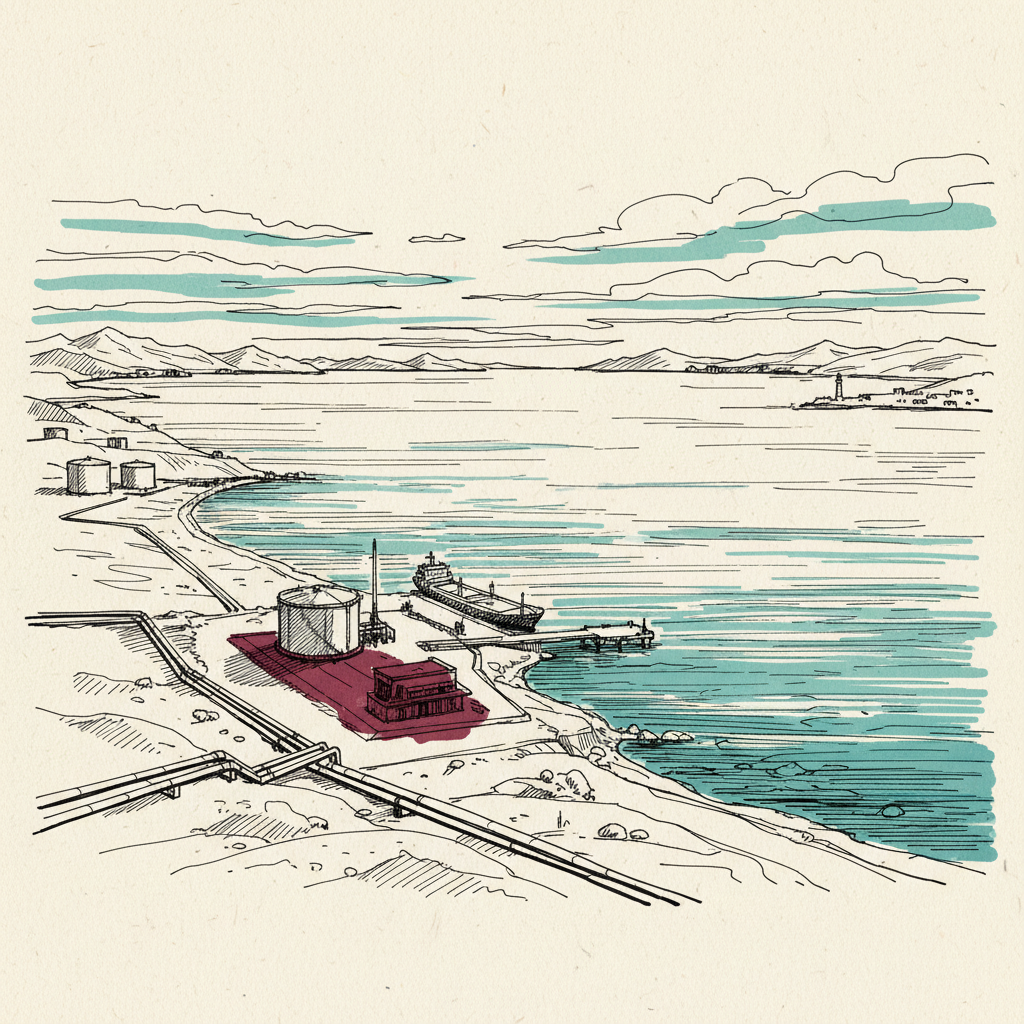
The Caspian Sea is the transit geography underpinning the Caspian Pipeline Consortium route that carries crude from Kazakhstan's Tengiz oilfield to the CPC terminal at Novorossiysk. Ukraine's 6 April 2026 strike on the Novorossiysk terminal, and the State Department's subsequent warning to Kyiv, placed the Caspian oil supply chain at the centre of the war's economic dimension.
The Caspian is bordered by Russia, Kazakhstan, Turkmenistan, Azerbaijan, and Iran. It is the world's largest enclosed body of water and holds roughly 50 billion barrels of proven oil reserves. Its landlocked geography means all crude exports must travel overland or through pipelines to reach export terminals. The CPC pipeline, running from Kazakhstan's Tengizchevroil fields through Russian territory to Novorossiysk, is the dominant route, handling 1.3 million Barrels Per Day at peak capacity.
The Caspian's Energy infrastructure sits at the intersection of multiple geopolitical pressures: US sanctions on Russia, Kazakhstan's need to monetise Tengiz reserves without depending on Russia's goodwill, and the Iran-Russia corridor that Israel struck at Bandar Anzali. Ukraine's Black Sea campaign now reaches the Caspian supply chain indirectly through Novorossiysk, placing Chevron's export route in the line of fire.
Why does Ukraine striking Novorossiysk affect Caspian oil exports?
How does Kazakhstan export its oil without going through Russia?
Why did Ukraine strike an Iranian ship in the Caspian Sea?
Is the Caspian Sea a sea or a lake?



Written with AI from Lowdown's published reporting. Not individually reviewed by an editor. Updated 28 July 2026. Editorial standards.