Skip to content
Briefings are running a touch slower this week while we rebuild the foundations.See roadmap
Russia-Ukraine War 2026
9JUN

Russia fires first dual Oreshnik salvo

3 min read
11:54UTC

Russia launched two Oreshnik nuclear-capable missiles simultaneously on 24 May, anchoring a 690-weapon barrage that damaged 300 sites across every Kyiv district and killed four people. No air defence system Ukraine currently operates can intercept the Oreshnik.

ConflictDeveloping
Key takeaway

Russia fired two nuclear-capable IRBMs at Kyiv in the war's first dual launch, setting a new escalation floor.

Russia fired two Oreshnik intermediate-range ballistic missiles simultaneously at Ukraine on 24 May. Where the November 2024 and March 2026 single launches carried signalling weight, firing two at once points to production confidence and a shift from demonstration to operational doctrine.

The weapon cannot be intercepted. Oreshnik travels at Mach 10-13 and releases multiple manoeuvring warheads; nothing in Ukraine's inventory, including US-supplied Patriot, can stop it. Kyiv has requested additional Patriots but faces a White House export freeze. The barrage hit 300 sites across every capital district, which suggests targeting of civilian morale as much as military infrastructure.

Poland scrambled fighters during the attack, the closest NATO has come to a direct military response during a Russian strike on Ukraine. The scramble did not change the outcome, but it set a precedent: if Oreshnik debris crosses NATO airspace, the Article 5 consultation threshold becomes a live question.

This is the first operational firing of a ground-launched IRBM in a European theatre since Soviet SS-20s were withdrawn under the 1987 INF Treaty. Russia's 2019 withdrawal from the INF, citing US violations, removed the legal barrier; the dual launch is the operational consequence of that withdrawal. The escalation tracks the front line: ISW recorded Russia's first net monthly territorial loss since August 2024 in early May , and the missile spectacle now substitutes for the ground advance Moscow can no longer deliver.

Deep Analysis

In plain English

Russia fired two of its most advanced nuclear-capable missiles at Ukraine on 24 May, both at once, which had never happened before in this war. These missiles, called Oreshnik, travel so fast that no air defence system Ukraine has can intercept them. They were part of an enormous attack of 690 weapons total. The attack damaged around 300 buildings in Kyiv, including museums, and killed four people. The Chornobyl Museum, which holds artefacts from the 1986 nuclear disaster, lost more than 40 percent of its collection. Firing two at once suggests Russia has now moved from using this weapon to make a point to using it as a regular part of its attacks. Poland scrambled its fighter jets during the attack, the closest NATO has come to directly responding to a Russian strike on Ukraine.

Deep Analysis
Root Causes

Russia's September 2024 nuclear doctrine update lowered the threshold for strategic-weapons use to include conventional threats to state territorial integrity. That revision authorised Oreshnik employment for battlefield-contiguous purposes, covering scenarios well short of existential ones. The Kremlin carried that institutional cover into the 24 May launch.

The 100 sq mi four-week territorial loss adds a second driver. Russia cannot publish that reversal domestically without undermining the narrative of a necessary and successful special military operation. A dual Oreshnik launch on Kyiv, generating footage of an uninterceptable weapon striking the enemy capital, substitutes a strategic-superiority story for the absent tactical success. Doctrine unlocks the option; domestic communications pressure creates the incentive to exercise it.

Escalation

Upward and accelerating. The dual launch moves Oreshnik from a demonstration weapon to an operational one. Lavrov's evacuation demand, issued 24 hours later, creates a diplomatic wrapper for future strikes on Kyiv's government district. Poland's fighter scramble establishes a precedent for NATO air response that has not previously occurred during a Russian strike on Ukraine.

What could happen next?
  • Risk

    If Russia normalises dual Oreshnik launches, no Ukrainian city is defensible without a new-generation intercept capability not currently in Western inventories.

    Medium term · Reported
  • Consequence

    Ukraine's Patriot resupply request gains political urgency but faces the White House export freeze that blocked it in April.

    Immediate · Reported
  • Precedent

    The first dual IRBM launch in a European theatre since the INF era reopens the strategic category that treaty was built to close.

    Long term · Reported
First Reported In

Update #18 · Oreshnik doubles as Russia's front collapses

Kyiv Independent· 1 Jun 2026
Read original
Different Perspectives
North Korea / DPRK
North Korea / DPRK
ISW confirmed the first mounting of DPRK Type-75 MLRS on Russian autonomous UGVs near Kharkiv on 7 June, the latest step in a supply axis that escalated from shells in 2023 to troops in 2024. Pyongyang gains live battlefield data on its ordnance and on Russia's uncrewed-systems programme.
IAEA / Rafael Grossi
Grossi confirmed Chornobyl structural damage with nuclear material metres away and could not attribute the ZNPP 15-hour blackout during the agreed repair window. Six ceasefires brokered and broken at ZNPP, compounded by Rosatom's May attack on IAEA neutrality, have eroded his ability to enforce the windows he negotiates.
Emmanuel Macron / France
Macron co-signed the E3 framework whose line-of-contact baseline marks Europe's first formal acceptance that 1991 borders are not the opening position. France's role carries weight because Macron had previously proposed a European force for Ukraine, and the framework's multinational force point is the vehicle for that.
Keir Starmer / E3
Keir Starmer / E3
Starmer, Macron and Merz met Zelenskyy on 7 June and backed a five-point framework taking the line of contact as the talks baseline, conceding roughly one fifth of Ukraine in exchange for a multinational force and frozen assets. With US mediation ended, the NATO Ankara summit on 7-8 July is the next test.
Vladimir Putin / Kremlin
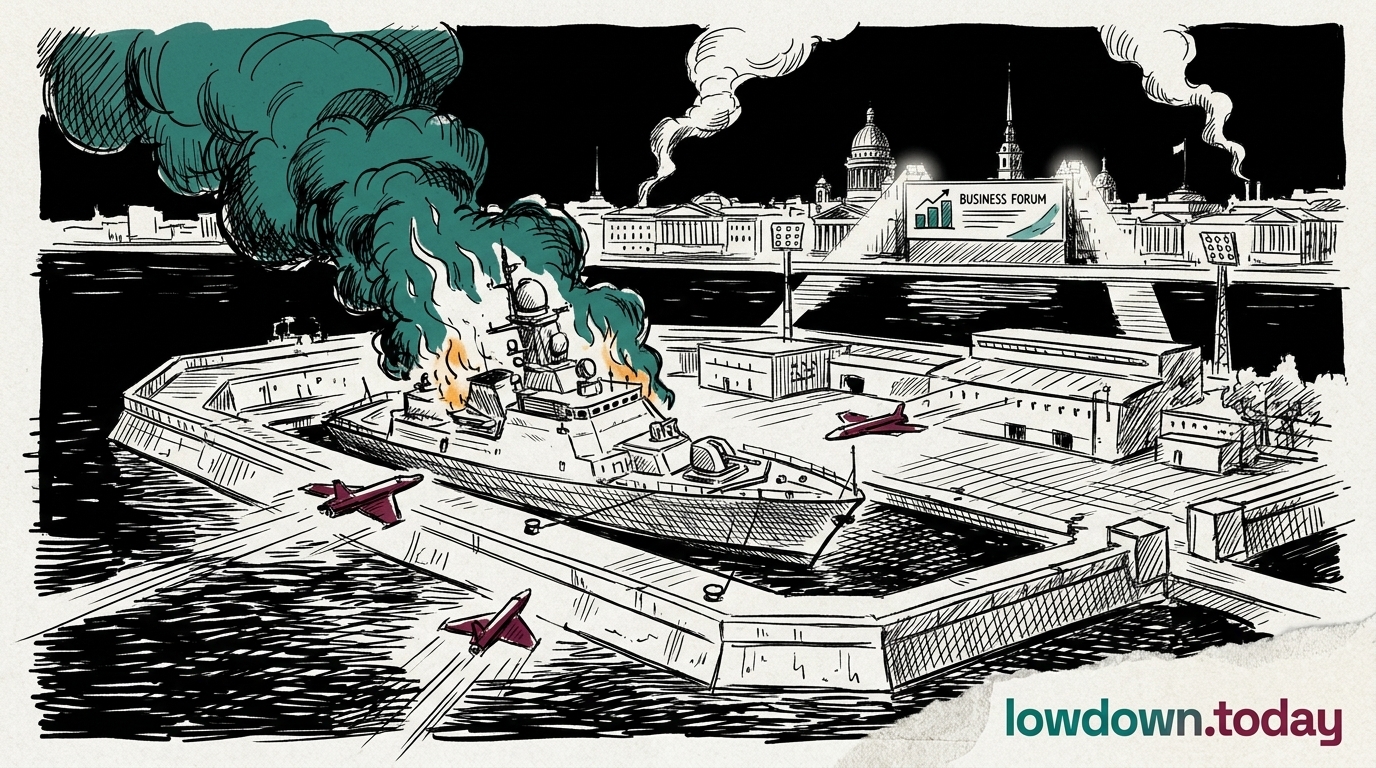
Putin used SPIEF to reject Zelenskyy's summit letter, citing 'elements of rudeness', and repeated the pre-agreed treaty precondition that has frozen every diplomatic round since May. The SPIEF platform's message of investor confidence was punctured by naval fires visible from St Petersburg, which Moscow declined to dispute in scale.
Ukraine / Unmanned Systems Forces
Commander Brovdi confirmed USF units tracked and set fire to Boikyi at Kronstadt, while Code 9.2 struck the Chonhar Bridge the following day. Ukraine is sequencing strikes for rear-area interdiction and political timing rather than ground gains, trading the Baltic Fleet's home base for the logistics squeeze Russia cannot absorb without rationing its own occupied territory.