Skip to content
Briefings are running a touch slower this week while we rebuild the foundations.See roadmap
Russia-Ukraine War 2026
9JUN

Lavrov tells US to leave Kyiv now

3 min read
11:54UTC

Sergei Lavrov called Marco Rubio on 25 May to warn that Russia would launch systematic strikes on Kyiv's decision-making centres and demanded the evacuation of US diplomatic staff and American citizens. It was the first such demand of the full-scale war; the US did not comply.

ConflictDeveloping
Key takeaway

Lavrov's evacuation demand is the war's first formal Russian pre-strike warning, framing future strikes on Kyiv's government district.

Sergei Lavrov called US Secretary of State Marco Rubio on 25 May to warn that Russia would launch "systematic and consistent strikes" on Kyiv's decision-making centres and to demand the evacuation of US diplomatic staff and American citizens. Russia has issued general warnings about Western involvement before; formally demanding one nation's diplomats leave one city, a day after striking it with nuclear-capable missiles, is a different category of coercion.

The demand serves Russia's escalation architecture two ways. It creates a record: if US embassy staff are killed in a future strike, Moscow can argue it warned them. And had the US complied, even partially, it would have validated Russia's claim that Kyiv is a legitimate target for systematic bombardment.

Rubio relayed the warning to Trump but announced no drawdown. EU Ambassador Katarina Mathernova answered "We stay in Kyiv," and Ukrainian Foreign Minister Andrii Sybiha called the demand "Russian blackmail." The allied solidarity is clear, but the episode has generated a new diplomatic grammar around Kyiv's status as a capital under threat.

The Lavrov-Rubio channel is the war's only remaining US-Russia direct line. Bloomberg confirmed this was their first contact since 5 May, a 20-day gap that spanned both Istanbul Round 1 and the first 205-for-205 tranche .

Deep Analysis

In plain English

The day after Russia fired nearly 700 weapons at Kyiv, Russia's top diplomat called America's top diplomat. Sergei Lavrov told Marco Rubio that Russia would keep striking Kyiv's government buildings and told the US to pull its embassy staff and American citizens out before they get hurt. The US refused and kept its embassy open. The EU's ambassador said the EU would stay in Kyiv. Ukraine's foreign minister called it blackmail. This matters because it is the first time in the full-scale war that Russia has formally told a foreign government to evacuate a specific city before it continues striking it. That kind of advance warning has implications for who is considered legally responsible if foreign nationals are later harmed.

Deep Analysis
Root Causes

Lavrov's demand reflects Russia's awareness that its Oreshnik strikes are structurally uninterceptable by any system Ukraine operates. With the weapon's efficacy established, Moscow needs a framework that makes future strikes on Kyiv's government district legally defensible under international diplomatic conventions: if it warned the US and EU to evacuate, strikes that harm their personnel become the fault of those who refused to leave.

The 20-day gap between Lavrov's 5 May and 25 May contacts with Rubio, covering Istanbul Round 1 and the Oreshnik barrage, was not random. Russia appears to have structured the sequence: demonstrate the weapon's uninterceptability, then immediately open a diplomatic channel to formalise the threat. The weapon demonstration precedes the diplomatic demand because the demand's credibility depends on Kyiv's demonstrated inability to defend itself.

What could happen next?
  • Risk

    Russia has established a pre-strike notification framework for Kyiv targeting that normalises strikes on the government district as long as a prior warning was issued.

  • Consequence

    Western embassies in Kyiv now factor explicit Russian pre-strike notification into security planning, compounding staffing and insurance costs.

First Reported In

Update #18 · Oreshnik doubles as Russia's front collapses

Al Jazeera· 1 Jun 2026
Read original
Causes and effects
This Event
Lavrov tells US to leave Kyiv now
Lavrov's evacuation demand creates a diplomatic paper trail Russia can cite if Western personnel are harmed in future strikes on central Kyiv, adding a layer of coercive diplomacy not seen before in this conflict.
Different Perspectives
North Korea / DPRK
North Korea / DPRK
ISW confirmed the first mounting of DPRK Type-75 MLRS on Russian autonomous UGVs near Kharkiv on 7 June, the latest step in a supply axis that escalated from shells in 2023 to troops in 2024. Pyongyang gains live battlefield data on its ordnance and on Russia's uncrewed-systems programme.
IAEA / Rafael Grossi
Grossi confirmed Chornobyl structural damage with nuclear material metres away and could not attribute the ZNPP 15-hour blackout during the agreed repair window. Six ceasefires brokered and broken at ZNPP, compounded by Rosatom's May attack on IAEA neutrality, have eroded his ability to enforce the windows he negotiates.
Emmanuel Macron / France
Macron co-signed the E3 framework whose line-of-contact baseline marks Europe's first formal acceptance that 1991 borders are not the opening position. France's role carries weight because Macron had previously proposed a European force for Ukraine, and the framework's multinational force point is the vehicle for that.
Keir Starmer / E3
Keir Starmer / E3
Starmer, Macron and Merz met Zelenskyy on 7 June and backed a five-point framework taking the line of contact as the talks baseline, conceding roughly one fifth of Ukraine in exchange for a multinational force and frozen assets. With US mediation ended, the NATO Ankara summit on 7-8 July is the next test.
Vladimir Putin / Kremlin
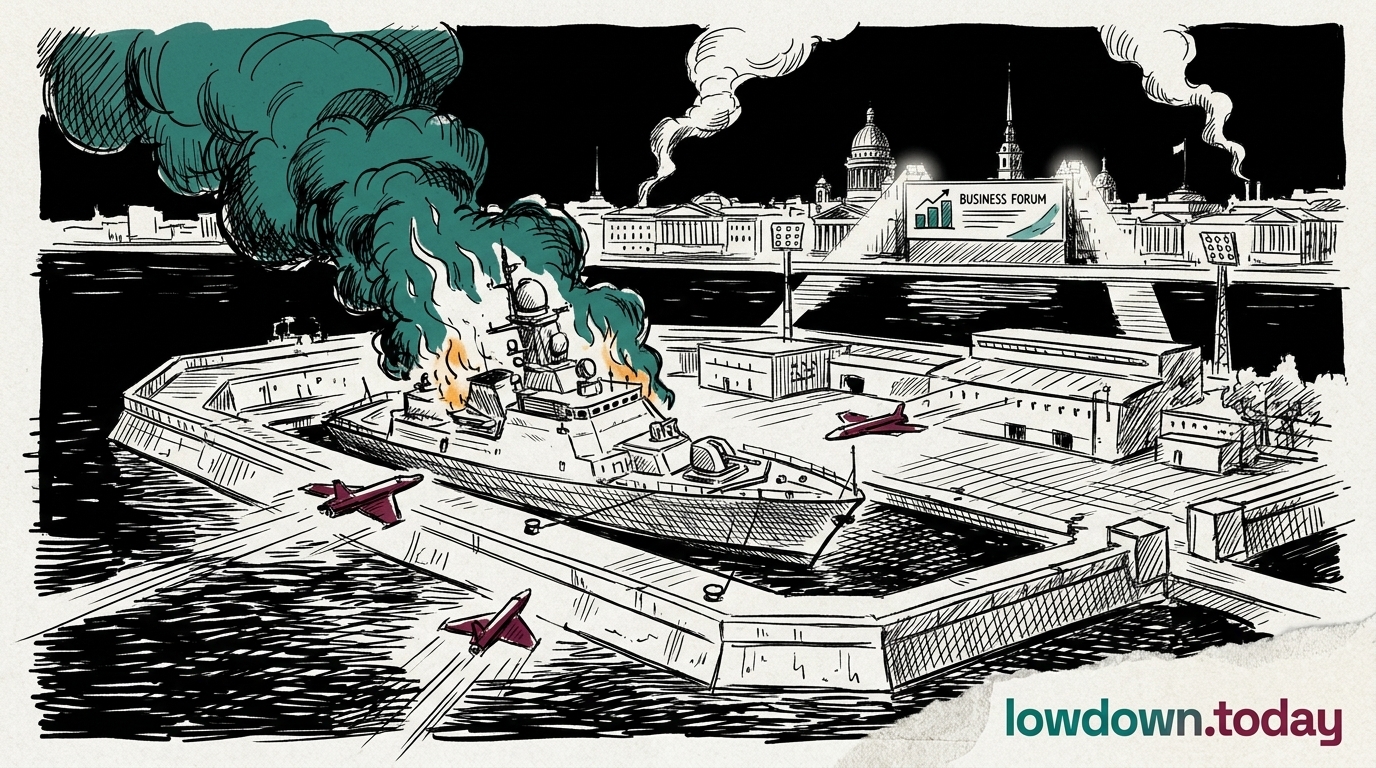
Putin used SPIEF to reject Zelenskyy's summit letter, citing 'elements of rudeness', and repeated the pre-agreed treaty precondition that has frozen every diplomatic round since May. The SPIEF platform's message of investor confidence was punctured by naval fires visible from St Petersburg, which Moscow declined to dispute in scale.
Ukraine / Unmanned Systems Forces
Commander Brovdi confirmed USF units tracked and set fire to Boikyi at Kronstadt, while Code 9.2 struck the Chonhar Bridge the following day. Ukraine is sequencing strikes for rear-area interdiction and political timing rather than ground gains, trading the Baltic Fleet's home base for the logistics squeeze Russia cannot absorb without rationing its own occupied territory.