Skip to content
Briefings are running a touch slower this week while we rebuild the foundations.See roadmap
Russia-Ukraine War 2026
9JUN

Ukraine kills 65 drone cadets at Snizhne

2 min read
11:54UTC

Ukraine's Unmanned Systems Forces destroyed a 2,484 sq m drone training compound in Russian-occupied Snizhne on 20-21 May, killing 65 Sever-Akhmat cadets and one instructor. Russia cited a follow-up strike on Starobilsk as its formal justification for the 24 May Oreshnik barrage.

ConflictDeveloping
Key takeaway

Ukraine hit a Chechen drone school 11 drones; Russia replied with 690 weapons including nuclear-capable IRBMs.

Ukraine deployed 11 drones carrying 100 kg warheads to destroy the Sever-Akhmat regiment's drone training compound in Russian-occupied Snizhne on 20-21 May, killing 65 cadets and one instructor. Russia answered with two nuclear-capable IRBMs and 688 other weapons aimed at a capital city.

The Sever-Akhmat regiment is a Chechen-affiliated unit that has used drone operators as a force-multiplier in Donetsk. Destroying the training pipeline at compound level is a different class of targeting from battlefield drone interdiction.

Russia cited the follow-up Starobilsk strike, not the Snizhne operation, as its formal justification for the barrage. The distinction matters: Starobilsk sits in Luhansk Oblast, which Russia claims as its own territory under annexation. Strikes on annexed land carry different rhetorical weight in Moscow than strikes on occupied Donetsk.

The Snizhne operation followed Ukraine's Syzran refinery strike , which halted roughly 25% of Russian refining; together they put simultaneous pressure on both Russian military training and fuel supply.

Deep Analysis

In plain English

Ukraine's military drone branch sent 11 small drones into Russian-occupied eastern Ukraine on 20-21 May to destroy a training school where Russian soldiers were learning to fly combat drones. The school belonged to a Chechen-affiliated unit called Sever-Akhmat, named after the founder of Chechnya's current ruling family. Ukraine said 65 trainee drone pilots and one instructor were killed. Russia then used a separate strike Ukraine made on another facility in the same region as its stated reason for firing nearly 700 weapons at Kyiv three days later. The two strikes were very different in scale: Ukraine used 11 small drones against military targets; Russia responded with nuclear-capable missiles against a civilian capital.

Deep Analysis
Root Causes

The Sever-Akhmat regiment depends on a continuous supply of trained drone operators to sustain its force-multiplier role in Donetsk. Russian conventional infantry training cannot produce drone specialists at the required rate; dedicated training facilities like the Snizhne compound are a structural bottleneck in Russian drone warfare capacity.

Russia's formal annexation of Luhansk Oblast provides the second structural driver: by citing the Starobilsk Rubikon strike, not the Snizhne operation, as its formal Oreshnik justification, Moscow signals that strikes on annexed territory carry a different escalation threshold in its doctrine than strikes on occupied Donetsk.

Kyiv's drone forces struck in Luhansk Oblast knowing Moscow would treat it as a strike on Russian territory, which gave Russia a more credible retaliation justification than the Snizhne operation alone would have provided.

What could happen next?
  • Consequence

    Russia's Oreshnik response to a proportionate drone strike establishes a new escalation baseline where conventional military targeting triggers IRBM retaliation.

First Reported In

Update #18 · Oreshnik doubles as Russia's front collapses

ISW / Critical Threats· 1 Jun 2026
Read original
Causes and effects
This Event
Ukraine kills 65 drone cadets at Snizhne
Ukraine's precision strike on a drone training facility demonstrates deep-strike capacity against occupation-zone military infrastructure; Russia's response, 11 drones answered with 690 weapons, illustrates the escalation asymmetry now governing the war.
Different Perspectives
North Korea / DPRK
North Korea / DPRK
ISW confirmed the first mounting of DPRK Type-75 MLRS on Russian autonomous UGVs near Kharkiv on 7 June, the latest step in a supply axis that escalated from shells in 2023 to troops in 2024. Pyongyang gains live battlefield data on its ordnance and on Russia's uncrewed-systems programme.
IAEA / Rafael Grossi
Grossi confirmed Chornobyl structural damage with nuclear material metres away and could not attribute the ZNPP 15-hour blackout during the agreed repair window. Six ceasefires brokered and broken at ZNPP, compounded by Rosatom's May attack on IAEA neutrality, have eroded his ability to enforce the windows he negotiates.
Emmanuel Macron / France
Macron co-signed the E3 framework whose line-of-contact baseline marks Europe's first formal acceptance that 1991 borders are not the opening position. France's role carries weight because Macron had previously proposed a European force for Ukraine, and the framework's multinational force point is the vehicle for that.
Keir Starmer / E3
Keir Starmer / E3
Starmer, Macron and Merz met Zelenskyy on 7 June and backed a five-point framework taking the line of contact as the talks baseline, conceding roughly one fifth of Ukraine in exchange for a multinational force and frozen assets. With US mediation ended, the NATO Ankara summit on 7-8 July is the next test.
Vladimir Putin / Kremlin
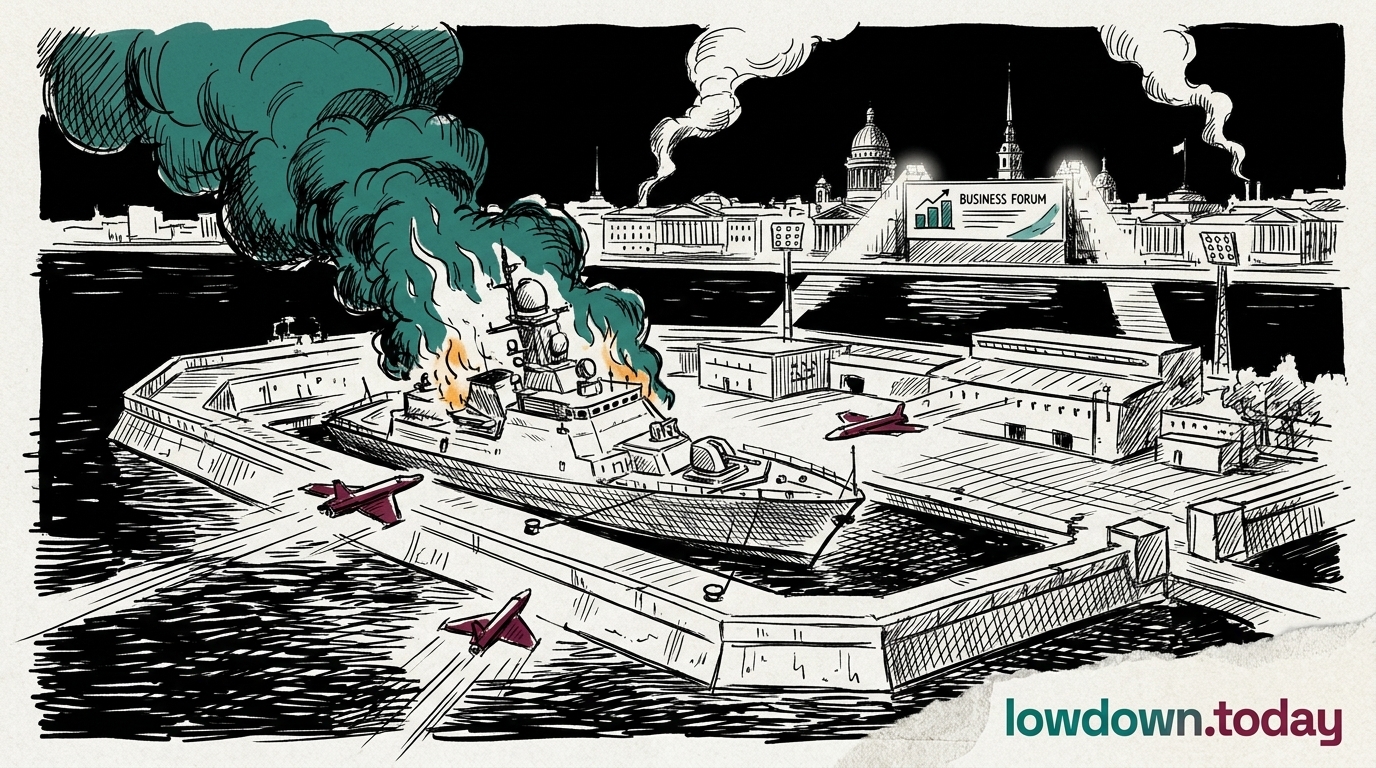
Putin used SPIEF to reject Zelenskyy's summit letter, citing 'elements of rudeness', and repeated the pre-agreed treaty precondition that has frozen every diplomatic round since May. The SPIEF platform's message of investor confidence was punctured by naval fires visible from St Petersburg, which Moscow declined to dispute in scale.
Ukraine / Unmanned Systems Forces
Commander Brovdi confirmed USF units tracked and set fire to Boikyi at Kronstadt, while Code 9.2 struck the Chonhar Bridge the following day. Ukraine is sequencing strikes for rear-area interdiction and political timing rather than ground gains, trading the Baltic Fleet's home base for the logistics squeeze Russia cannot absorb without rationing its own occupied territory.