Skip to content
Briefings are running a touch slower this week while we rebuild the foundations.See roadmap
Russia-Ukraine War 2026
9JUN

Russia loses 179 soldiers per square km

2 min read
11:54UTC

Mykhailo Fedorov calculated that Russian forces were suffering 179 losses per square kilometre of advance in 2026, nearly three times the 67 per sq km in 2025. Mediazona's running database recorded verified dates of death for 202,000 Russian soldiers as of 22 May.

ConflictDeveloping
Key takeaway

Russia is paying three soldiers per kilometre for every one it paid in 2025, while simultaneously losing ground.

Mykhailo Fedorov, Ukraine's Minister of Digital Transformation, calculated that Russian forces are suffering 179 losses per square kilometre of advance in 2026, against 67 in the same window of 2025. The defence budget of 13.5 trillion rubles was set when advance rates were five times higher; Russia is now paying 2.7 times more in personnel per unit of territory than the budget contemplated.

Mediazona offers the most reliable open-source count, tracking named deaths through obituaries, social media and probate records. Its 202,000 figure is verified individual cases with dates. The Probate Registry statistical extrapolation, published 9 May, puts total male deaths aged 18-59 through end-2025 at 352,000 .

The gap between 202,000 confirmed and 352,000 statistical reflects how effectively Russia's casualty suppression works. Compensation systems pay families without requiring public registration, so they are incentivised not to publicise deaths. Mediazona treats its 202,000 figure as a floor that the true toll exceeds, not a ceiling.

At 179 losses per sq km, Russia would need to advance roughly 6 sq km a day to sustain its 2025 casualty rate per unit of time. The 100 sq mi loss over four weeks means it is moving the other way.

Deep Analysis

In plain English

In 2025, Russia lost roughly 67 soldiers for every square kilometre of Ukrainian territory it captured. In 2026, that figure has risen to 179 soldiers per square kilometre, nearly three times as many. And unlike in 2025, Russia is now losing ground rather than gaining it. An independent Russian media outlet working from obituaries and public records has confirmed the dates of death for 202,000 Russian soldiers. A separate statistical study puts the real total of Russian men killed since the invasion started through end-2025 at around 352,000. These numbers explain why Russia is turning to its most advanced weapons: the conventional ground war is becoming too expensive in lives and money to sustain.

What could happen next?
  • Consequence

    Russia's defence budget, set at 2025 attrition assumptions, is structurally underfunded for 2026 casualty consumption rates.

First Reported In

Update #18 · Oreshnik doubles as Russia's front collapses

Al Jazeera· 1 Jun 2026
Read original
Causes and effects
This Event
Russia loses 179 soldiers per square km
Tripled per-kilometre attrition is the fiscal and operational mechanism behind Russia's front-line collapse; the defence budget was calibrated on 2025 advance rates and cannot sustain 2026 casualty consumption per unit of territory.
Different Perspectives
North Korea / DPRK
North Korea / DPRK
ISW confirmed the first mounting of DPRK Type-75 MLRS on Russian autonomous UGVs near Kharkiv on 7 June, the latest step in a supply axis that escalated from shells in 2023 to troops in 2024. Pyongyang gains live battlefield data on its ordnance and on Russia's uncrewed-systems programme.
IAEA / Rafael Grossi
Grossi confirmed Chornobyl structural damage with nuclear material metres away and could not attribute the ZNPP 15-hour blackout during the agreed repair window. Six ceasefires brokered and broken at ZNPP, compounded by Rosatom's May attack on IAEA neutrality, have eroded his ability to enforce the windows he negotiates.
Emmanuel Macron / France
Macron co-signed the E3 framework whose line-of-contact baseline marks Europe's first formal acceptance that 1991 borders are not the opening position. France's role carries weight because Macron had previously proposed a European force for Ukraine, and the framework's multinational force point is the vehicle for that.
Keir Starmer / E3
Keir Starmer / E3
Starmer, Macron and Merz met Zelenskyy on 7 June and backed a five-point framework taking the line of contact as the talks baseline, conceding roughly one fifth of Ukraine in exchange for a multinational force and frozen assets. With US mediation ended, the NATO Ankara summit on 7-8 July is the next test.
Vladimir Putin / Kremlin
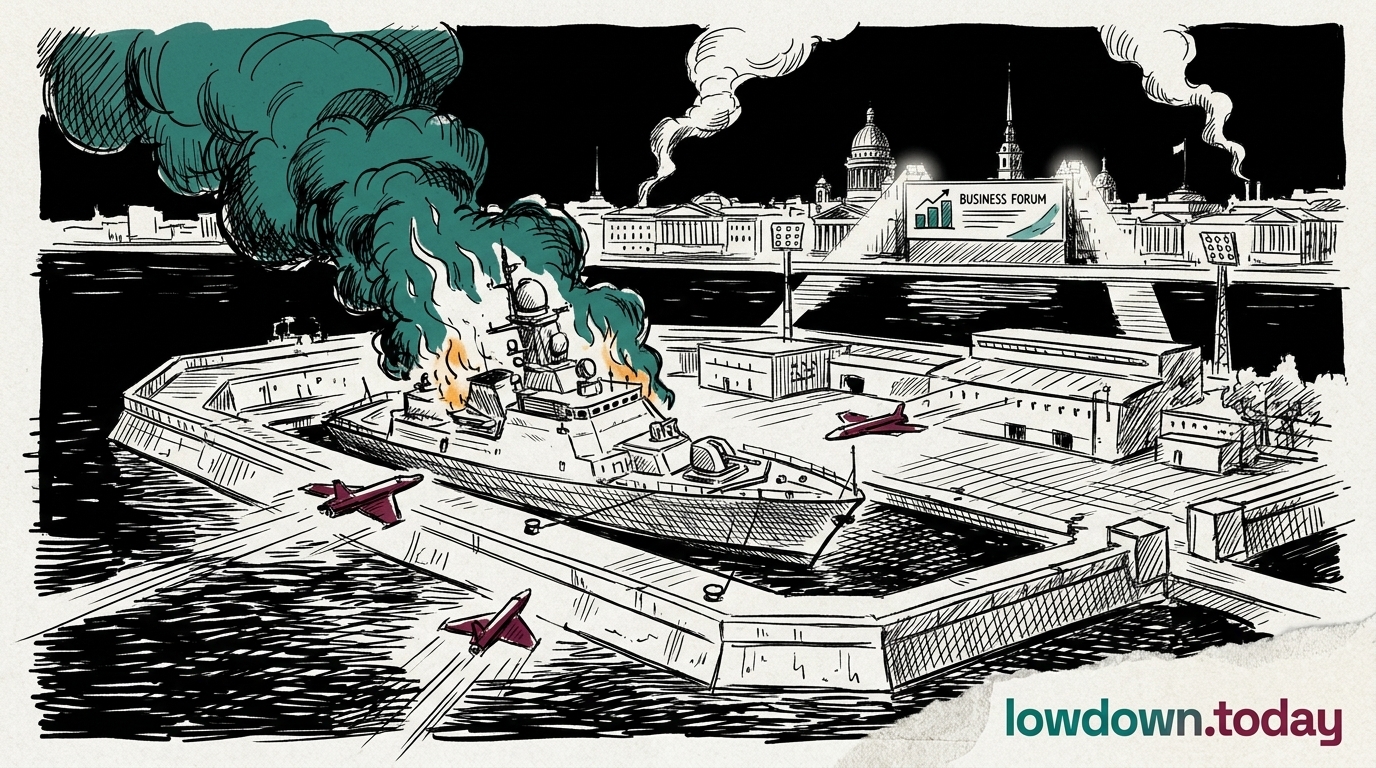
Putin used SPIEF to reject Zelenskyy's summit letter, citing 'elements of rudeness', and repeated the pre-agreed treaty precondition that has frozen every diplomatic round since May. The SPIEF platform's message of investor confidence was punctured by naval fires visible from St Petersburg, which Moscow declined to dispute in scale.
Ukraine / Unmanned Systems Forces
Commander Brovdi confirmed USF units tracked and set fire to Boikyi at Kronstadt, while Code 9.2 struck the Chonhar Bridge the following day. Ukraine is sequencing strikes for rear-area interdiction and political timing rather than ground gains, trading the Baltic Fleet's home base for the logistics squeeze Russia cannot absorb without rationing its own occupied territory.