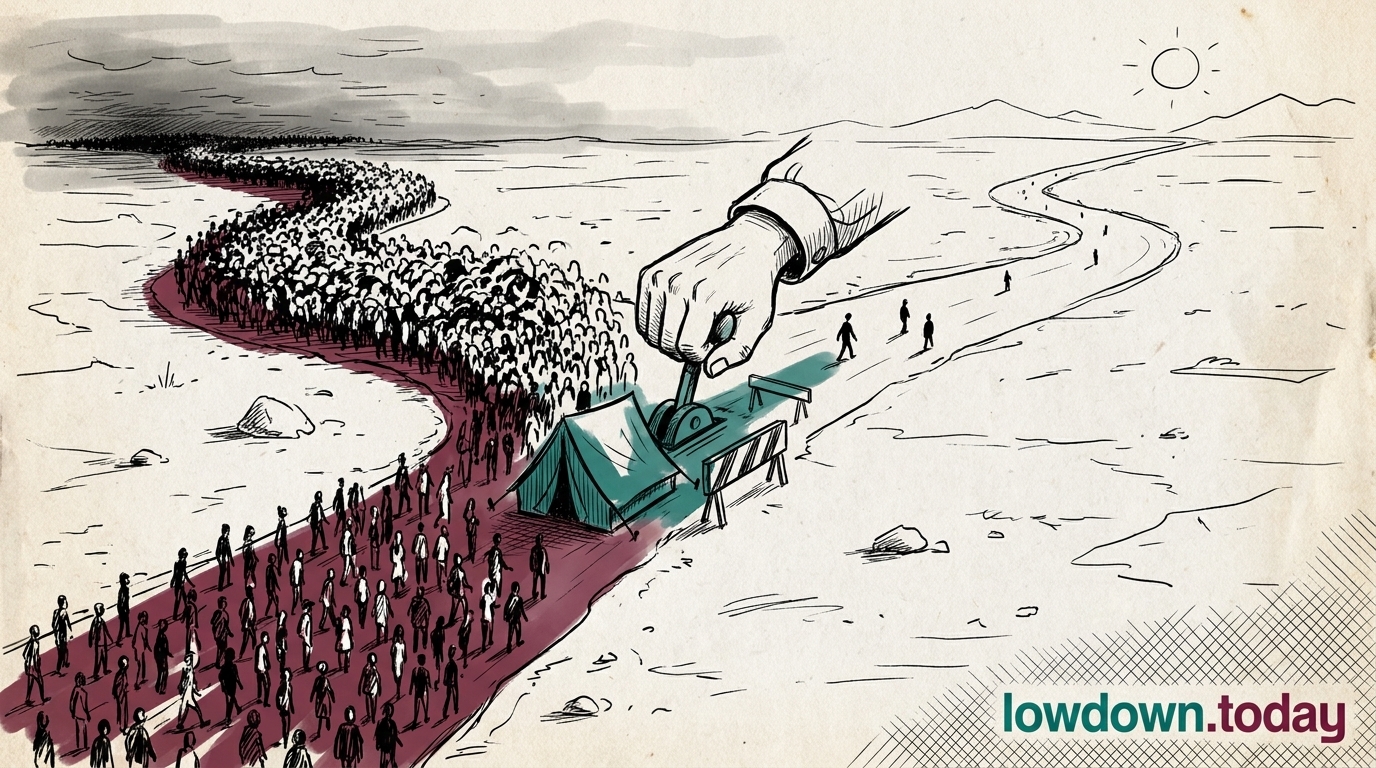
The US Department of Health and Human Services (HHS), the federal department overseeing the CDC, expanded its 30-day Ebola entry ban on 5 June to cover green-card holders, lawful permanent residents1. The restriction has been in force since 18 May against travellers from DRC, Uganda and South Sudan and runs to about 17 June, so it has widened rather than expired. DRC's health minister called it discriminatory and unsupported by science, and Kinshasa is negotiating an early lift2. A counter-case exists: states may reasonably screen at the border during an emergency, and a Ugandan traveller with a recent United Arab Emirates (UAE) history did surface in the case data, though the UAE confirmed on 3 June it had found no onward transmission3.
The restriction lands while the treaty meant to govern moments like this stays stuck. The WHO Pandemic Agreement's Pathogen Access and Benefit-Sharing annex, PABS, the rule tying rapid pathogen-data sharing by source countries to guaranteed access to the vaccines and treatments derived from it, was deferred at the World Health Assembly and now waits on the seventh negotiating session, IGWG7 (the Intergovernmental Working Group), 6 to 17 July4. WHO cannot open the agreement for signature until member states adopt the annex.
DRC shows the mechanism live right now. Kinshasa is sharing Bundibugyo sequence data in real time, the genome already confirmed distinct from the 2007 and 2012 strains, while receiving no treaty-guaranteed access to whatever those sequences help produce. DRC is paying into a system whose July deadline arrives months after the vaccines its data informs. The gap the annex exists to close is running live, in one country, this month.



