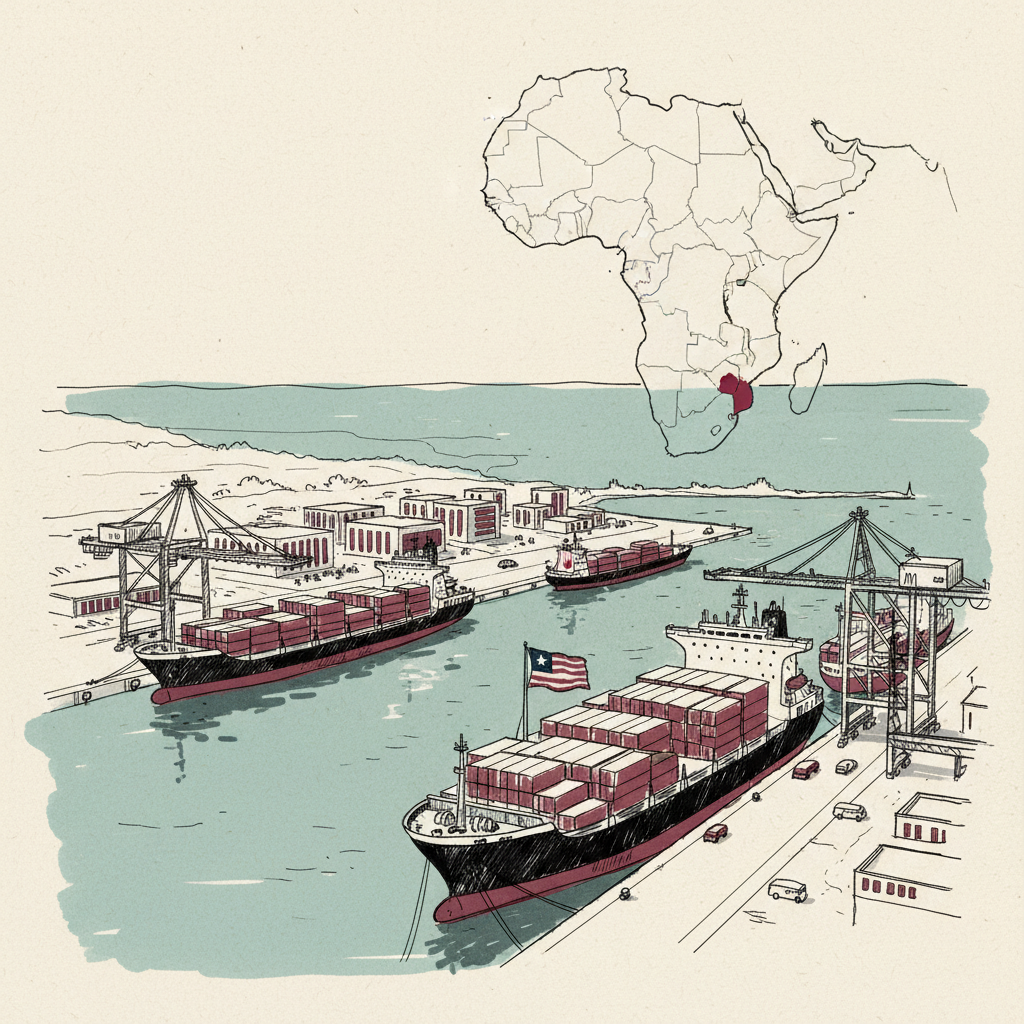
Liberia
West African ship registry; 2014-16 Ebola epidemic (Zaire species) killed 4,800, unlike DRC's Bundibugyo strain.
Liberia's 2015 Ebola relapse, a new case within two months of WHO declaring it free on 9 May 2015, shows the limit of the 42-day all-clear that ended Uganda's Bundibugyo outbreak on 26 August 2026.
Last refreshed: 4 October 2026
How is a West African flag registry running from Vienna becoming a key conduit for Iranian oil?
Timeline for Liberia
Mentioned in: WHO calls Uganda's Ebola outbreak over
Pandemics and BiosecurityMentioned in: A third Ebola case leaves Africa
Pandemics and BiosecurityMentioned in: Ebola's responders are dying in Ituri
Pandemics and BiosecurityMentioned in: Unpaid Ituri health workers walk off
Pandemics and BiosecurityMentioned in: US renews 30-day Ebola entry ban
Pandemics and BiosecurityBackground
Liberia runs one of the world's two largest ship registries by tonnage, alongside Panama, through the Liberia International Ship and Corporate Registry (LISCR). Its open-registry model draws foreign tanker operators with low costs and light flag-state enforcement, and registry fees are a significant source of state revenue. Liberia-registered entities were among those designated in the US Treasury's 19 May 2026 sanctions round on ships and shell companies moving Iranian oil.
LISCR has cooperated with US requests to deregister vessels tied to sanctioned owners. The volume of Iran-linked tonnage under the flag still outruns the number of individual designations the US can process.
Liberia counted more than 10,000 Ebola cases and about 4,800 deaths in the Zaire-species epidemic that swept West Africa from 2014 to 2016. Responders were paid through dedicated hazard-allowance funds, and late payments led to strikes and work stoppages.
Why is Liberia involved in Iran oil sanctions evasion?
What is the Liberia International Ship and Corporate Registry?
Which Liberia-flagged ships were sanctioned over Iran in May 2026?
Why is Liberia's 2014 Ebola history relevant to the 2026 Ituri health worker strike?
How many people died in Liberia's 2014-16 Ebola outbreak?
Is Liberia's 2014 Ebola outbreak the same virus as DR Congo's 2026 outbreak?

