Skip to content
Briefings are running a touch slower this week while we rebuild the foundations.See roadmap
Pandemics and Biosecurity
9JUN

Ebola outbreak gets an R0, and a fork

3 min read
09:58UTC

CDC modelling puts the Bundibugyo outbreak's reproduction number at 2.51 and shows its fate turning on one number: how many patients get isolated. WHO has recalibrated the headline count, cutting suspected cases from around 1,000 to 116 and reporting 534 confirmed. The confirmed line is still rising. Five non-Ebola signals run alongside, from a barnyard bacterium spreading in EU saunas to a malaria surge in Mayotte.

Key takeaway

The CDC model names isolation rate as the decisive lever; armed-group access prevents pulling it.

This briefing mapped
Loading map…
Regulatory
Humanitarian
Diplomatic
Economic

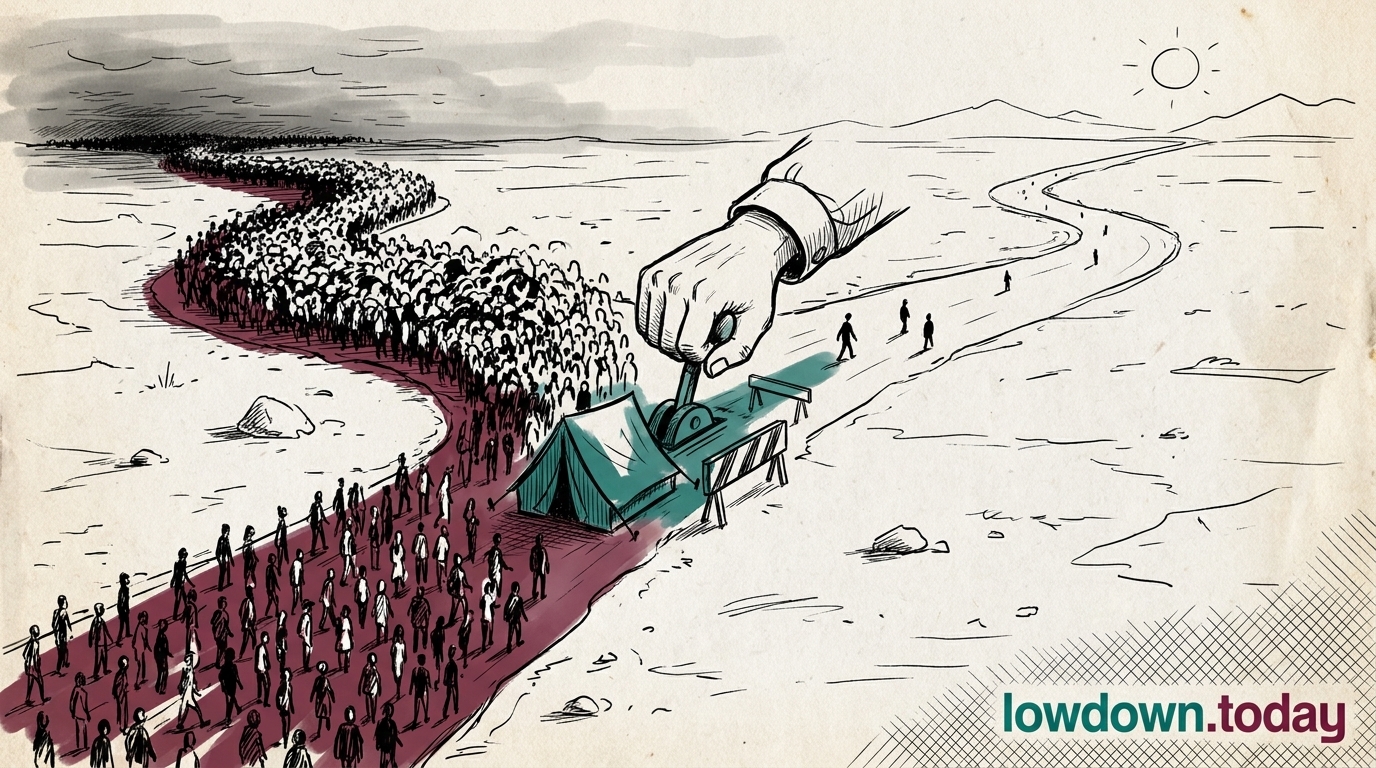
The CDC put the Bundibugyo outbreak's reproduction number at 2.51 on 5 June, and showed its fate turning on one controllable variable: how many patients get isolated in time.

Sources profile:This story draws on neutral-leaning sources

The US Centers for Disease Control and Prevention published modelling on 5 June. It put this Ebola strain's reproduction number at 2.51, meaning each case infects roughly two or three others. At the current 20% patient isolation rate, 65% of simulations reached 20,000 cases by late August.

Raising isolation to 70% collapses that to a 1% tail risk. The obstacle is that two key outbreak zones are controlled by armed groups WHO block health workers entirely. 

Sources:CDC MMWR

WHO recalibrated the Bundibugyo headline count on 8 June, cutting suspected cases from around 1,000 to 116 and reporting 534 confirmed; the confirmed line is still rising fast.

Sources profile:This story draws on neutral-leaning sources

WHO's Disease Outbreak Notice 606 was published on 8 June. It cut the headline case count from around 1,000 to 534 by shifting to confirmed-only reporting after clearing a testing backlog. The prior figure included suspected cases that later tested negative.

The confirmed count is still accelerating: the Democratic Republic of the Congo added 194 confirmed cases in just five days. WHO recalibrated its reporting method; the virus did not slow down. 

CEPI committed $62m across three Bundibugyo vaccine platforms on 1 June and GAVI added $50m, while no treatment was authorised to dose a patient and the outbreak reached an area responders cannot enter.

Sources profile:This story draws on neutral-leaning sources

Vaccine funders committed $112m on 1 June to develop three Bundibugyo vaccine candidates. No candidate will reach human trials for at least 12 months.

Two experimental treatments that could be used on patients now, MBP134 and remdesivir, are still awaiting regulatory clearance from the Congo and Uganda. The funding covers the future; today's patients have only supportive care. 

HHS extended its 30-day Ebola entry ban to green-card holders on 5 June, while the treaty annex meant to tie data-sharing to vaccine access stayed deadlocked ahead of July talks.

Sources profile:This story draws on mixed-leaning sources from United States
United States

The US health department expanded its Ebola travel ban on 5 June to cover green-card holders from the Congo, Uganda and South Sudan. The ban expires around 17 June. The Congo's health minister called it discriminatory.

A global treaty meant to guarantee vaccine access for countries that share disease data remains deadlocked. The next negotiating session is scheduled for July. 

ECDC flagged 50 cases of Dermatophilus congolensis among men who have sex with men across France, Germany and Spain, with evidence suggesting human-to-human spread of a normally animal-only bacterium.

Sources profile:This story draws on neutral-leaning sources

Between December 2025 and May 2026, 50 people across France, Germany and Spain were diagnosed with a bacterial skin infection normally found only in horses and cattle. All were men WHO had sex with men visiting saunas, and all recovered fully with antibiotics.

Europe's disease surveillance agency says the pattern suggests the bacterium may now be spreading person to person in humid environments, something never documented before. A formal risk assessment is due on 23 June. 

Sources:ECDC

The FAO put a price on antimicrobial resistance on 3 June, projecting $318bn in cumulative livestock losses by 2040, about six times the cost of acting now.

Sources profile:This story draws on neutral-leaning sources from Italy
Italy

The UN Food and Agriculture Organization published a report on 3 June. It found global antibiotic use in livestock is on track to rise 30% by 2040. That would drive $318 billion in production losses from drug-resistant infections.

Acting now to reduce antibiotic overuse in farming would cost around a sixth of that. The report links to the WHO antimicrobial resistance action plan adopted in May. 

Sources:FAO
1 FAO

ECDC recorded 171 Plasmodium falciparum cases in Mayotte to 21 May, 63 of them locally acquired, a 4.2-fold rise that means the parasite is now circulating on the island.

Sources profile:This story draws on neutral-leaning sources

Between January and late May 2026, Mayotte, a French island near Madagascar, recorded 171 malaria cases, with 63 caught locally. In three weeks in late April and May, case numbers hit 25 per week, four times the rate from the same period the year before.

All cases involved Plasmodium falciparum, the most lethal malaria species. EU health authorities say mainland France faces very low risk but recommend travellers to Mayotte take anti-malarial medication. 

Sources:ECDC

ECDC is tracking 83 Salmonella Stanley ST2045 cases across 10 EU countries since December, with children over-represented and chicken-based products the suspected vehicle.

Sources profile:This story draws on neutral-leaning sources

Since late December 2025, 83 people across 10 European countries have been infected with the same Salmonella strain. Children and young adults make up a larger share of cases than usual. Investigators suspect chicken-flavoured instant noodles as the source.

The cluster is still active, and a joint EU food safety assessment is due 1 July. No product recall has been announced. 

Sources:ECDC

WHO EMRO logged two new MERS-CoV cases including one death in Saudi Arabia since 4 May, with no sustained human-to-human transmission and EU risk rated very low.

Sources profile:This story draws on neutral-leaning sources from Switzerland
Switzerland

Two new cases of Middle East Respiratory Syndrome coronavirus were recorded in Saudi Arabia between 4 May and 1 June, including one death. The virus kills roughly one in three people it infects.

Neither case led to onward spread. EU health authorities rate the risk to European residents as very low, and no transmission chain was found outside Saudi Arabia

Sources:ECDC·WHO EMRO
Closing comments

Escalating. The CDC model's 20,000-case worst case has a 65% probability at current 20% isolation rates; the confirmed DRC count rose 194 in five days (321 to 515) as of 8 June. The two near-term decision points that could change the trajectory are: whether MBP134 or remdesivir receive regulatory authorisation from DRC and Uganda in the coming days, providing a treatment bridge before any vaccine is available; and whether the approximately 17 June entry-ban expiry produces a lift, extension, or conversion to enhanced screening, which affects US-DRC coordination on outbreak logistics. The structural ceiling, IS-controlled Mambasa and M23-held South Kivu blocking contact tracing, is unchanged and has no health-authority solution.

Different Perspectives
United States (HHS/CDC)
HHS expanded the Ebola entry ban to green-card holders on 5 June, widening a restriction expiring around 17 June against WHO advice. The CDC simultaneously published the R0=2.51 modelling, the sharpest analytical contribution to the response, from a federal bench that holds the NIH and acting CDC director roles in one person.
Democratic Republic of the Congo
Kinshasa shares Bundibugyo sequence data in real time with no treaty-guaranteed access to the vaccines that data informs, and its health minister called the US entry ban discriminatory while negotiating an early lift. DRC accounts for 515 of 534 confirmed cases and faces IS-controlled access blockades in Mambasa that health authorities cannot resolve.
Uganda
Uganda
Uganda's 19 confirmed cases are concentrated in Kampala and Wakiso, an urban cluster that applied the 2022 Sudan-ebolavirus playbook; the Bwera border laboratory shortens cross-border confirmation to same-day. Uganda's regulatory authority must co-sign before MBP134 or remdesivir can dose any patient.
European Union (ECDC)
ECDC's Week 23 CDTR tracked four simultaneous non-Ebola signals: the Dermatophilus congolensis novel-transmission cluster across France, Germany and Spain; a 4.2-fold malaria surge in Mayotte; the Salmonella ST2045 multi-country cluster; and two new Saudi MERS cases. The continental early-warning layer is carrying a full multi-pathogen picture while Bundibugyo dominates headlines.
World Health Organization
WHO's DON606 recalibration to confirmed-only reporting gives the clean baseline the CDC model rests on, but the apparent fall from 1,040 to 534 carries misinterpretation risk WHO communications have not pre-empted. The PABS deadlock ahead of IGWG7 and continuing MBP134/remdesivir assessment without authorisation make WHO the body most able to accelerate the two decisions that could change the outbreak's trajectory.


