Skip to content
Briefings are running a touch slower this week while we rebuild the foundations.See roadmap
Pandemics and Biosecurity
9JUN

US bans entry from DRC, Uganda, S Sudan

3 min read
09:58UTC

On 18 May the United States imposed a 21-day entry ban on nationals of three African states, including green-card holders, three days before WHO formally advised against exactly such restrictions.

ScienceDeveloping
Key takeaway

The US entry ban runs against live WHO advice for the first time since the 2014 Ebola response.

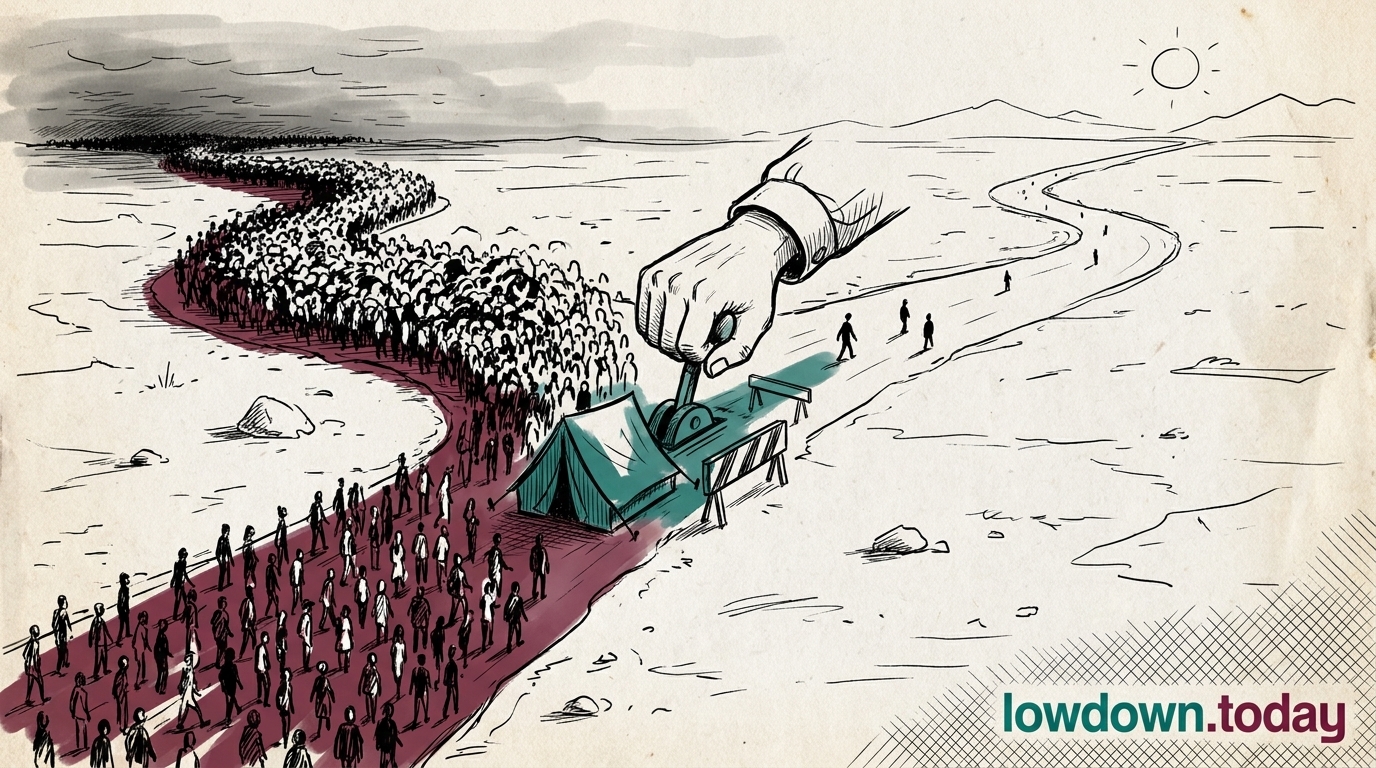
On 18 May the United States imposed a 21-day entry ban on nationals of the Democratic Republic of Congo, Uganda and South Sudan, including green-card holders 1. US citizens may still enter but face enhanced public-health screening at George Bush Intercontinental Airport in Houston from 26 May 2. South Sudan was included despite having no confirmed Bundibugyo cases, on the stated logic of porous borders with the DRC 3. The measure followed three days after WHO declared the Bundibugyo emergency .

The ban came first; four days later WHO's Emergency Committee issued Temporary Recommendations advising against travel and trade restrictions, and the ban has not been lifted since 4. Africa CDC publicly opposed the restrictions on 19 May 5. A major power has now banned travel against live WHO advice during an active emergency for the first time since the West Africa Ebola crisis of 2014, whose travel-ban failures the IHR exit-screening model was written to replace.

Entry bans push exposed travellers toward unscreened land routes and onward third-country flights, the exact behaviour exit screening at source is built to capture, and they discourage the honest disclosure border co-operation depends on. Bans also operate on nationality rather than exposure: a green-card holder WHO has not left the US in a year falls under the bar, while the screening of returning US citizens at Houston targets actual travel history. The 21-day entry ban therefore catches people by passport, not by where they have been.

Washington's reach for a border measure rather than a deployment has a structural backdrop. The USAID outbreak-response unit that would have surged personnel to Ituri had already been disbanded before the emergency , leaving entry restriction as one of the few levers still readily available. For readers planning travel, the practical effect is narrow: the bar falls on green-card holders and nationals of the three countries, while US citizens face questions and a temperature check at Houston, not exclusion.

Deep Analysis

In plain English

On 18 May 2026, the United States banned entry for nationals of three countries: the Democratic Republic of Congo, Uganda, and South Sudan. The ban includes people with US permanent residency (green cards). South Sudan was included even though no Ebola cases had been confirmed there. Public-health experts consistently oppose travel bans during Ebola outbreaks because they do not stop the virus, they drive sick or worried people to use unofficial routes where they cannot be monitored. They also make healthcare workers from affected countries reluctant to volunteer to help, which is exactly the opposite of what a response needs. Four days after the ban was imposed, the WHO's own expert committee formally recommended against travel or trade restrictions.

Deep Analysis
Root Causes

The US entry ban tracks a structural gap left by the dismantling of USAID's outbreak-response unit: with no 90-person CDC field presence deployable to Ituri, the only publicly visible US action available is a border measure. Entry bans are administratively simple and politically legible; field surge deployment requires an institutional apparatus the current US government no longer has.

South Sudan's inclusion despite zero cases reflects the conflation of geographic proximity with epidemic risk. The Ituri-South Sudan border does carry genuine surveillance risk given ungated population movement, but including South Sudan in a travel ban without a confirmed case is epidemiologically unjustifiable and was designed to signal political decisiveness rather than epidemiological precision.

What could happen next?
  • Risk

    Travel bans that push affected-country nationals to use informal border crossings reduce the WHO's ability to conduct exit screening, the single most evidence-based border measure for Ebola.

  • Consequence

    Uganda and South Sudan nationals working abroad in healthcare roles may delay return to their countries of origin, reducing the human resource pool available for the Ituri response surge.

First Reported In

Update #4 · Ebola triples, response misfires

STAT News· 24 May 2026
Read original
Different Perspectives
World Health Organization
WHO's DON606 recalibration to confirmed-only reporting gives the clean baseline the CDC model rests on, but the apparent fall from 1,040 to 534 carries misinterpretation risk WHO communications have not pre-empted. The PABS deadlock ahead of IGWG7 and continuing MBP134/remdesivir assessment without authorisation make WHO the body most able to accelerate the two decisions that could change the outbreak's trajectory.
European Union (ECDC)
ECDC's Week 23 CDTR tracked four simultaneous non-Ebola signals: the Dermatophilus congolensis novel-transmission cluster across France, Germany and Spain; a 4.2-fold malaria surge in Mayotte; the Salmonella ST2045 multi-country cluster; and two new Saudi MERS cases. The continental early-warning layer is carrying a full multi-pathogen picture while Bundibugyo dominates headlines.
Uganda
Uganda
Uganda's 19 confirmed cases are concentrated in Kampala and Wakiso, an urban cluster that applied the 2022 Sudan-ebolavirus playbook; the Bwera border laboratory shortens cross-border confirmation to same-day. Uganda's regulatory authority must co-sign before MBP134 or remdesivir can dose any patient.
Democratic Republic of the Congo
Kinshasa shares Bundibugyo sequence data in real time with no treaty-guaranteed access to the vaccines that data informs, and its health minister called the US entry ban discriminatory while negotiating an early lift. DRC accounts for 515 of 534 confirmed cases and faces IS-controlled access blockades in Mambasa that health authorities cannot resolve.
United States (HHS/CDC)
HHS expanded the Ebola entry ban to green-card holders on 5 June, widening a restriction expiring around 17 June against WHO advice. The CDC simultaneously published the R0=2.51 modelling, the sharpest analytical contribution to the response, from a federal bench that holds the NIH and acting CDC director roles in one person.
Imperial College London / Cori and Ferguson
Anne Cori and Neil Ferguson place the case-fatality ratio at 30 to 40 per cent and read the 6.8-to-1 suspected-to-confirmed ratio as evidence that the laboratory figure understates true lethality. Many people die before a swab reaches them.
