Skip to content
You can now search across every topic, entity and event.What's new
Pandemics and Biosecurity
9JUN

US Ebola entry ban nears expiry

3 min read
09:58UTC

The 30-day US entry ban on DRC, Uganda and South Sudan nationals, widened to green-card holders on 5 June, expires around 17 June with no announced lift. Africa CDC calls it of 'little, if any, benefit'.

ScienceDeveloping
Key takeaway

The US Ebola entry ban reaches its 17 June expiry unresolved, while Washington funds the response it restricts.

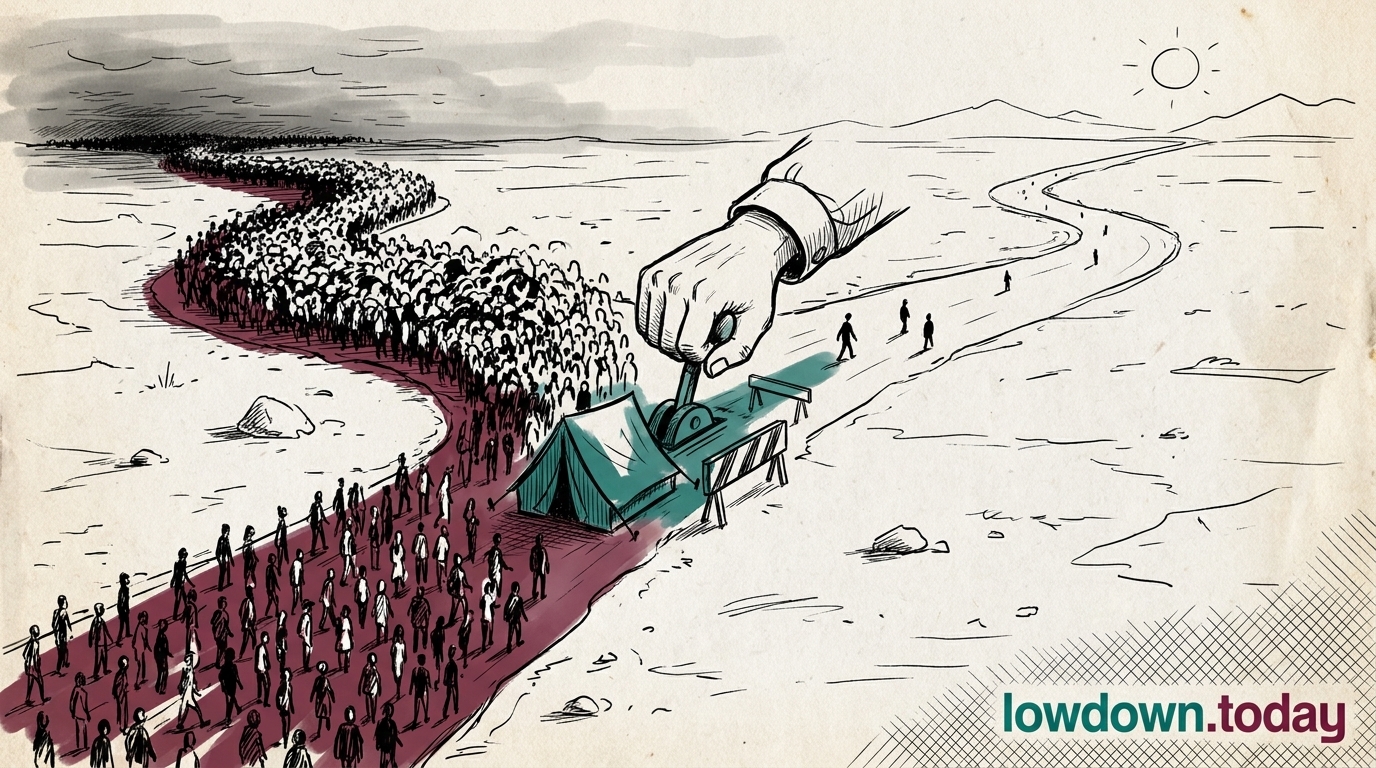
A 30-day US entry ban on nationals of the Democratic Republic of the Congo, Uganda and South Sudan, expanded on 5 June to include green-card holders , expires around 17 June with no announced extension, modification or lift as of publication. The ban is administered by the US Department of Health and Human Services, the federal department overseeing public health. The Africa CDC Emergency Consultative Group, the continental agency's scientific advisory body on outbreaks, calls the restriction of "little, if any, benefit" 1.

The scientific case against entry bans is settled and has been since the 2014 West Africa epidemic. They delay rather than prevent importation, they displace travel through unscreened overland routes, and they deter the surveillance cooperation that lets responders see a virus coming. The original order, issued 18 May , rests on the same reasoning that the evidence rejects.

The same administration funding hundreds of millions of dollars of the response is restricting movement through the borders that response depends on partners keeping open. As of publication the border restriction stands as established fact; its fate at expiry is genuinely open, neither a reported lift nor a confirmed extension.

Deep Analysis

In plain English

The United States imposed a ban on 18 May preventing nationals of DRC, Uganda and South Sudan from entering the country. On 5 June it was expanded to include green-card holders, people who live legally in the US, from those same countries. The ban was due to expire around 17 June, but as of publication, no announcement had been made about whether it would be lifted, renewed or changed. Public health experts, including the WHO and Africa CDC, are against entry bans because they do not actually prevent the virus from reaching other countries. What they do is push travellers to take indirect routes through countries with less screening, and they make it harder for healthcare workers and scientists to travel to and from the outbreak zone. The US is simultaneously spending $270 million to fight the outbreak it is restricting people from fleeing.

Deep Analysis
Root Causes

Two structural forces sustain entry bans despite their epidemiological ineffectiveness. Domestic political risk calculus: elected governments face asymmetric accountability, if a banned national imports the virus, the absence of the ban becomes the explanatory variable in public and legislative discourse, regardless of screening capacity at borders. The cost of being seen to have permitted importation is politically higher than the cost of maintaining a restriction that impedes response.

A legal architecture gap reinforces the political dynamic. The IHR Temporary Recommendations issued 22 May explicitly advise against travel and trade restrictions, but the IHR has no enforcement mechanism. States that impose restrictions contrary to Temporary Recommendations face no formal consequence beyond WHO censure; the US's $270 million bilateral funding commitment demonstrates that the DRC and Ugandan governments are not in a position to impose a symmetrical diplomatic penalty.

What could happen next?
  • Consequence

    If the ban is extended past 17 June, it risks reducing the flow of outbreak-trained DRC and Ugandan epidemiologists to international conferences and WHO technical meetings, compounding the surveillance cooperation gap that the WHO Pandemic Agreement's deadlocked PABS annex (ID:4053) already creates.

    Short term · Reported
  • Precedent

    A 30-day ban that runs through PHEIC declaration and generates no documented importation-prevention evidence, while coexisting with $270 million in bilateral response funding, establishes a domestic-politics-over-epidemiology precedent that other governments may cite in future outbreak declarations.

    Long term · Reported
  • Risk

    The ban's displacement effect, pushing DRC and Ugandan nationals through unscreened third-country routes, may generate importation events in countries with less detection capacity than the US, creating secondary spread that the ban was nominally designed to prevent.

    Short term · Reported
First Reported In

Update #7 · Bundibugyo's fork stays open

Africa CDC· 16 Jun 2026
Read original
Different Perspectives
UK Health Security Agency
UKHSA said egg consumption remains the strongest signal in its 207-case Salmonella Enteritidis investigation. The genomic cluster and 38% hospitalisation among people with available information make exposure identification a public-health priority.
GLEWS+
GLEWS+
GLEWS+ assessed spillover risk from clade B MERS in Nile Basin camels as high if the clade establishes, while rating evidence for spread in camel populations low confidence. The joint assessment makes whole-genome sequencing the next test of the threat.
WHO Regional Office for Africa
WHO's Africa office said transmission in DR Congo is outpacing control efforts after laboratory capacity reached 19 sites and treatment capacity exceeded 1,300 beds. The assessment puts access, insecurity, community deaths and late care-seeking ahead of a simple equipment shortage.
People in Guatemala
People in Guatemala
Guatemala's population now carries the region's largest reported measles burden, with 30,371 confirmed cases and 26 deaths. The scale shifts practical attention from the Mexico-centred frame that followed the World Cup's travel consequences.
Pan American Health Organization
PAHO rated regional measles risk very high after recording 47,459 confirmed cases and 44 deaths through week 28. It names vaccination coverage, accumulated susceptibles and mass gatherings with broad international participation as general risk factors.
Chinese health authorities
China reported three human H9N2 cases to WHO between 10 and 16 July: two four-year-olds recovered, a 44-year-old man remains in intensive care, the first severity signal in a cluster that has produced 173 cases and 2 deaths globally since 2015. The subtype is distinct from the H5N1 series this topic otherwise tracks.
